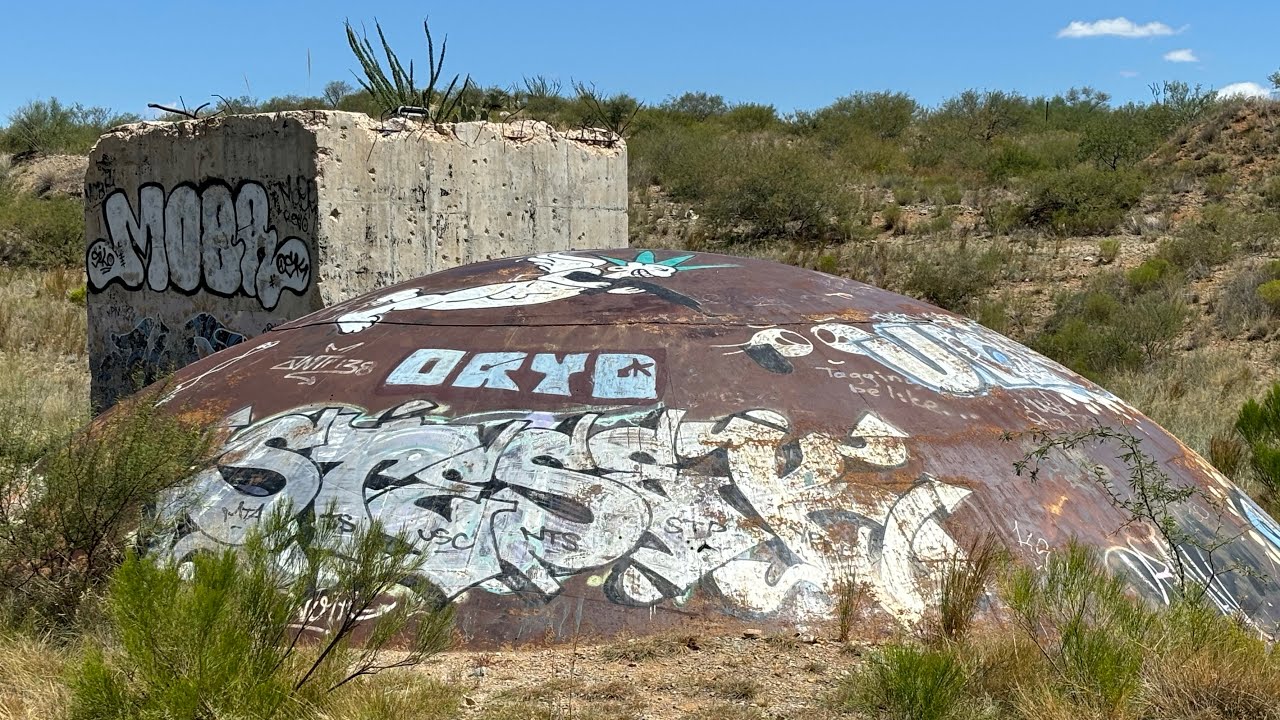
Checking out 2 deactivated Titan II Missile Silos
Автор: Desert Walker
Загружено: 2024-09-03
Просмотров: 507
Описание:
TITAN PROGRAM HISTORY
The Martin Company first proposed the development of the Titan II in 1958, and the Air Force approved the program in October of 1959. Construction of the launch complexes began in December of 1960. The first missile was installed in December of 1962, and the first unit was turned over to the Strategic Air Command (SAC) on March 31, 1963.
Four important changes distinguished the Titan II from its predecessors, the Atlas F and the Titan I. First, the Titan II used nitrogen tetroxide (oxidizer) and unsymmetrical dimethyl hydrazine (fuel) as its propellants. These liquids are hypergolic, meaning that they do not ignite until contact. This increased the reliability of the Titan II, both at liftoff and when the Stage II engine ignited at high altitude. Second, nitrogen tetroxide is noncryogenic so that both propellants could be stored on board the missile for indefinite periods of time. Third, the Titan II would also launch from its underground silo, reducing the launch time of the missile to just under a minute. Finally, the Titan II utilized an all-inertial guidance system, increasing its accuracy over the Titan I.
Carrying the largest nuclear warhead ever deployed on an ICBM by the United States, and with a range of 5,500 miles, the Titan II was the ultimate liquid-propellant ICBM
Повторяем попытку...
Доступные форматы для скачивания:
Скачать видео
-
Информация по загрузке:


