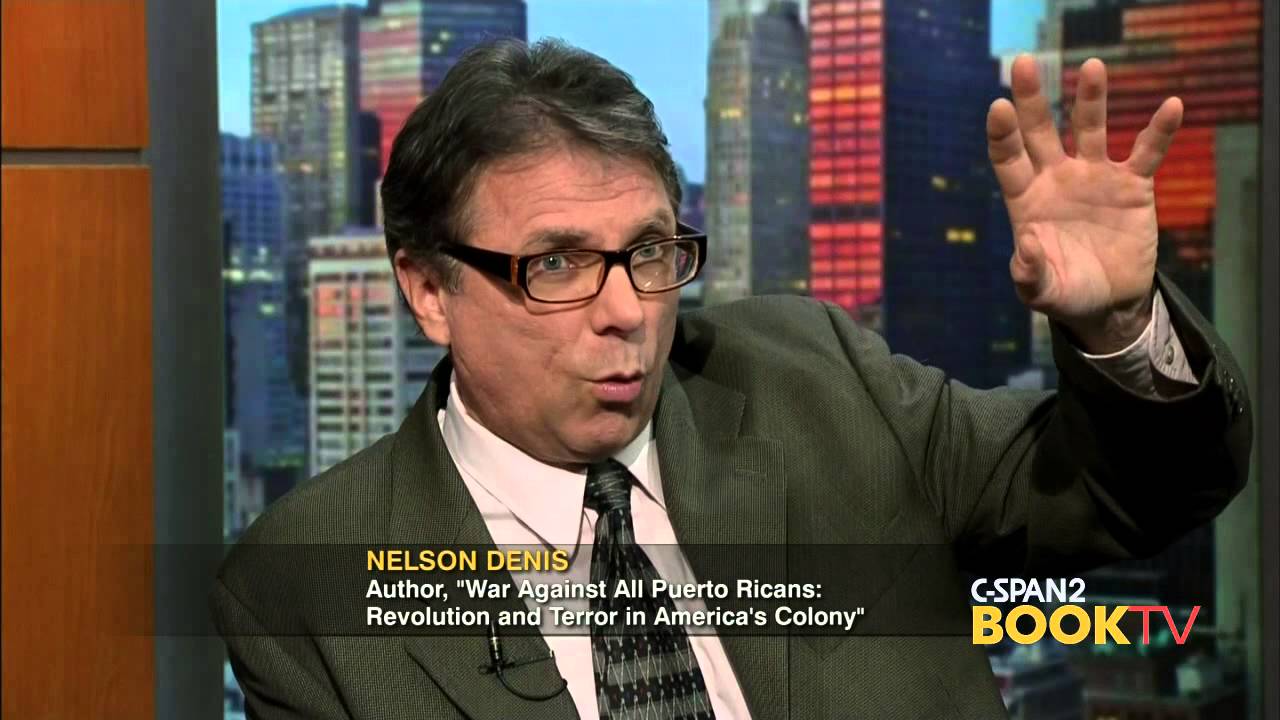
Nelson Antonio Denis Part 2
Автор: City & State
Загружено: 2016-04-21
Просмотров: 1048
Описание:
March, 2015
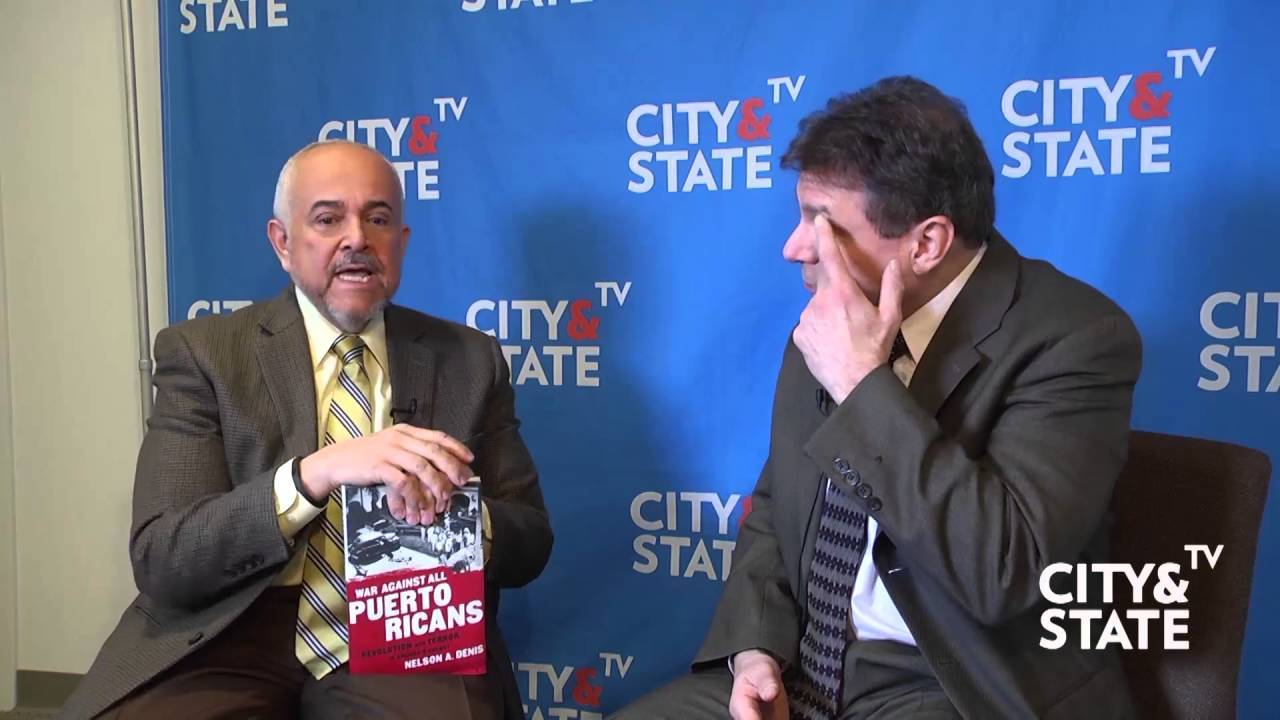
Nelson A. Denis, a former state Assemblyman, is known in political circles as a reformer and commentator. But the New York City native’s career has also involved work as an attorney, filmmaker and—most recently—an author. His new book, “War Against All Puerto Ricans: Revolution and Terror in America’s Colony,” will be published next month.
Denis, who is of Puerto Rican heritage, spoke with City & State Editor-at-Large Gerson Borrero about his forthcoming book and the history of how the island came under U.S. control.
City & State: I find the title fascinating, because people will say, “Who’s got the war against Puerto Ricans?” And basically you are saying, “It’s the U.S. government.”
Nelson A. Denis: Actually, there’s a real story behind this. I feel like there’s a war against Puerto Ricans every time I pay my taxes—
C&S: Why?
NAD: Well, that was just a joke. On a more serious note, this “War against all Puerto Ricans” were the words that were uttered by the chief of police of Puerto Rico. His name was Francis E. Riggs.
C&S: Who was not Puerto Rican.
NAD: No, absolutely not. He was Yale educated. His father was president of the Riggs National Bank, which was known for financing and destabilizing a lot of regimes in South and Central America. The bank was finally closed when they got caught laundering money for Augusto Pinochet in Chile. Riggs was sent down to Puerto Rico to help “stabilize” the situation together with an army general named Blanton Winship who was designated as the governor. Why did this happen? Because Pedro Albizu Campos, the president of the Nationalist Party, had been writing editorials, holding meetings, giving speeches, touring through South America, making his presence felt. The United States could care less—the First Amendment was alive and well on the island of Puerto Rico—until an island-wide agricultural strike in 1934, which brought the economy to a standstill for about two or three months. There was a meaningful negotiation, which actually ended up doubling the workers’ wages, los macheteros, the sugar cane workers in Puerto Rico, from 75 cents to roughly $1.50 a day for a 10-hour day. That was actually a big deal. That was amazing. They doubled their wages. It was the difference between starvation and not to many of these people.
C&S: What was the role of Albizu Campos?
NAD: Albizu Campos was brought in by the macheteros to lead and negotiate the terms for the workers. He led this strike. Originally it was supposedly led by the labor leaders, the FLT, but the rank and file found out that those leaders in the union had sold them out for comfortable government jobs in San Juan. That’s when they went to Albizu. Albizu led that strike. When he led that strike, immediately Blanton Winship and Riggs paid attention to him. That’s when Riggs invited Albizu to el Escambrón,to a lunch to offer him large sums of money to buy him off politically and he didn’t go for it.
C&S: This is not a novel. This is actual history, and you have over 100 pages documenting this. What would be most compelling in here to draw in people who don’t know about the atrocities committed by the U.S.?
NAD: When that strike happened and the U.S. government was very unhappy, they started assailing, assaulting, provoking all the nationals and they assassinated four of them in what was known as, before the Ponce Massacre, the Rio Piedras Massacre in Oct. 24, 1935. They killed four nationalists in broad daylight, they just assassinated them. They killed them, just for being nationalists. When asked to explain that in a press conference, the police chief, Yale-educated Riggs, son of the bank president Riggs, said if people kept following Albizu Campos, and if Albizu Campos kept stirring up the macheteros and the college students that there would be war to the death against all Puerto Ricans.
C&S: You reviewed FBI documents called las carpetas taken from espionage on Puerto Ricans. How many of these carpetas did the FBI collect on Puerto Ricans?
NAD: People were followed all over the island, and not just a small group. There were over 100,000 secret police dossiers, FBI files, called carpetas, over the period from the mid ’30s to the mid ’80s. When you think about the process and the human interactions that comprised that, in order to create 100,000 files you have to have a hell of a lot of informants, because the informants are the ones that provided the data for those files. Most of the FBI agents didn’t speak Spanish. These informants, the vast majority of them were Puerto Ricans. This is something that over two generations affected the Puerto Rican character.
Повторяем попытку...
Доступные форматы для скачивания:
Скачать видео
-
Информация по загрузке: