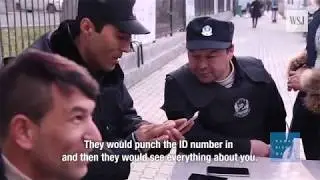
The Chinese government's censorship regime goes to college
Автор: FIRE
Загружено: 2022-12-02
Просмотров: 3246
Описание:
Protests are currently sweeping China, as Chinese citizens bravely go out into the streets to share their discontent with the Chinese Communist Party, their lack of freedom of speech, and the country’s COVID policies.
The Chinese government is notoriously harsh on dissenters who risk violence and arrest by speaking out.
It’s not safe to speak out against the CCP in China. But is it safe to criticize China on campus in the United States?
For a group of anonymous Chinese students at George Washington University, the answer is no.
These students have faced a series of frightening attempts to unmask and punish them over the past year as they’ve coordinated demonstrations against the Chinese government and Xi Jinping.
Protests began in February. when students posted artwork from dissident artist Badiucao criticizing human rights abuses in China while it hosted the 2022 Winter Olympics.
Student groups on campus, including the Chinese Students and Scholars Association, or CSSA, complained to the administration, demanding that the university both censor the art and punish the students who posted it.
CSSA chapters have increasingly been involved in efforts to silence China’s critics on American campuses and in some cases have coordinated with Chinese embassies in the United States.
GW’s President Mark S. Wrighton initially granted their demands. He said he was "personally offended" by the posters and would "undertake an effort to determine who is responsible."
In response to criticism, he quickly reversed course, but make no mistake: his initial response would’ve put these students in serious danger.
Unwittingly, Wrighton agreed to do exactly what the Chinese government has been trying to do worldwide: unmask and punish critics of the CCP, even those far outside its borders.
For these students, the danger is real: Not only could they face legal trouble or imprisonment when they return home, as students before them have, but their families in China could face consequences too, including harassment from authorities.
Unfortunately, that incident wasn’t the only threat against GW’s anonymous Chinese dissidents.
In October, they posted new sets of flyers including one inspired by a lone protester who hung banners calling Xi Jinping a "dictator” over a bridge in Beijing. His protest, which took place ahead of the 20th Communist Party Congress, caught the world’s attention.
The GW students’ posters echoed his sentiments. But one night, as campus communities around the world engaged in global protests against the CCP, the GW students were approached while posting signs by a man who immediately asked them, in Chinese, what organization they were from. When they didn’t answer, he pulled out his phone and began recording them.
American campuses should be among the freest places in the world to speak. But, for some students, freedom is only found in anonymity — if they can keep it.
Повторяем попытку...

Доступные форматы для скачивания:
Скачать видео
-
Информация по загрузке: