Professional scientific diving as a consultant Why and how we dive in rivers Jouni Leinikki
Автор: Sukeltajaliitto ry
Загружено: 2025-10-12
Просмотров: 9
Описание:
This is part of a series of presentations giving by diving enthusiasts and science professionals interested in citizen science organised by the Finnish Divers' Federation. We started in 2023 on Suomenlinna with a live seminar mainly about the Baltic Sea, covering the environmental risks of WW-I and II wrecks, scale models of wrecks, ghost net removal, and research projects involving technical diving. We learned about the Saimaa ringed seal conservation project, the restoration of sea grass meadows, monitoring and the future of scientific diving education in Finland.
In 2024 the Finnish Divers Federation Sukeltajaliitto continued the journey into inland waters to rivers and lakes. As in 2023, presenters covered both archaeology and ecology in and around water.
Jouni Leinikki is a trained marine biologist and scientific diver. In 1989, he started, together with his partner Panu Oulasvirta, the professional consultancy Alleco.
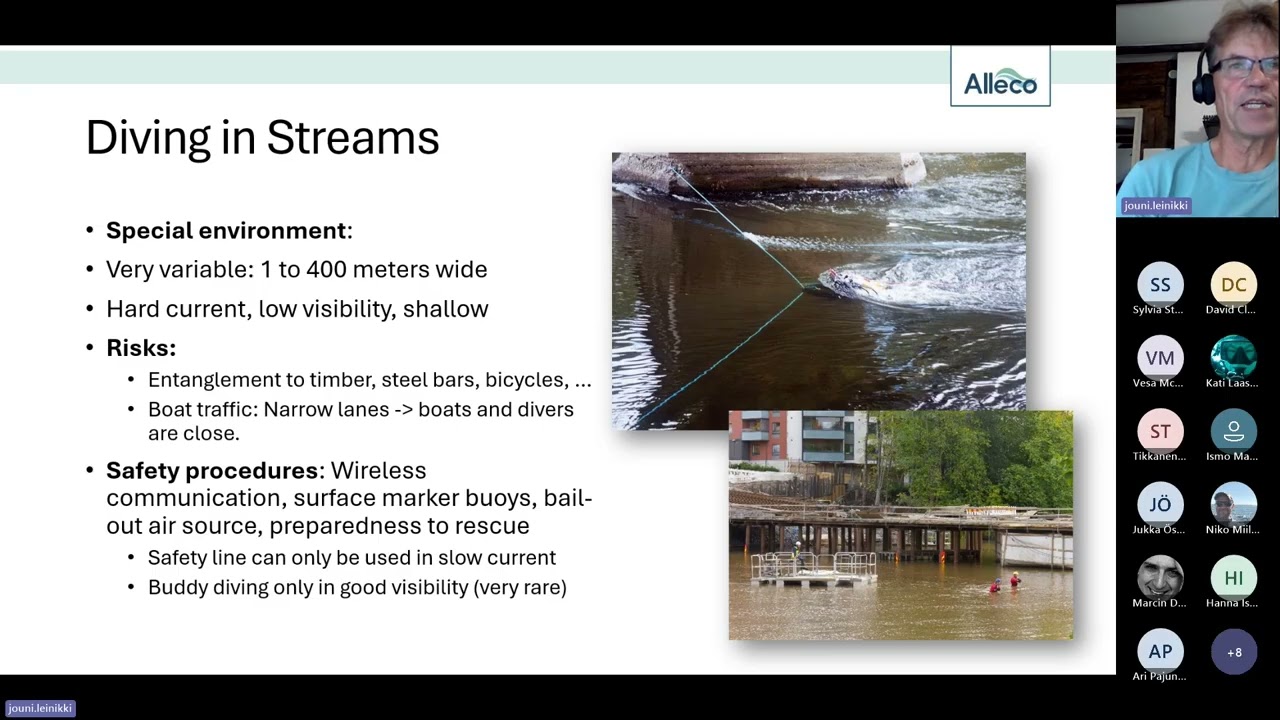
Alleco is a consultancy specializing in underwater surveying of natural values in different environments. One of the major areas involves mapping the threatened mussel species. There are two protected mussel species in Finland that are listed in EU Habitats Directive Annex II, meaning that they cannot deliberately be killed or even disturbed by human activities, such as building bridges, forestry, or even river restoration works. These mussel species are thick-shelled river mussel (TSRM) and freshwater pearl mussel (FPM). TSRM thrives in the murky rivers of southern Finland, while FPM prefer clear and pure waters, of which most are in northern Finland. Surveying techniques for these two are different. TSRM are usually collected with all mussel species in 0-visibility by hand for identification onshore. FPM can be identified visually underwater and usually live in small water bodies, so the divers swim up or down the creek or river and count the number of FPM they see. If the habitat of the mussels is inevitably threatened, they are often collected and transferred into a safe environment, usually upstream.
Повторяем попытку...
Доступные форматы для скачивания:
Скачать видео
-
Информация по загрузке: