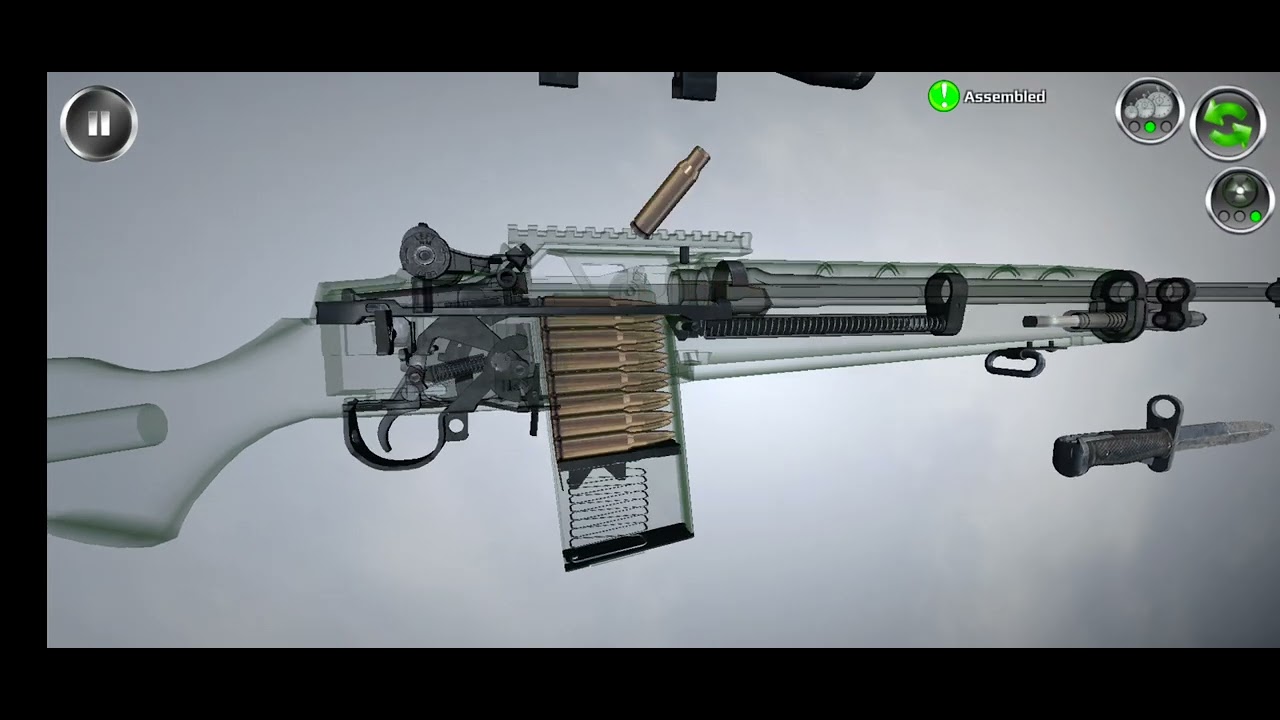
PPSh 41 Submachine Gun - Step By Step Disassembly & Reassembly
Автор: TheGreenLing
Загружено: 2020-08-04
Просмотров: 1271
Описание:
The PPSh-41 (pistolet-pulemyot Shpagina; Russian: Пистолет-пулемёт Шпагина; "Shpagin machine pistol") is a Soviet submachine gun designed by Georgy Shpagin as a cheap, reliable, and simplified alternative to the PPD-40. Common nickname is "papasha" (Russian: папаша), meaning "daddy".
The PPSh is a magazine-fed selective fire submachine gun using an open bolt, blowback action. Made largely of stamped steel, it can be loaded with either a box or drum magazine and fires the 7.62×25mm Tokarev pistol round.
The PPSh saw extensive combat use during World War II and the Korean War. It was one of the major infantry weapons of the Soviet Armed Forces during World War II. Around six million PPSh-41s were manufactured. In the form of the Chinese Type 50 (licensed copy), it was still being used by the Viet Cong as late as 1970. According to the 2002 edition of the Encyclopedia of Weapons of World War II the PPSh was still in use with irregular militaries.
he impetus for the development of the PPSh came partly from the Winter War against Finland, where the Finnish Army employed the Suomi KP/-31 submachine gun as a highly effective tool for close-quarter fighting in forests and built-up urban areas. A submachine gun, the PPD-40, was subsequently rushed into mass production in 1940, but it was expensive to manufacture, both in terms of materials and labor, because it used numerous milled metal parts, particularly its receiver. Shpagin's main idea for cost reduction was to use metal stamping for the production of most parts; that concept was revolutionary in the Soviet Union at the time. Shpagin created a prototype PPSh in September 1940, which also featured a simple gas compensator designed to prevent the muzzle from rising during bursts; this improved shot grouping by about 70% relative to the PPD.
The new weapon was produced in a network of factories in Moscow, with high-level local Party members made directly responsible for meeting production targets. A few hundred weapons were produced in November 1941 and another 155,000 were made during the next five months. By spring 1942, the PPSh factories were producing roughly 3,000 units a day. Soviet production figures for 1942 indicate that almost 1.5 million units were produced. The PPSh-41 is a classic example of a design adapted for mass production (other examples of such wartime design are the M3 submachine gun, MP 40, PPS submachine gun, and the Sten). Its parts (excluding the barrel) could be produced by a relatively unskilled workforce with simple equipment available in an auto repair garage or tin shop, freeing more skilled workers for other tasks. The PPSh-41 uses 87 components compared to 95 for the PPD-40 and the PPSh could be manufactured with an estimated 5.6 machining hours (later revised to 7.3 hours) compared with 13.7 hours for the PPD. Barrel production was often simplified by using barrels for the 7.62mm Mosin–Nagant: the rifle barrel was cut in half and two PPSh barrels were made from it after machining the chamber for the 7.62×25mm Tokarev cartridge.
Model Courtesy of World Of Guns: Gun Disassembly
Повторяем попытку...

Доступные форматы для скачивания:
Скачать видео
-
Информация по загрузке: