Short Courses Series - Day 2 Session 3 - Dr Sutapa Agrawal
Автор: Food Security for Equitable Futures
Загружено: 2026-01-29
Просмотров: 10
Описание:
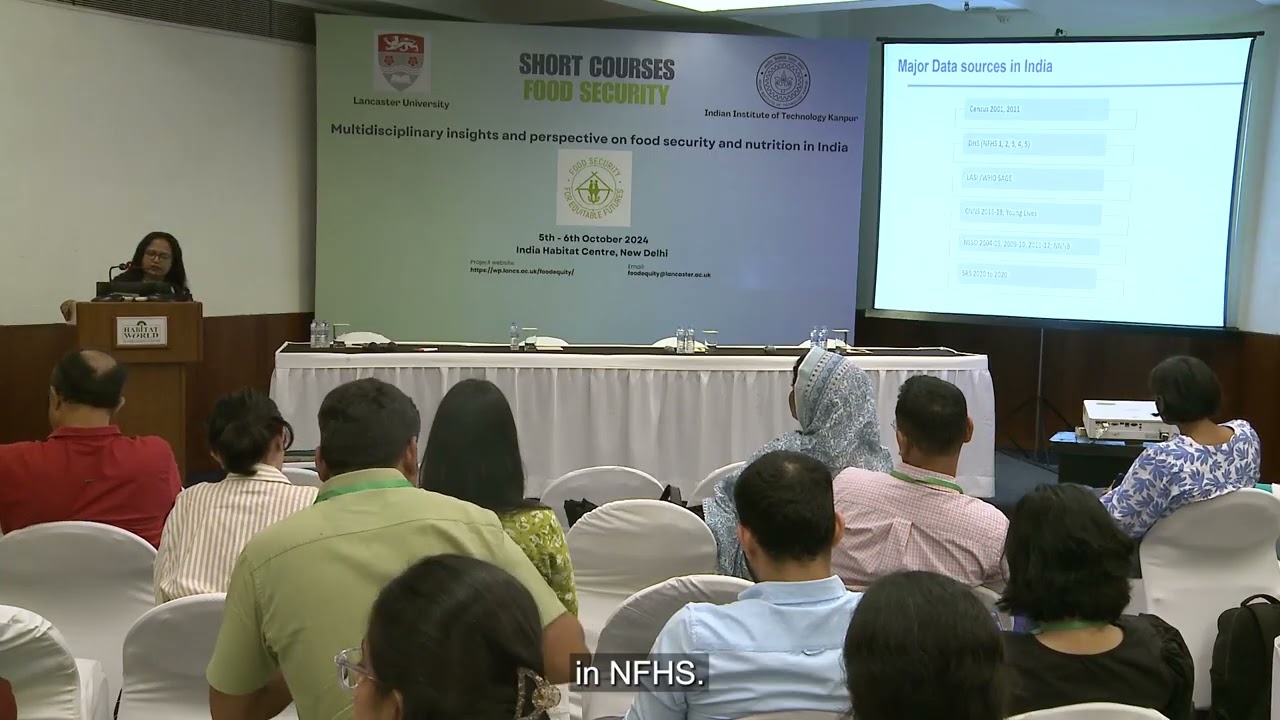
Dr Sutapa Agrawal’s session titled “Nutritional Paradox in India: Evidence from NFHS-5 and CNNS" highlighted the complexities and challenges of nutrition in India. It laid focus on the findings of Comprehensive National Nutrition Survey (CNNS) and other health surveys conducted in India. Dr Agrawal discussed the nutrition paradox (defined below) in India among young children and adolescents, including its causes, effects and the need to tackle it. The session highlighted that nutrition problems differ from health issues and require consistent social and behaviour change communication (SBCC) rather than medical interventions.
What is Nutrition Paradox?
Nutrition paradox refers to the coexistence of undernutrition and overnutrition (overweight/obesity) within the same population, often due to poor adolescent and maternal diets, inadequate infant and young child feeding (IYCF) practices, and the rise of non-communicable diseases (NCDs). This paradox is characterized by issues such as stunting, wasting, underweight, and micronutrient deficiencies alongside increasing rates of overweight and obesity, particularly among adolescents. Cultural practices often result in inadequate nutrition for women during pregnancy, leading to low birth weight (LBW) and wasting in children. Thus it is imperative to recognize that nutritional issues require long term solutions.
Data Sources and CNNS
Key data sources to study nutrition in India include Census 2001, 2011, National Family Health Survey (NFHS) (1-5), CNNS 2016-18, and others. The CNNS, conducted from February 2016 to October 2018, is the largest micronutrient survey, covering all 30 states and both urban and rural areas. It used a cross-sectional, household survey design with multi-stage random sampling, covering 82% of districts from the 2011 Census. It presented national and state-level estimates on the triple burden of malnutrition (overnutrition, undernutrition, anaemia) biomarkers indicating micronutrient status, and risk factors for NCDs. The survey also assessed cognitive development, school readiness, and educational achievement.
Outcomes from the CNNS included a detailed assessment of micronutrient status of children and adolescents in India, serving as a baseline for national level initiatives like POSHAN Abhiyaan, an initiative focusing on improving nutritional outcomes among children, adolescent girls, pregnant women, and lactating mothers and Anemia Mukt Bharat, a government strategy to reduce anaemia among women, children and adolescents. The data also defined the interactions between malnutrition and NCD risk factors, aiding evidence-based policy development to reduce undernutrition, prevent overweight and obesity, and prevent NCDs.
Nutrition Paradox in India
Dr Agrawal talked about the nutrition paradox present in India as per the CNNS report. Stunting remained a substantial problem, with almost one-quarter of children aged 5-9 years stunted, affecting their educational potential. Thinness among adolescents was also prominent, with 20% or higher prevalence in most states. Overweight and obesity were rising among adolescents, particularly in Tamil Nadu, Delhi, and Goa. Anemia is a severe public health problem for children aged 1-4 years in eight states. Micronutrient deficiencies, such as vitamin A, B12, folate, zinc, and vitamin D, are widespread, especially among adolescents. The growing threat of NCDs was evident, with 10% of children and adolescents being pre-diabetic and 7% at risk of chronic kidney disease.
Possible reasons behind the Nutrition Paradox
The main causes of malnutrition in India, as pointed out by Dr Agrawal, included poor adolescent and maternal nutrition, inadequate diets during pregnancy, cultural practices wherein pregnancy was often not given the treatment it required and women’s nutritional needs were neglected, poor IYCF practices, multiple micronutrient deficiencies (MMD), and consumption of junk foods and sedentary lifestyle which lead to emerging NCDs and compromised social capital.
Addressing the Nutritional Concerns in India
Dr Agrawal said that a cross-sectoral program was essential to address the nutrition paradox, emphasizing the need for POSHAN Abhiyaan 2.0 to tackle the triple burden of malnutrition. She advocated for early intervention to control NCDs, diversifying diets to combat hidden hunger, ensuring adequate diets during pregnancy, and treating pregnancy as special. Particular attention was required for LBW babies and severely malnourished children, with real-time monitoring and adequate IYCF practices. Ensuring all children attend preschool and schools with adequate diets was crucial for their development and learning.
These interventions were aimed at improving overall nutrition, reducing malnutrition, and enhancing the health and well-being of the population, particularly the vulnerable groups.
Повторяем попытку...
Доступные форматы для скачивания:
Скачать видео
-
Информация по загрузке: