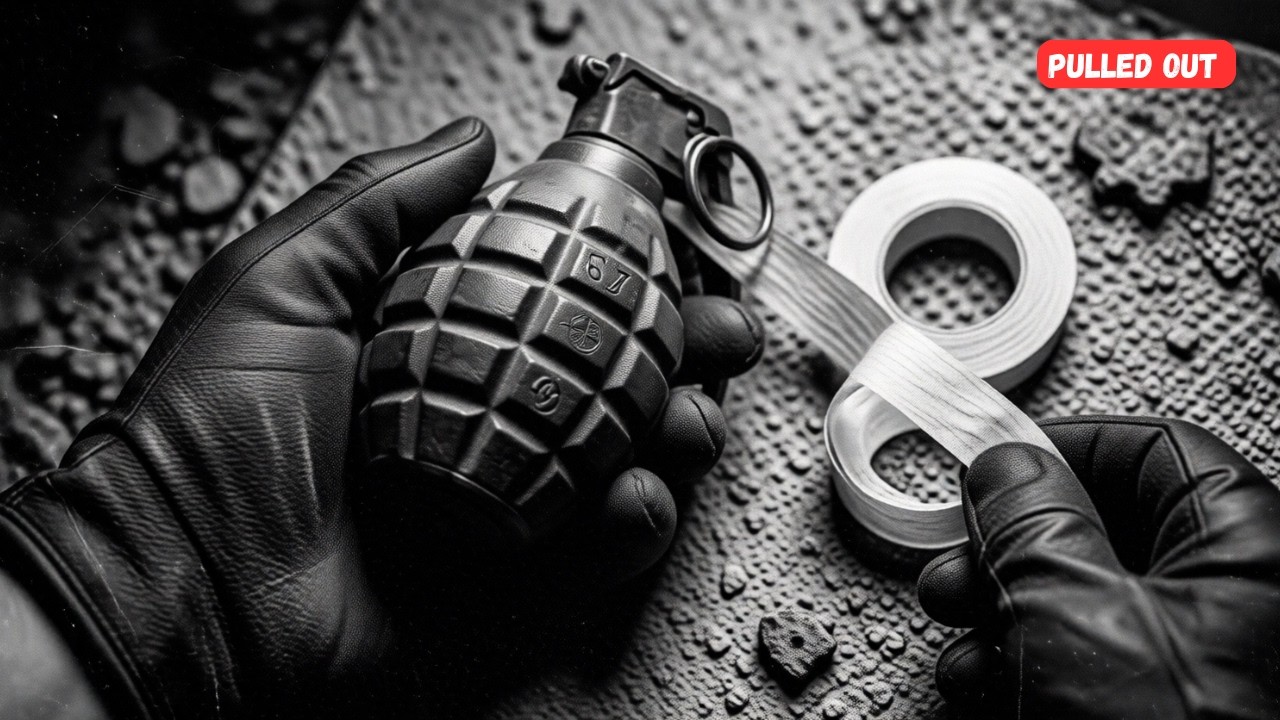
Why British Crews 'Risked' Pulling One Grenade Pin For the Holman Projector
Автор: Covert Weapons
Загружено: 2026-02-13
Просмотров: 16
Описание:
A short, smooth-bore tube sits on a simple deck pivot. A pressure hose runs to a gauge. A metal canister drops in from the muzzle. One pin is pulled, and the operator steps back for clearance. The next line in the log is not about accuracy. It is about a missing stamp, a delayed inspection, and a pressure system that could change by the minute.
In early 1940, Britain faced intense air attack on coastal convoys and merchant routes. Escort guns were scarce, fighter cover was inconsistent, and ships needed some kind of immediate deck defense. Procurement accepted stop-gap systems that could be mass-fitted fast, even if they were imperfect.
The device was the Holman Projector: a pneumatic mortar using compressed air, or ship steam, to lob a canistered grenade upward. It could throw a disruptive burst screen against low approaches, but limited velocity, wind drift, ship roll, and condensation in lines produced inconsistent performance and safety risk. In convoy service, its value was disruption, not precision kills.
Subscribe for more deep dives into British military history.
Повторяем попытку...

Доступные форматы для скачивания:
Скачать видео
-
Информация по загрузке: