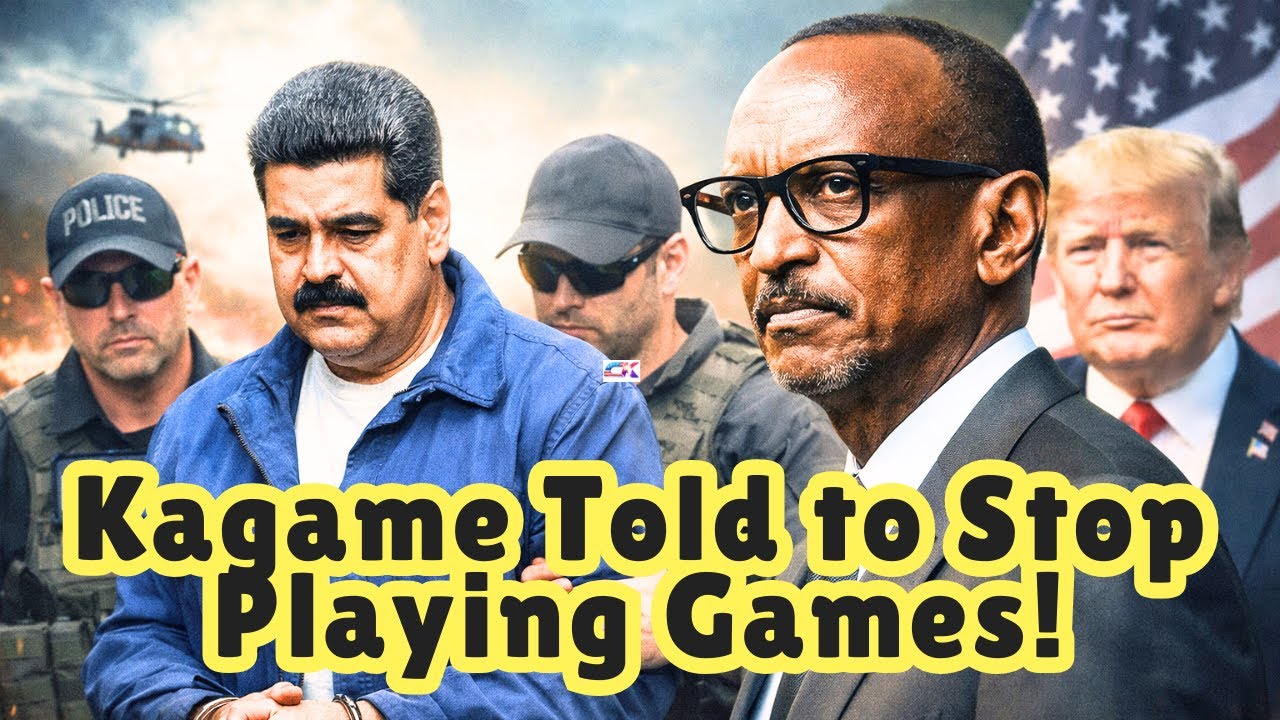
Rubio Warns Kagame: What Maduro’s Fall Reveals About Power!
Автор: Chris Kamo
Загружено: 2026-01-03
Просмотров: 6161
Описание:
Today’s analysis takes us beyond headlines and into the mechanics of power—how it speaks, how it warns, and how it disciplines those who believe they can endlessly test its limits.
The capture of Nicolás Maduro was not just a dramatic episode in Latin American politics. It was a signal. A signal sent deliberately, publicly, and without ambiguity. When Washington moves from sanctions and statements to direct action, it is never acting in isolation. It is reminding the world that defiance has thresholds—and that those thresholds are enforced selectively, but decisively.
In the days that followed, one phrase stood out. A warning issued by U.S. Secretary of State Marco Rubio: “Don’t play games.” Simple words. Heavy meaning. Those words were not aimed only at Caracas. They travelled far beyond Venezuela. They echoed across continents and landed squarely in the Great Lakes region of Africa.
This video asks a question many prefer to avoid: when global power draws a line, how do leaders like Paul Kagame respond—and what does that response reveal about the real state of African sovereignty?
For years, Kagame’s regime has operated under a carefully maintained illusion of strategic immunity. Rwanda was framed as disciplined, indispensable, and morally shielded by history. That narrative allowed Kigali to project power beyond its borders, particularly in eastern Congo, while enjoying diplomatic protection and strategic indulgence from Western capitals. But global conditions have changed. Congo is no longer peripheral. Its minerals, geography, and stability now sit at the centre of international economic and security calculations.
This is why the warning matters. Not because it promises immediate action, but because it signals the beginning of scrutiny. Washington does not escalate emotionally. It escalates methodically. First comes the signal. Then the waiting period. Then the consequences—if defiance continues.
In this context, Kagame’s dilemma is no longer a military one. It is political and psychological. Does he recalibrate, retreat, and adapt to a shifting world order? Or does he double down on a posture shaped by an older system that no longer guarantees protection?
For Congo, this moment is equally critical. For decades, Congolese voices warning about aggression and proxy warfare were dismissed as noise. Today, those same realities are being acknowledged—not out of moral awakening, but out of strategic necessity. That is not justice. But it is leverage. And leverage, if used with clarity and discipline, can alter the balance of power.
This analysis does not celebrate Washington. It does not romanticise power. It dissects it. It shows how sovereignty in the modern world is not declared—it is negotiated, tested, and often constrained by forces far larger than any single state.
The next months will matter. Not because history repeats itself mechanically, but because leaders who misread moments of transition tend to pay the highest price. The question is not whether power will act. The question is who understands its language—and who keeps pretending the old rules still apply.
Stay with us as we unpack what this warning really means, why it should not be dismissed as rhetoric, and how the future of the Great Lakes may hinge on choices being made quietly, away from cameras, while the world watches and waits. #AfricanSovereignty #Kagame #GreatLakes #Geopolitics #GlobalPower
Повторяем попытку...
Доступные форматы для скачивания:
Скачать видео
-
Информация по загрузке: