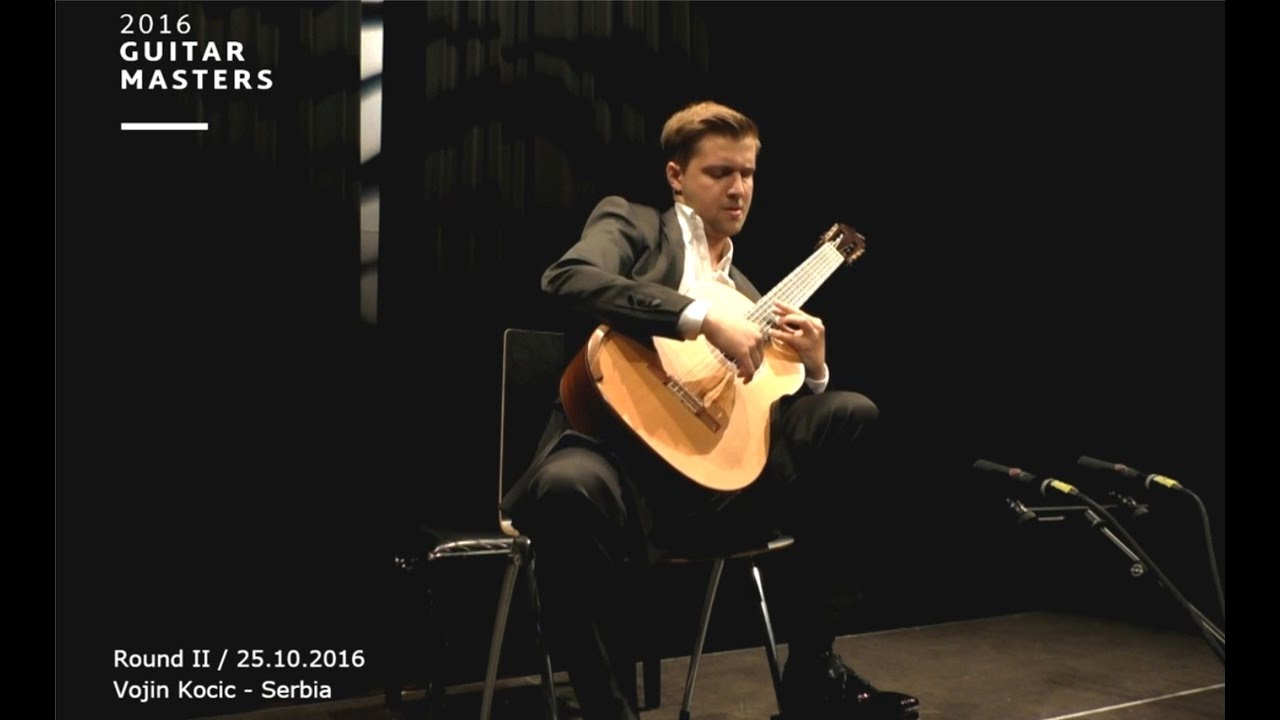
Phosphenes: After Sylvius Leopold Weiss | Marek PASIECZNY | Vojin Kocić (guitar)
Автор: Marek Pasieczny
Загружено: 2016-11-12
Просмотров: 4566
Описание:
free full score: http://ow.ly/Vz4a305Ylc7 | Vojin Kocić (guitar)
PHOSPHENES (After Sylvius Leopold Weiss) by Marek PASIECZNY
This piece has been commissioned by the International Guitar Festival and competition ‘Guitar Masters 2016’ in Wroclaw, Poland as a set work. Phosphene is dedicated to the city of Wroclaw (Poland).
A phosphene is a phenomenon characterized by the experience of seeing light without any light actually entering the eye. The word phosphene comes from the Greek words phôs meaning ‘light’, and phaínein meaning ‘to show or shine’. Phosphenes are often experienced as spots of light that blur or obscure the vision. However, as the phosphenes begin to fade, the vision becomes clearer and clearer until it is fully restored.
Taking this image as the structural basis for this new composition, the piece begins with an obscured presentation of Sylvius Leopold Weiss’s ‘Passacaglia’ from his Sonata in D major (WeissSW 18.6). At the end, however, his main theme becomes clearly visible when the phosphenes have finally subsided. The result is a contemporary twist in postmodern language on the variation form, where the theme and variations are presented in reverse order.
FORM
A set of 10 variations precede the coming of the theme, each exhibiting fragmentary visualisations of Weiss’s Passacaglia, corresponding not only to his main theme, but also to the rhythmic and harmonic structures of his original variations on the theme (arpeggios, ostinato bass line).
The 10 variations are signaled by 10 repetitions of an octave g-g figure in the opening passages. This octave g-g figure returns to conclude the piece together with a pure open 5th c/g, bringing forth a sense of circular open ended-ness.
KEY
To avoid constructing too close a resemblance to Weiss’s Passacaglia, the key of this composition was deliberately changed to C major (as opposed to the original key, D major). This helped to evade invoking the same colors or the same guitar patterns, but rather allowed the exploration of a broader and different spectrum of sound. Similarly, this piece was first composed on the piano in aid of seeking less idiomatic exploits of the guitar, giving rise to the use of an extended range (low C up to high B).
MAREK PASIECZNY
March 2016 | Leeds, the United Kingdom
#classicalguitar #marekpasieczny
Повторяем попытку...
Доступные форматы для скачивания:
Скачать видео
-
Информация по загрузке:


![60’s Soul Classic (1969) [Unreleased Album] Roberta Flack & Aretha Franklin](https://imager.clipsaver.ru/Pi9jjgt9Xp4/max.jpg)