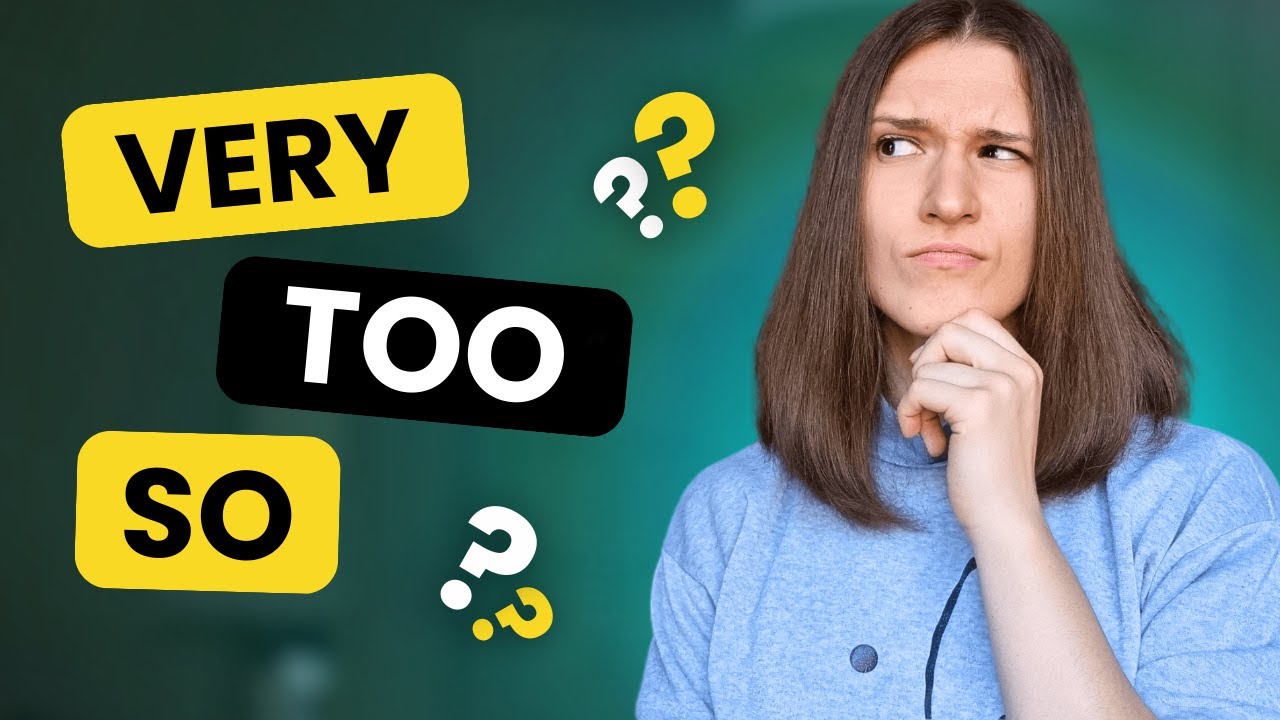
Confusing words: VERY & TOO
Автор: Learn English with Rebecca · engVid
Загружено: 2014-05-05
Просмотров: 307064
Описание:
http://www.engvid.com/ Is the weather very hot or too hot? Was the movie very good or too good? Learn the difference between the commonly confused words 'very' and 'too'. You will never make this mistake again! This English vocabulary lesson is a must if you're not sure when to use these words. It's really easy -- it isn't too hard! Take the very comprehensive quiz here: http://www.engvid.com/confusing-words...
TRANSCRIPT
Hi. This is Rebecca. In today's lesson, I'll explain the difference between two commonly used words and two commonly confused words. They are: "very" and "too". So what is the difference between these? Well, first of all, both of them are used for in... To intensify the meaning of words, usually adjectives, but they are very different.
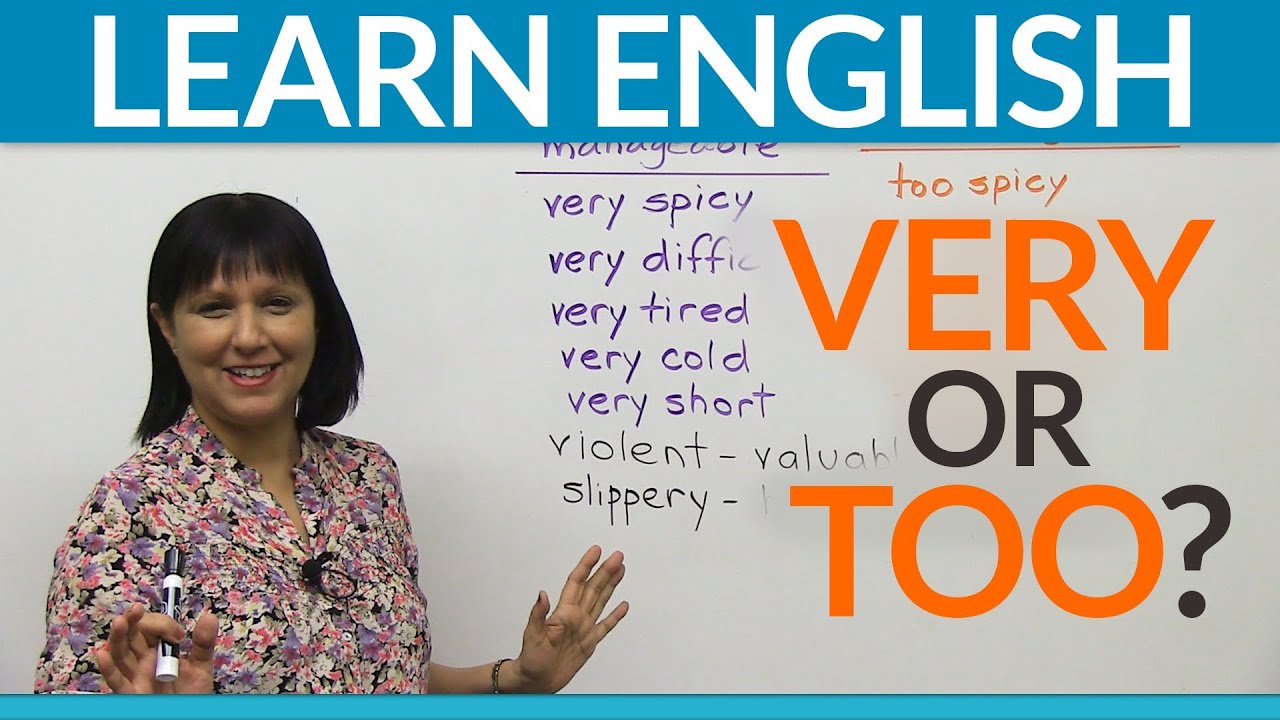
Let's look at some examples and you'll understand. So the word "very" is used to mean extremely, a lot. But it's extremely... It's when something is extremely something, but manageable. The word "too" indicates extremely, a lot, but something is not acceptable, or not manageable, or over the limit. All right? I'll explain and you'll understand when I give you some sentences.
So, for example, I could say: "Oh, this food is very spicy", but I'm still eating it. Okay? Or: "This food is very spicy, but I like it like that." So that's okay. Or you might say: "This food is too spicy. I can't eat it." So here, it was over the limit, it was not acceptable.
Let's take another example. "The exam was very difficult." Okay? "But I think I'll pass." Okay? Or: "The exam was too difficult. I'm not sure I'm going to pass." All right? So you see again, too much, over the limit.
"I'm very tired. I'm going to bed." Sorry, I wanted to give you a different example there. "I'm very tired, but let's go out anyway." Or: "I'm too tired. I'm going to bed." All right? So there, it was too much so the person was not going to go out. But here, they were saying they're very tired, but it's manageable.
Next: "It's very cold out, but I'm going to go out anyway.", "It's too cold. Let's stay at home." See the difference?
Next one: "She's very short." It's just a fact. Or: "She's too short to be on the basketball team," for example. All right? Which is what happened to me when I was in school. Wasn't very good at basketball. All right?
So I hope you understand, through these examples, the difference between "very" and "too". Both are used to intensify the word we are talking about, but in a completely different way. So now see if you can decide which of these to use.
So suppose I want to say that a particular movie is so violent that I can't watch it, I don't want to watch it. So would I say: "It's very violent", or would I say: "It's too violent"? I would probably say: "It's too violent. I don't want to watch it."
Okay, suppose you want to indicate that some jewelry is extremely valuable. So what could you say? "It's very valuable." All right?
Next: suppose you want to say that the hotel room is so dirty that you will not stay there, you want the management to give you another hotel room. So then you would say: "Our room is... This room is too dirty. Please give us another room." Okay?
Suppose you want to say that it's so slippery outside that you're afraid to go out, you're not going to go out. So you say: "It's too slippery." Right?
Next: suppose you want to indicate that a suitcase is so heavy that you can't lift it. Would you say: "It's very heavy", or "It's too heavy"? Well, if you say "very heavy", you're still saying it's heavy, that's true, but because we want to indicate that it's over the limit heavy, it's so heavy that you can't pick it up - we're going to say: "It's too heavy. I can't lift it. I need some help."
Last one, if you want to say that something is extremely expensive, you would just say: "It's very expensive." But if you want to say that it costs so much money that you can't afford to buy it, then you have to say: "It's too expensive." All right?
So I hope this lesson helped you to understand the difference between these two very commonly confused words. If you want to do a quiz on this, please go to our website: www.engvid.com. You could also subscribe to my YouTube channel for more English lessons. Thanks for watching, and good luck with your English.
Повторяем попытку...
Доступные форматы для скачивания:
Скачать видео
-
Информация по загрузке: