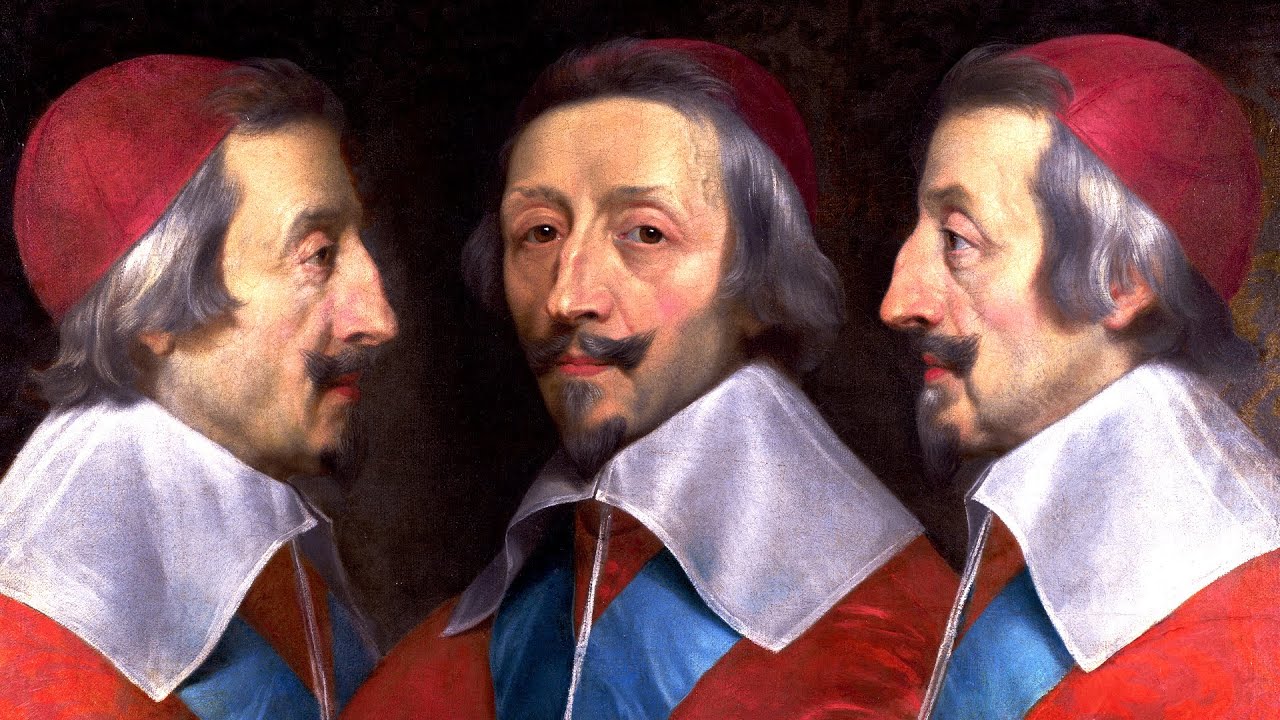
The Lion of the North | Cardinal Richelieu | The Battle of Lutter (1625—1626)
Автор: Cromwell's Return
Загружено: 2021-06-23
Просмотров: 734
Описание:
https://www.edwardandezra.com/
“The Day of the Dupes” is an amazing portrayal of political savvy. In 1630, rival factions reached a head in Louis XIII court. Louis’ mother, Marie de’ Medici, gave her son an ultimatum, either one of Louis’ top advisor is dismissed, or she herself would leave. The French king left the court and retired to a hunting excursion. A celebration began of the presumed dismissal of that advisor. Unaware that while the king was away from his court, he was actually with that advisor. King Louis assured the man of his continued support. Louis XIII’s mother eventually exiled herself from the royal court to northern France.
Choosing an advisor over their own mother! Who was this person that performed perhaps one of the most astonishing moves in political history? Armand du Plessis, or simply Cardinal Richelieu: not only a French statesmen, but also a member of the Catholic clergy. And although he was a cardinal for the Church, in yet another interesting move of politics, decided to fund Protestants against the Holy Roman Empire. Why would one of the most Catholic nations in Europe, in a decision initiated by a cardinal, aid Protestant rebels against their Catholic rulers?
Spain was ruled by the Spanish Hapsburgs on France’s western border, and with the rise of the Austrian Hapsburgs in the Holy Roman Empire, the concern was with being encircled. Seeing an opportunity to weaken the ascension of their rivals: Richelieu offered funding to any nation that would invade the Holy Roman Empire, liberate the Protestant rebels, and dethrone the Hapsburg emperor Ferdinand II. From religious conflict in Germany, a world war was about to begin— and consume Europe for thirty years.
Christian IV, king of Denmark accepted the feat. He seemed like an ideal choice as he was duke of Holstein, and also the brother-in-law to Frederick of the Palatine. In late 1625, Christian began raising an army.
Mansfeld, a supporter of Frederick, marched from Brandenburg to the strategically vital location of the Dessau bridge and began an assault on Wallenstein in April. Mansfeld was beaten back severely, his infantry were forced to surrender while his cavalry fled across the Oder. Wallenstein followed.
In May, Christian marched to aid Mansfeld, but later noticed that Mansfeld and Wallenstein moved south. Christian attacked the same bridgehead but was driven back, this time by Tilly’s men. Christian and his force retired to Brunswick. Tilly followed and reached the Danish army at Lutter in late summer.
Christian made a stand with his army of 20,000 against the equally numbered Imperialists. Tilly opened the battle in the afternoon by crossing the Hummecke river to attack the Danish left. A young Danish infantry commander made an unauthorized advance to capture the Imperial artillery positioned in the front. While this fighting was taking place, a flank was ordered by Tilly from the left wing of horse.
At the time the maneuver had been completed, Tilly’s infantry had repelled the enemy advance and had pushed forward across the river. Christian’s cavalry were able to hold against Tilly’s double flank while the 3rd and 2nd line of infantry retreated north. However, the first line of infantry were not able to disengage from Tilly’s push.
Seventy-five hundred Danes were captured, deserted, or killed. Among those killed in battle were some of Christian’s senior officers. The intervention of Denmark was a complete disaster for the anti-Hapsburg force shortly after Lutter. Emperor Ferdinand had no opposing army in the Holy Roman Empire, and strong Protestant bastions like Brunswick, Mecklenburg, Brandenburg, and Pomerania, had no choice but to offer varying levels of political deference to Ferdinand. However, fortified cities like Stralsund could hold their defense against the Imperialists.
Ferdinand had the leverage to humiliate Christian IV with terms of surrender. But the terms offered were quite generous. The emperor had no interest in war with his neighbor, especially his northern most neighbor.
Comments are disabled. Please contact us if you have a fact checking concern.
Повторяем попытку...
Доступные форматы для скачивания:
Скачать видео
-
Информация по загрузке: