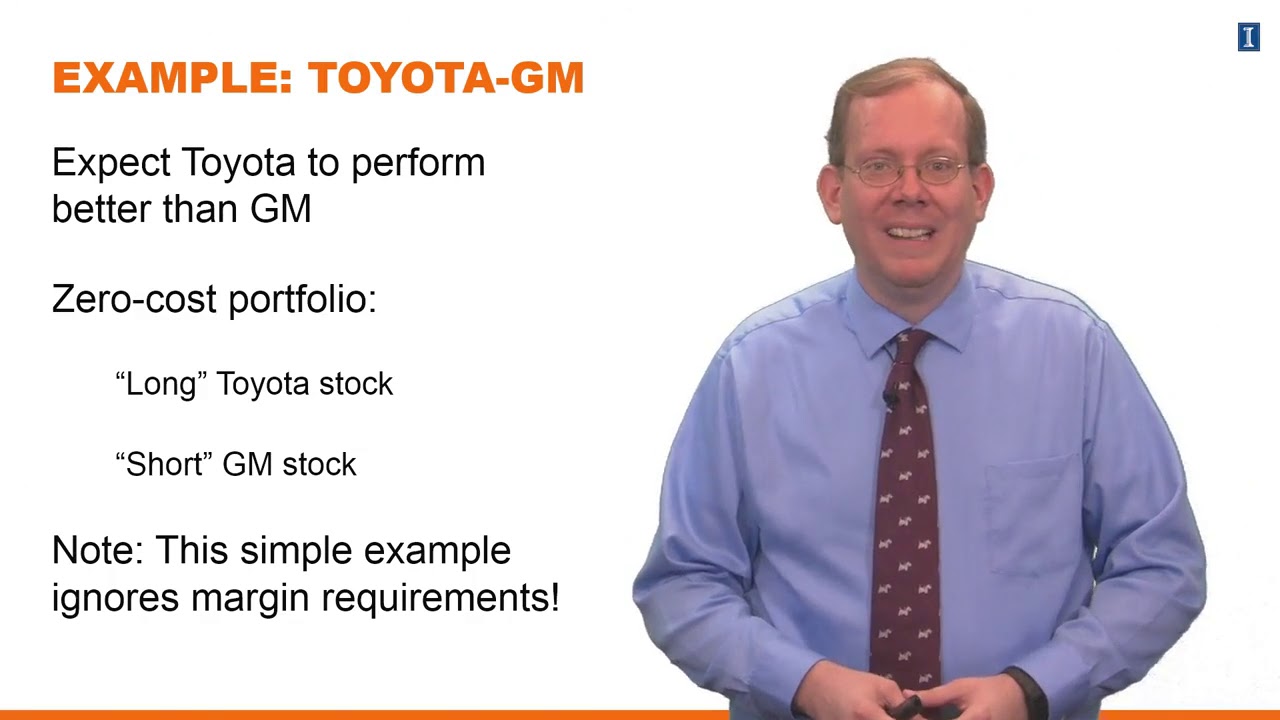
Zero-Cost Portfolio - Investments I: Fundamentals of Performance Evaluation
Автор: Wynnie Eilis
Загружено: 2020-11-08
Просмотров: 325
Описание:
Link to this course:
https://click.linksynergy.com/deeplin...
Zero-Cost Portfolio - Investments I: Fundamentals of Performance Evaluation
Financial Management Specialization
In this course, we will discuss fundamental principles of trading off risk and return, portfolio optimization, and security pricing. We will study and use risk-return models such as the Capital Asset Pricing Model (CAPM) and multi-factor models to evaluate the performance of various securities and portfolios. Specifically, we will learn how to interpret and estimate regressions that provide us with both a benchmark to use for a security given its risk (determined by its beta), as well as a risk-adjusted measure of the security’s performance (measured by its alpha). Building upon this framework, market efficiency and its implications for patterns in stock returns and the asset-management industry will be discussed. Finally, the course will conclude by connecting investment finance with corporate finance by examining firm valuation techniques such as the use of market multiples and discounted cash flow analysis. The course emphasizes real-world examples and applications in Excel throughout. This course is the first of two on Investments that I am offering online (“Investments II: Lessons and Applications for Investors” is the second course).
The over-arching goals of this course are to build an understanding of the fundamentals of investment finance and provide an ability to implement key asset-pricing models and firm-valuation techniques in real-world situations. Specifically, upon successful completion of this course, you will be able to:
• Explain the tradeoffs between risk and return
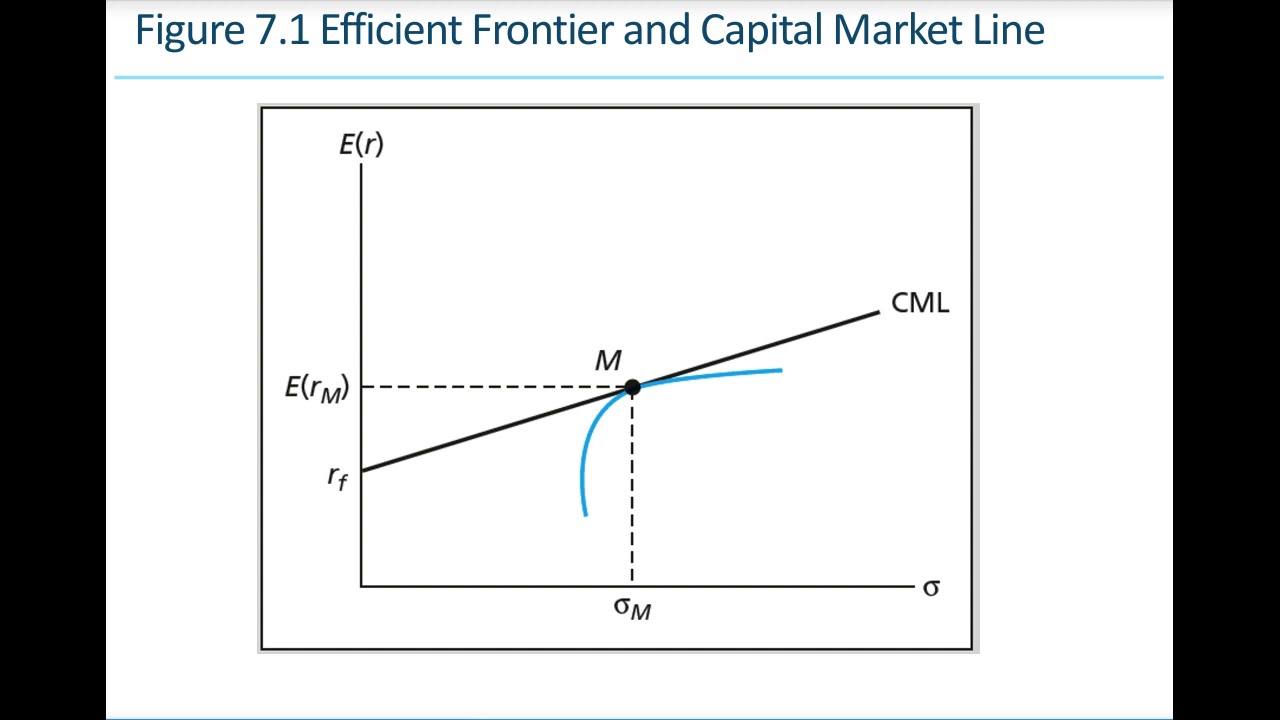
• Form a portfolio of securities and calculate the expected return and standard deviation of that portfolio
• Understand the real-world implications of the Separation Theorem of investments
• Use the Capital Asset Pricing Model (CAPM) and 3-Factor Model to evaluate the performance of an asset (like stocks) through regression analysis
• Estimate and interpret the ALPHA (α) and BETA (β) of a security, two statistics commonly reported on financial websites
• Describe what is meant by market efficiency and what it implies for patterns in stock returns and for the asset-management industry
• Understand market multiples and income approaches to valuing a firm and its stock, as well as the sensitivity of each approach to assumptions made
• Conduct specific examples of a market multiples valuation and a discounted cash flow valuation
This course was previously entitled “Financial Evaluation and Strategy: Investments” and was part of a previous specialization entitled Improving Business and Finances Operations, which is now closed to new learner enrollment. “Financial Evaluation and Strategy: Investments” received an average rating of 4.8 out of 5 based on 199 reviews over the period August 2015 through August 2016. You can view a detailed summary of the ratings and reviews for this course in the Course Overview section.
This course is part of the iMBA offered by the University of Illinois, a flexible, fully-accredited online MBA at an incredibly competitive price. For more information, please see the Resource page in this course and onlinemba.illinois.edu.
Stock, Finance, Investment Strategy, Investment
One of the best courses across platforms- classroom or online that I have taken. Huge real life value addition. Professor Scott has worked incredibly hard in putting this valuable content.,I've taken several investments classes on Coursera and this is the best presentation of CAPM I've seen. Really systematic and entertaining presentation. I will recommend it to friends.
In Module 1, we will build the fundamentals of portfolio formation. After providing a brief refresher of basic investment concepts (our toolkit), a summary of historical patterns of stock returns and government securities in the U.S. is provided. We then consider general examples of portfolio choice to highlight the tradeoffs between “risk” and return. We end the module with a discussion of dominated assets and efficient portfolio formation, emphasizing real-world examples and practice in Excel solving for the optimal portfolio given certain constraints (such as the amount of volatility we will accept in our portfolio).
Zero-Cost Portfolio - Investments I: Fundamentals of Performance Evaluation
Copyright Disclaimer under Section 107 of the copyright act 1976, allowance is made for fair use for purposes such as criticism, comment, news reporting, scholarship, and research. Fair use is a use permitted by copyright statute that might otherwise be infringing. Non-profit, educational or personal use tips the balance in favour of fair use.
Повторяем попытку...
Доступные форматы для скачивания:
Скачать видео
-
Информация по загрузке: