Accounting for Uncertain Tax Positions With Example | CPA Exam and Intermediate Accounting
Автор: Farhat Lectures. The # 1 CPA & Accounting Courses
Загружено: 2024-04-06
Просмотров: 3316
Описание:
In this video, we discuss accounting for uncertain tax position as it is covered on the CPA exam and intermediate accounting course.
Click to start your free trial: https://farhatlectures.com/
0:00 Introduction
Here's a summary of the video:
Uncertain Tax Position (UTP) Defined (0:21-0:35): An uncertain tax position arises when a company is unclear about a tax situation, and that position might not be accepted by tax authorities during an audit.
Aggressive Position (2:36): This is when a company takes a deduction or credit, but they are not sure if it is legitimate.
US GAAP Perspective (5:54-6:11): US GAAP has guidelines for companies to determine if a tax position is likely to be accepted during an audit.
Test 1 (6:15-7:01): A company needs to determine if there is a greater than 50% chance that their tax position will be accepted if the tax authority examines their books. If it's less than 50%, then they should not include this potential benefit in their financial records.
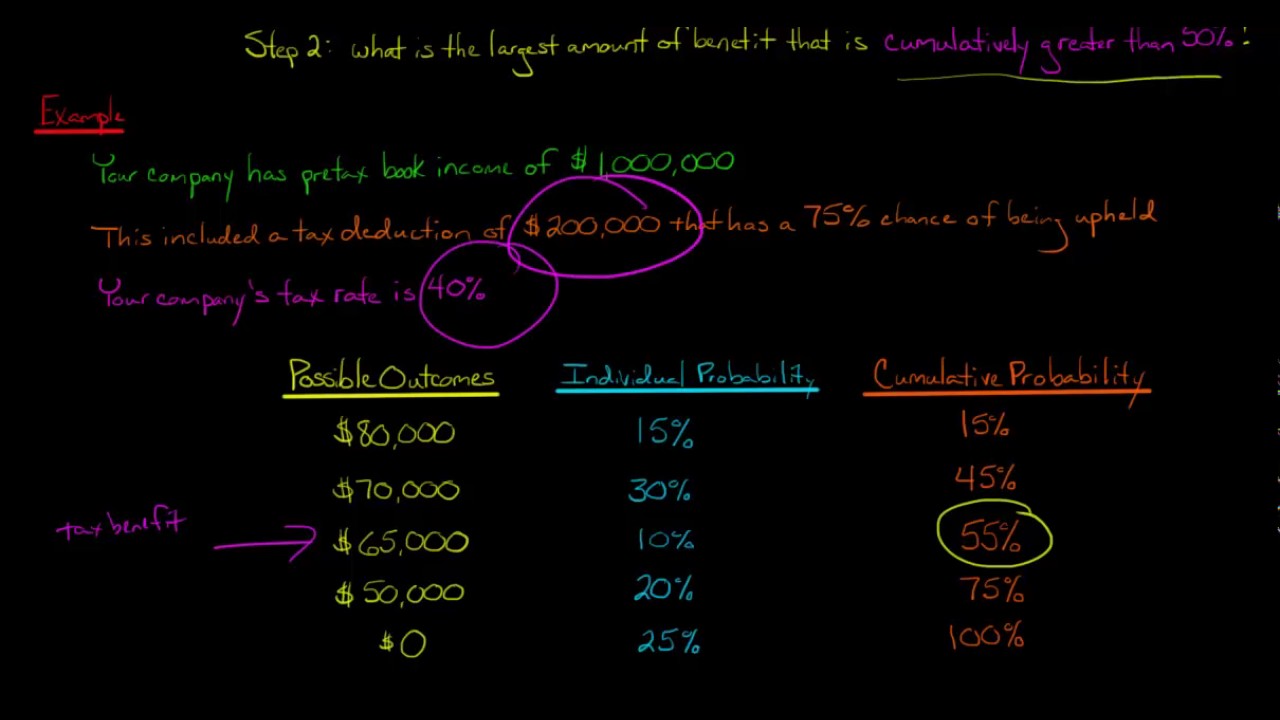
Test 2 (8:04-9:13): If a company determines its tax position is more than 50% likely to be approved, they need to figure out how much to adjust their tax assets and liabilities in their financial record.
Example (12:44-18:48): Tech Innovation takes a questionable $100,000 deduction, resulting in a $21,000 tax savings. They believe there is a greater than 50% chance that the deduction will be sustained if audited. The company should recognize a tax savings of only $15,000 for financial statement purposes.
Removing Liability (19:05-20:56): This can occur if you are audited and settle the liability, the statutes of limitation expire, or there are new rules or court cases that clarify the ambiguity.
The concept of an uncertain tax position (UTP) pertains to the ambiguity surrounding the acceptability of a tax stance adopted by a corporation, with regard to its sustainability under scrutiny or audit by tax authorities. According to the principles set out by the U.S. Generally Accepted Accounting Principles (GAAP), there must exist a level of confidence that is "more-likely-than-not" for a company to include a tax benefit in its financial statements. This threshold ensures that only those tax benefits which have a greater than fifty percent likelihood of being sustained upon examination are recorded, reflecting a conservative approach to accounting for tax positions.
Detailed Scope of Tax Positions
The scope of what constitutes a tax position under this framework is broad and encompasses several types of actions or decisions a business might take regarding its taxes, including but not limited to:
Tax Deductions: This is the most common type of tax position where a company claims a deduction on its tax return to reduce its taxable income. Examples include deductions for business expenses, depreciation, and charitable donations.
Decision to Not File a Tax Return: In some cases, a business might decide not to file a tax return for a particular jurisdiction if it believes it doesn't have a filing requirement due to lack of nexus or taxable presence. This decision carries inherent uncertainty, especially if tax authorities have a different view regarding the company's obligations.
Allocation or Shift of Income Between Jurisdictions: Companies operating in multiple jurisdictions may take positions on how income is allocated or shifted between these regions for tax purposes. This includes strategies like transfer pricing, where prices are set for transactions between related entities in different tax jurisdictions, affecting where income is reported and taxed.
Characterization of Income: How a company chooses to characterize or report income on its tax return can also be a tax position. This might include decisions on whether income is active or passive, ordinary or capital gains, which can significantly affect tax treatment.
Decision to Exclude Reporting Taxable Income: A business may decide not to report certain income it deems non-taxable. This decision, based on interpretations of tax law, can lead to disputes with tax authorities if they have a differing interpretation.
Classification of Transactions, Entities, or Positions as Tax Exempt: Finally, a company may take a position that a particular transaction, entity (like a partnership or trust), or another position (e.g., an investment) is exempt from tax. Such positions are subject to scrutiny, especially if they significantly reduce taxable income.
In summary, the concept of an uncertain tax position under U.S. GAAP encompasses a wide range of tax-related decisions and actions taken by a company. These positions are characterized by an inherent level of uncertainty regarding their acceptance by tax authorities, necessitating a more-likely-than-not threshold of confidence for their inclusion in financial statements.
#cpaexaminindia #cpaexam #accountingmajor
Повторяем попытку...
Доступные форматы для скачивания:
Скачать видео
-
Информация по загрузке: