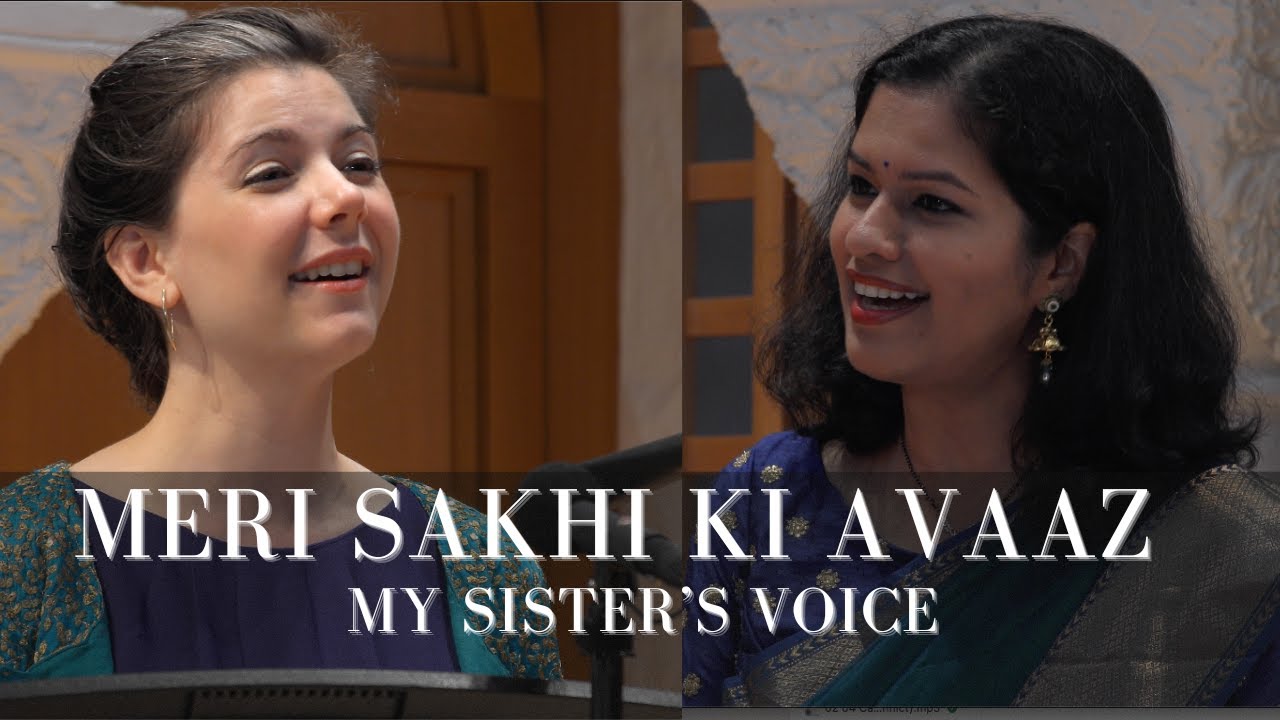
Meri Sakhi Ki Avaaz - My Sister's Voice (chamber version) -- Reena Esmail
Автор: reenaesmail
Загружено: 2025-05-26
Просмотров: 48194
Описание:
0:00 Two Flowers -- Do Kaliyaan
7:14 Sweet is the Voice -- Meri Sakhi Ki Avaaz
16:42 Mirror | Opposite -- Aks aur Saaya
Saili Oak - Hindustani vocals
Lucy Fitz Gibbon - soprano
Salastina Music Society
Maia Jasper White, Kevin Kumar - violins
Meredith Crawford - viola
Yoshika Masuda - cello
Hyejin Kim - piano
Directed by Louis Ng, Lenson Productions
Lyrics:
I.
Two flowers, one branch
Ek daali, do kaliyaan
In this garden of life
Is zindagi ke bagh mein
Bahine bane saheliyaan (sisters become soulmates)
My sister, my soul
Meri sakhi, saheliyaan
II.
Meri sakhi ki avaaz (my sister’s voice)
Sweet is the voice of my sister
ranj mein
in the season of sorrow
umeed ka ehsaas ([gives] a feeling of hope)
III.
Saaya nahi, pratibimb hai bahin
Not a shadow but a reflection of my sister
Vibhil chabi, ek dusre ka darpan
Lucid image, a mirror of one another
My sister is both my mirror and my opposite
Vo aks hai aur saaya bhi
-----
Meri Sakhi Ki Avaaz, at its core, is a piece about sisterhood across cultures (btw: sakhi is actually closer in meaning to the word 'girlfriend' or 'soul-sister', not sister - but I felt that 'sister' would better express the close relationship between these two singers).
Each movement’s short text epitomizes the one of the many facets of having and being a sister. It is also about what sisterhood looks like when expanded beyond a single family or a single culture— when two women, from two different musical cultures create space for one another’s voices to be heard.
The first movement is a modern take on Delibes’s famous Flower Duet from the opera Lakme. In the opera, Delibes depicts two Indian women singing by a river. In 1880s France, this orientalism was a point of entry into another culture far away. But today, Indian culture is so prevalent in the West -- so this is my attempt to show you what an ‘updated’ version of this duet might sound like with a Hindustani singer actually present, singing in Raag Yaman. So much of Western art music is about creating dialogue between the old and new, responding to our vast canon and musical tradition. And for the work I do, I couldn’t think of a better jumping-off point than this classic, much-loved duet.
For the second movement, I wrote a Hindustani bandish in ati-vilambit— a tempo that is so slow that the Western metronome doesn’t even have a setting for it. While Hindustani musicians would normally stay in one key for an entire piece (and for most of their professional career), this movement modulates once every avartan, or rhythmic cycle, and also allows space for improvisation within a very rigid western orchestral structure. Additionally, the singers are singing in two different raags — the Hindustani singer is in Charukeshi, while the soprano is in Vachaspati – and as the movement goes on, the switches between the raags get closer and closer.
The third movement is about mirrors and opposites. I used two different raags that are actual mirror images of one another: Bhup, a light and sweet raag, and Malkauns, a darker, heavier raag. You will hear the shifts in tonality as the phrases cross from one into the other. Also embedded in this piece is a classic Hindustani jugalbandi (a musical competition) that is done completely in mirror image, and with both Indian and Western solfege systems, and it ends with both women crossing into one another’s musical cultures: the Hindustani singer begins singing phrases in English and the soprano joins in for a tarana in harmony.
Повторяем попытку...
Доступные форматы для скачивания:
Скачать видео
-
Информация по загрузке:


