Khatyn: A Village Erased for a Single Partisan
Автор: War of Change
Загружено: 2025-11-08
Просмотров: 202
Описание:
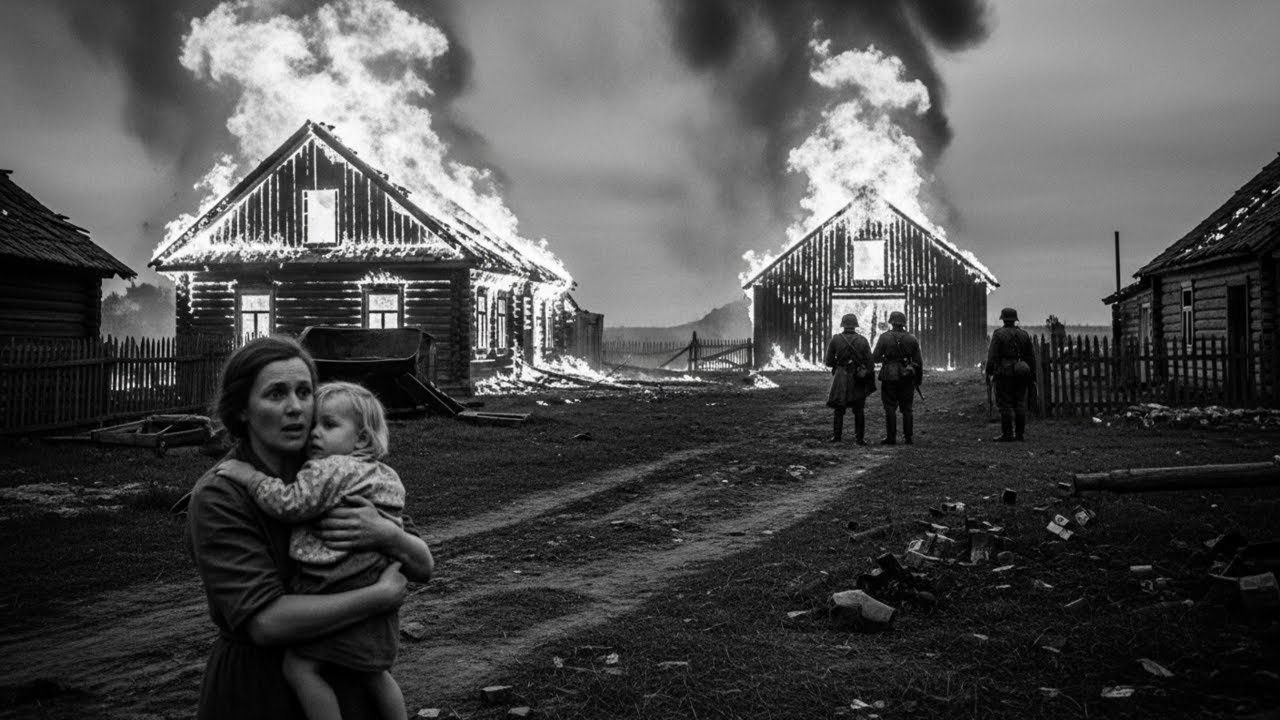
March 22, 1943: In the forests of occupied Belarus, German security forces and Ukrainian auxiliary troops launch a brutal reprisal after a partisan attack kills a single German officer. Their response is not tactical — it is extermination. The village of Khatyn is surrounded, its residents driven into a shed, and set ablaze. Those who try to escape are shot. In less than an hour, the village ceases to exist. Children, mothers, the elderly — all consumed in a fire meant to send a message of terror.
This documentary examines the Khatyn Massacre, the broader campaign of anti-partisan retaliation across Belarus, and how the memory of one erased village became a symbol of the thousands like it — villages wiped from the map because they lived within a war of shadows and survival.
🎯 KEY TOPICS COVERED:
The partisan war in Belarus: tactics, sabotage, and German retaliation policy
The killing of Oberleutnant Hans Woellke and escalation of reprisals
The massacre at Khatyn: what happened and who carried it out
Testimony of the few survivors — including those who witnessed family members burn alive
The broader pattern: over 600 Belarusian villages destroyed during occupation
Post-war remembrance and memorialization in Soviet and modern Belarus
How Khatyn is often misremembered or confused with Katyn — and why that matters historically
📅 CRITICAL DATES EXPLORED:
1941–1943 – German occupation and intensifying partisan resistance
March 22, 1943 – Destruction of Khatyn village
1944 – Operation Bagration liberates Belarus, revealing mass civilian atrocities
1969–1970 – Construction of the Khatyn Memorial Complex
Post-1991 – Historical reinterpretation and legacy debates
Drawing on survivor testimony, partisan reports, Einsatzgruppen documents, Soviet investigative archives, and wartime German correspondence, this documentary illuminates both the local human story and the broader machinery of occupation violence. Khatyn was not a battlefield. It was a warning — a place where ordinary people paid for the actions of others in a war without mercy.
SOURCES
Primary Historical Sources:
Soviet Extraordinary State Commission Reports on Atrocities in Belarus
Belarusian partisan activity logs and communication records
German occupation and security operations documents
Published Historical Works:
Bloodlands by Timothy Snyder (2010) — context of mass violence in Eastern Europe
The Destruction of the Belarusian Village by A. Adamushko (2004)
The Partisan War in Belarus by Kenneth Slepyan (1993)
Memoir and Oral Testimony:
Survivor interviews preserved by the Khatyn Memorial Archive
Post-war depositions and testimony from war crimes trials
#Khatyn #WW2 #Belarus #EasternFront #Occupation #PartisanWar #KhatynMassacre #WorldWar2History #NeverForget
Повторяем попытку...
Доступные форматы для скачивания:
Скачать видео
-
Информация по загрузке: