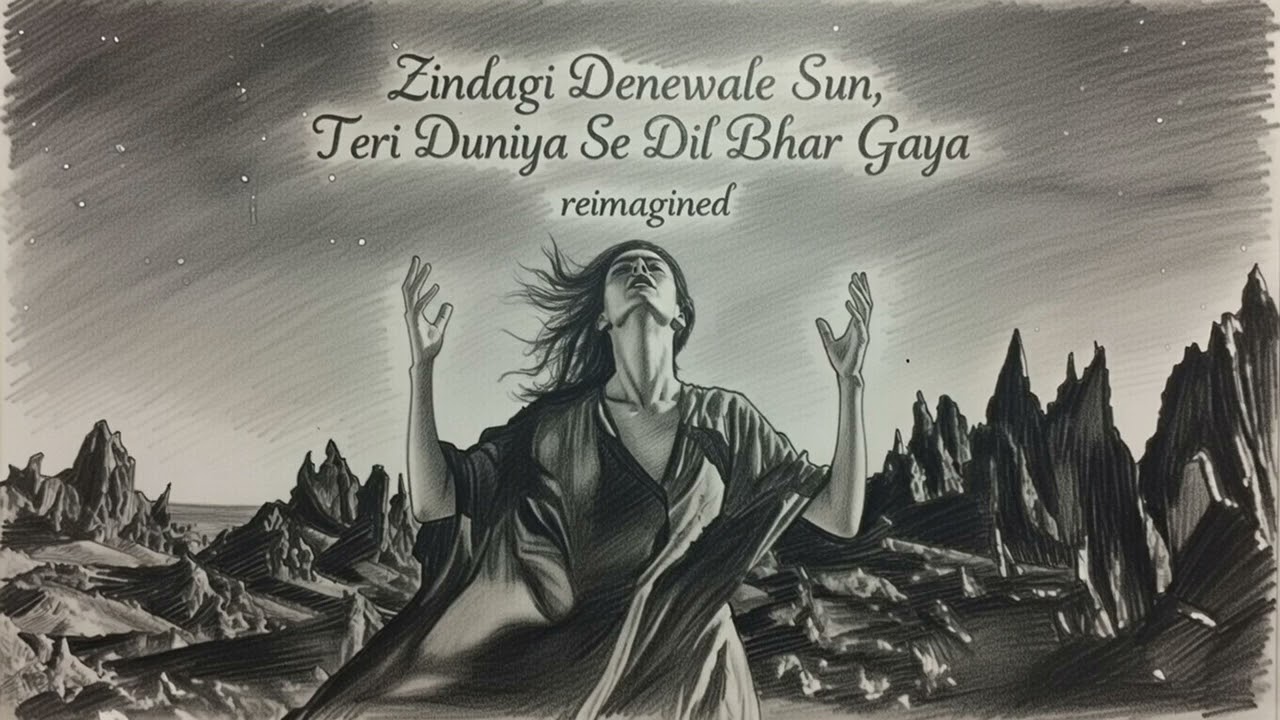
Ai Pyaar Teri Duniyaa | Reimagined | ऐ प्यार तेरी दुनिया से हम बस इतनी निशानी लेके चले
Автор: Zeeva
Загружено: 2026-02-19
Просмотров: 2
Описание:
Jhanjhar (1953), directed by Kidar Sharma and produced by C. Ramchandra under his banner, is a Hindi drama blending romance, sacrifice, and tragedy. The plot revolves around two brothers, Tej (Om Prakash) and Ruldu (Sajjan), and their daughters: the graceful Rupa (Kamini Kaushal) and the spirited Seeti (Usha Kiran). The story unfolds in the scenic far-eastern regions of India, where Paras (Motilal), a despondent man, attempts suicide but is rescued by the selfless Seeti. However, Paras harbors deep love for Rupa, creating a poignant love triangle rooted in unrequited affection and familial bonds.
Tension escalates when the villainous Yama (K.N. Singh) kidnaps Rupa. In a heroic act, Seeti infiltrates Yama's lair, rescues Rupa, and perishes alongside the antagonist in a dramatic confrontation. This sacrifice paves the way for Paras and Rupa's union, underscoring themes of selflessness and redemption. Despite a stellar cast and melodious score by C. Ramchandra, the film was critiqued for its clichéd, overused storyline, with its music emerging as the redeeming highlight.
The song "Ai Pyaar Teri Duniyaa Se Ham," sung by Lata Mangeshkar with lyrics by Rajendra Krishan, is placed amid the emotional climax, likely during Seeti's moment of heartbreak or farewell, as she realizes her love for Paras is unreciprocated and chooses sacrifice. Its melancholic melody amplifies the film's pathos, evoking despair over betrayal.
Meaning-wise, the lyrics depict a jilted lover abandoning a faithless world, carrying only a "broken heart," "crying youth," and "tears" as remnants—symbolizing the ruins of shattered dreams ("bahaarein bech daali, phoonk daala aashiyaane ko").
Philosophically, it echoes Vedantic detachment: love as illusory (maya), urging transcendence from attachment. The act of leaving with mere "ashes" critiques materialism, promoting inner resilience amid impermanence, akin to Buddhist notions of suffering (dukkha) from desire. This introspective layer elevates the song beyond filmi sentiment, reflecting life's transient joys and the wisdom in release.
Повторяем попытку...

Доступные форматы для скачивания:
Скачать видео
-
Информация по загрузке: