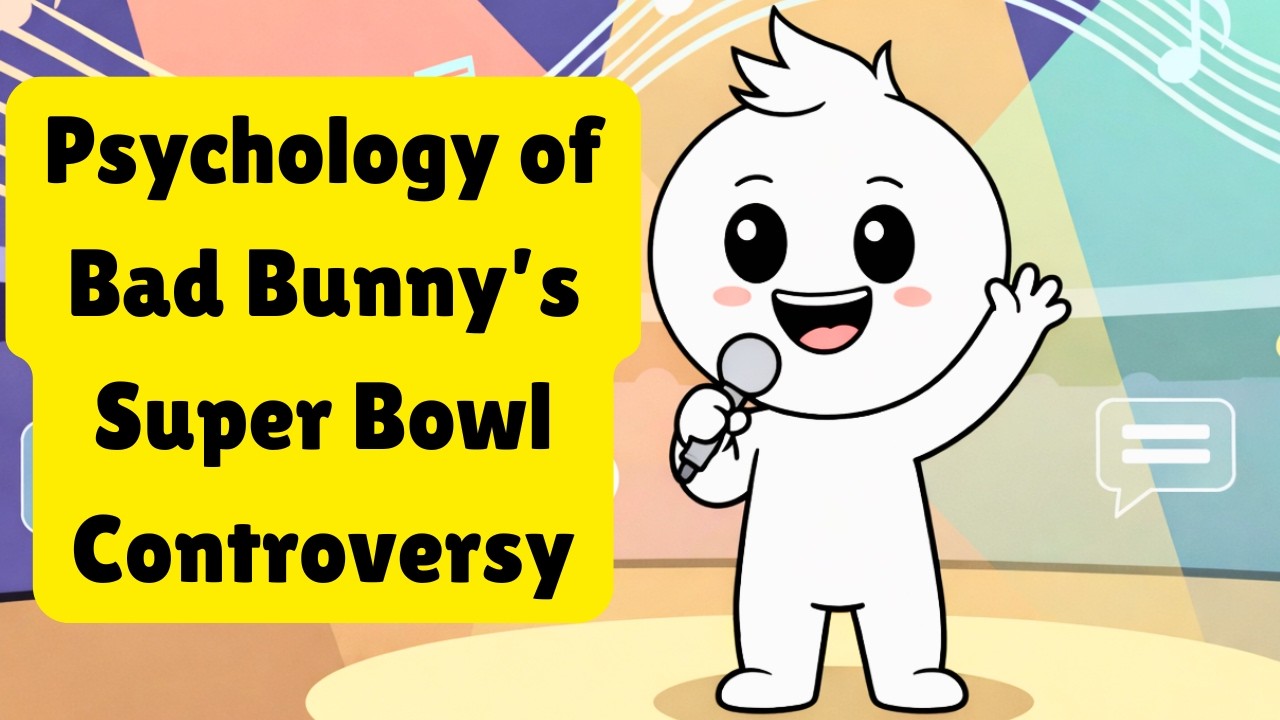
The Psychology Behind the Controversy of Bad Bunny’s Super Bowl Performance
Автор: DecodedPsychologyTV
Загружено: 2026-02-11
Просмотров: 353
Описание:
In this video, we break down the psychology behind why Bad Bunny's Super Bowl halftime show became one of the most divisive cultural moments in recent memory. Using psychological research and behavioral analysis, you'll discover the mental mechanisms, identity processes, and neurological patterns that explain why millions of people had such intense—and completely opposite—reactions to the same performance. From identity fusion and threat perception to moral outrage addiction and tribal signaling, this video explains why the controversy was never really about the music—and why your reaction reveals more about your brain's wiring than the actual performance.
We also explore:
The psychology of cultural threat perception and identity defense
Why some people celebrated the performance while others felt displaced
The neuroscience of moral outrage and social media amplification
How cultural change triggers automatic threat responses in the brain
The role of tribal membership, dopamine, and cognitive dissonance
Whether the controversy represents genuine cultural debate or algorithmic manipulation
If you've ever wondered why people have such extreme reactions to cultural moments—or felt confused by everyone's intense opinions about a halftime show—this video may explain why brains process cultural representation so differently.
Why This Video Matters
In a world driven by viral controversies, tribal politics, and cultural warfare, understanding the psychology of collective outrage reveals how identity, belonging, and social media algorithms shape our emotional reactions to cultural events.
References:
Richeson, J. A., & Sommers, S. R. (2016). Toward a social psychology of race and race relations for the twenty-first century. Annual Review of Psychology, 67, 439-463.
Swann, W. B., Jetten, J., Gómez, Á., Whitehouse, H., & Bastian, B. (2012). When group membership gets personal: A theory of identity fusion. Psychological Review, 119(3), 441-456.
Brady, W. J., Wills, J. A., Jost, J. T., Tucker, J. A., & Van Bavel, J. J. (2017). Emotion shapes the diffusion of moralized content in social networks. Proceedings of the National Academy of Sciences, 114(28), 7313-7318.
Crockett, M. J. (2017). Moral outrage in the digital age. Nature Human Behaviour, 1(11), 769-771.
Van Bavel, J. J., & Pereira, A. (2018). The partisan brain: An identity-based model of political belief. Trends in Cognitive Sciences, 22(3), 213-224.
Disclaimer: This channel is created for educational and informational purposes only. It is not intended to replace professional psychological, medical, or therapeutic advice.
#Psychology #HumanBehavior #CulturalPsychology #SuperBowl #BadBunny #SocialPsychology #Neuroscience #MoralOutrage
Повторяем попытку...
Доступные форматы для скачивания:
Скачать видео
-
Информация по загрузке: