Condensing Unit Install Practices (RSES NATE Prep)
Автор: HVAC School
Загружено: 2020-03-01
Просмотров: 15250
Описание:
In our new series, Bryan uses some resources from RSES NATE Prep to do some quick videos full of useful HVAC tips and data. This video in the series covers condensing unit install practices.
When you first arrive at the site, check for any unit damage that may have occurred during transport. Be sure to double-check the nameplate for voltage requirements and verify that you have the correct unit (230v vs. 208v, for example).
Many new units use R-410A, which has different oil (POE instead of mineral oil), charging methods (charge in the liquid state), and system pressures (50-70% higher) than R-22 systems. The POE oil is hygroscopic and can become contaminated when it comes into contact with moisture. Charging in the liquid state requires you to invert the tank and avoid getting liquid into the compressor. (Accumulators may trap liquid refrigerant and may lead to overcharging, so weighing in the charge is critical.)
The location of an outdoor unit is vital. You need the unit to have at least 5 feet of clearance above the unit and about 2 feet of clearance between walls and plants. In climates that experience snow, elevation needs to be taken into consideration. There also needs to be enough room for condensate drainage, and it's best to avoid dryer and kitchen vents, windows, and roof drainage. The pad should be level, free of vibration, and able to support the unit well. Some places require you to anchor systems to the pad by code, but it's a good practice that can prevent property damage in situations with high winds.
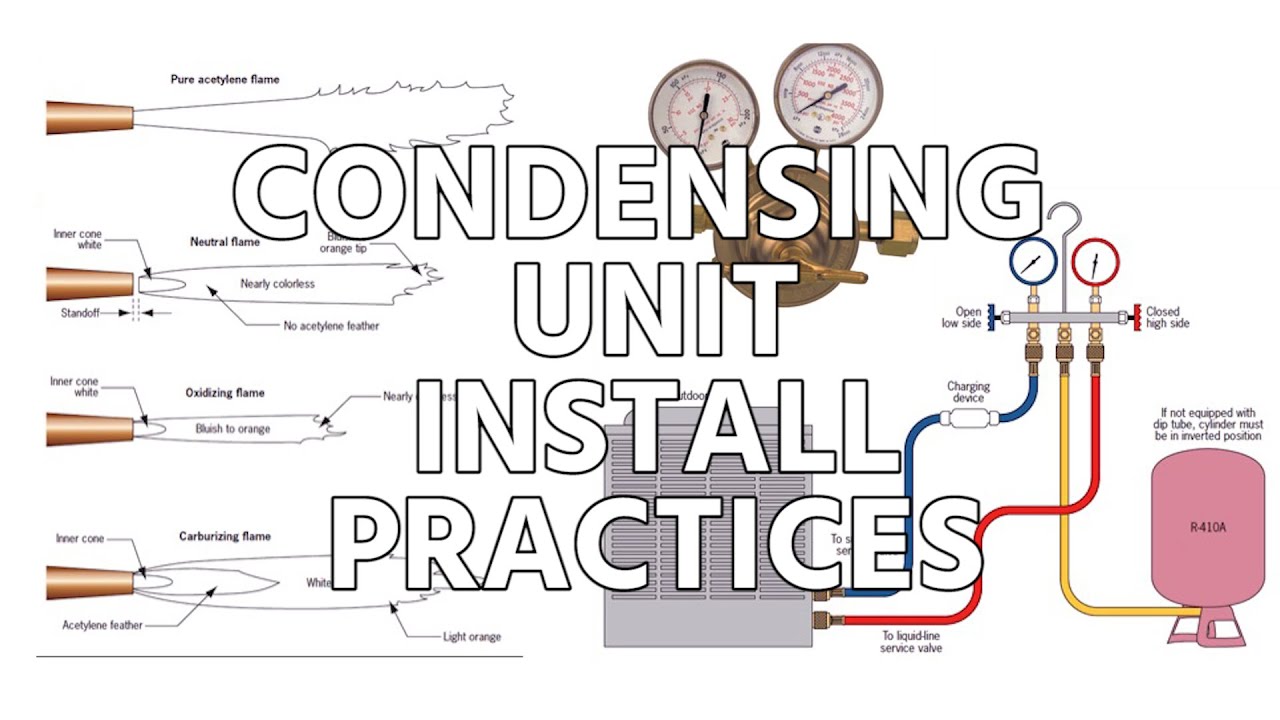
Refrigerant piping needs to be ACR tubing ONLY; plumbing lines are not acceptable. Oxyacetylene and air-acetylene torches are typically used for brazing joints. When brazing joints, be sure to flow nitrogen to prevent the buildup of oxides on the inner wall of the tubing. Purging with nitrogen at a relatively high velocity before brazing will displace oxygen from the pipes, and flowing nitrogen at 3-5 SCFH will prevent oxygen from getting in as you braze. When brazing, you must use a proper filler (alloy) and flux based on the metal being brazed; phosphorus typically acts as a fluxing agent in copper-to-copper brazing. Some fluxes are also corrosive and should be wiped off after the brazed joint has been cooled. Brazing differs from soldering in that it occurs at a higher temperature.
When transporting gas-handling cylinders (like oxygen, acetylene, or nitrogen), follow DOT protocols and keep them secured at all times (ideally stored upright). Make sure cylinders are capped and valves are closed when they aren't in use. When using gas-handling cylinders, use appropriate protection; safety glasses and gloves can prevent injuries to your face and hands.
Although oxygen itself isn't flammable, combustion can happen if it's present. Oxygen tanks can be especially dangerous because of how much pressure they are under; a small flame can spiral out of control quickly if that oxygen enters the area. Oxygen should also not come into contact with oil or grease, and it's best to keep oil and grease away from regulators. It's also best not to stand in front of the regulator when you're opening a cylinder (also, be sure to open the valve all the way).
Acetylene is not under as much pressure as oxygen, but it's still highly explosive. As a result, you need to store acetylene cylinders (marked as hazardous) upright and make sure it stays secure during transport.
When you're working with tanks under high pressure, a regulator allows you to reduce the pressure of the gas as it leaves the tank to make it suitable for brazing. These regulators also typically have a relief valve.
When you open cylinder valves, follow all instructions and use back-flash arrestors as needed. Rotate the valve no more than 1.5 turns for best results. It's also a good idea to keep the wrench on the valve as you're using a tank.
Oxyacetylene brazing requires a clean joint, reamed or deburred copper, properly heated copper, and a neutral flame or slightly carburizing flame as opposed to a highly carburizing or oxidizing flame.
When you finish brazing, shut off the torch oxygen valve first and the fuel valve second. Close both cylinder valves and then let the excess gas drain from the torch hoses by opening the torch oxygen valve and then closing it once the gas has drained. Release the spring pressure on the oxygen regulator and then check both high-pressure gauges to verify that the cylinder valves have been completely closed.
Overall, the key is to keep the system clean, dry, and tight.
Visit RSES website here: https://www.rses.org/
Read all the tech tips, take the quizzes, and find our handy calculators at https://www.hvacrschool.com/
Повторяем попытку...
Доступные форматы для скачивания:
Скачать видео
-
Информация по загрузке: