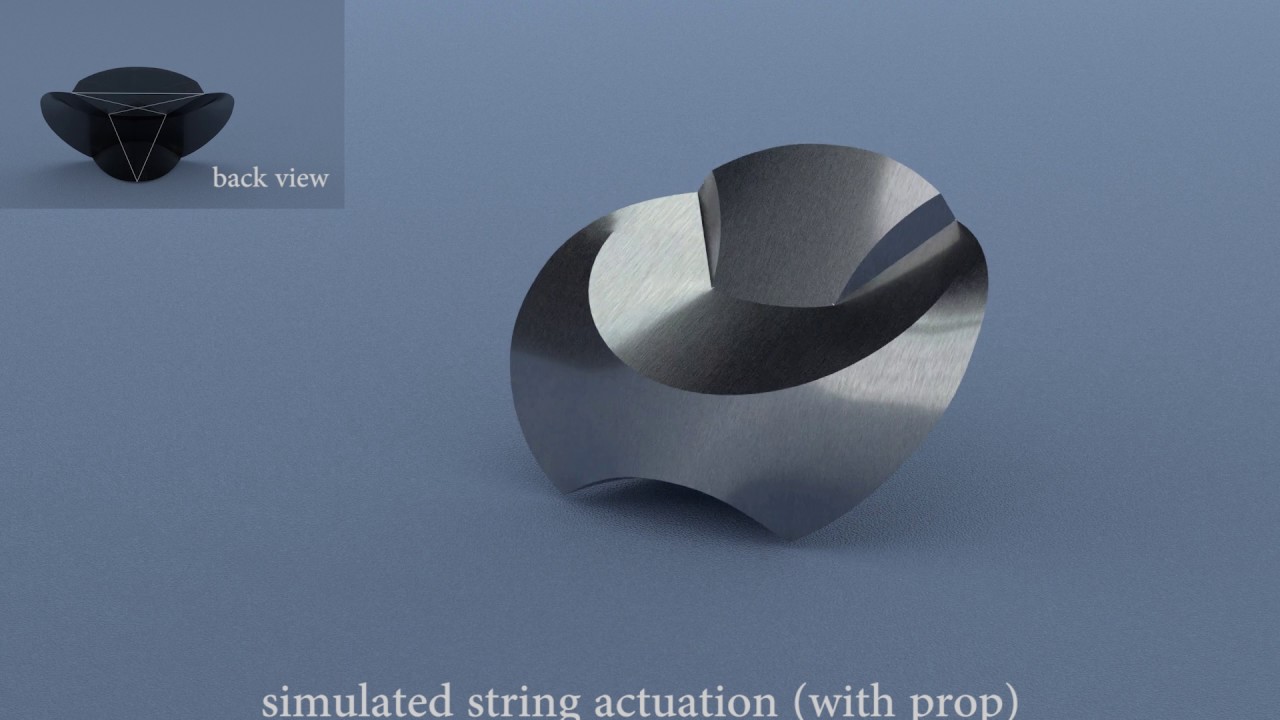
BYU's Origami-inspired Antenna Self-deploys in Zero Gravity
Автор: Brigham Young University
Загружено: 2025-01-13
Просмотров: 14331
Описание:
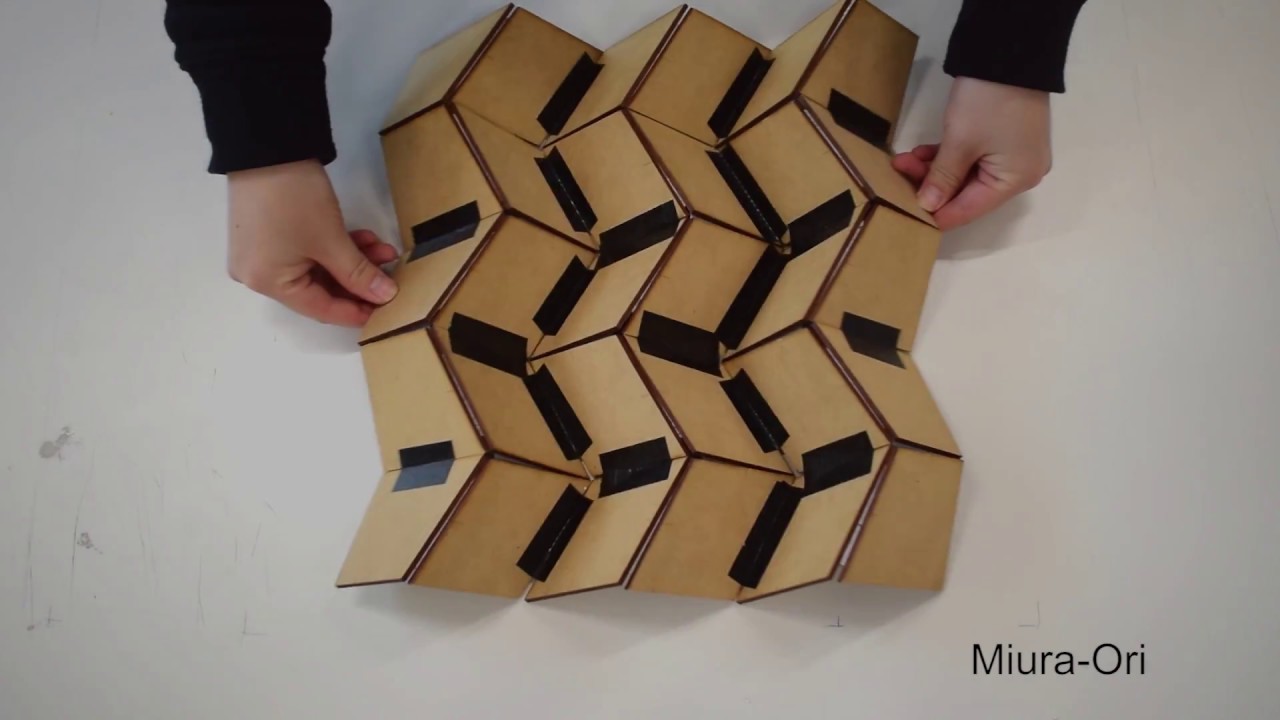
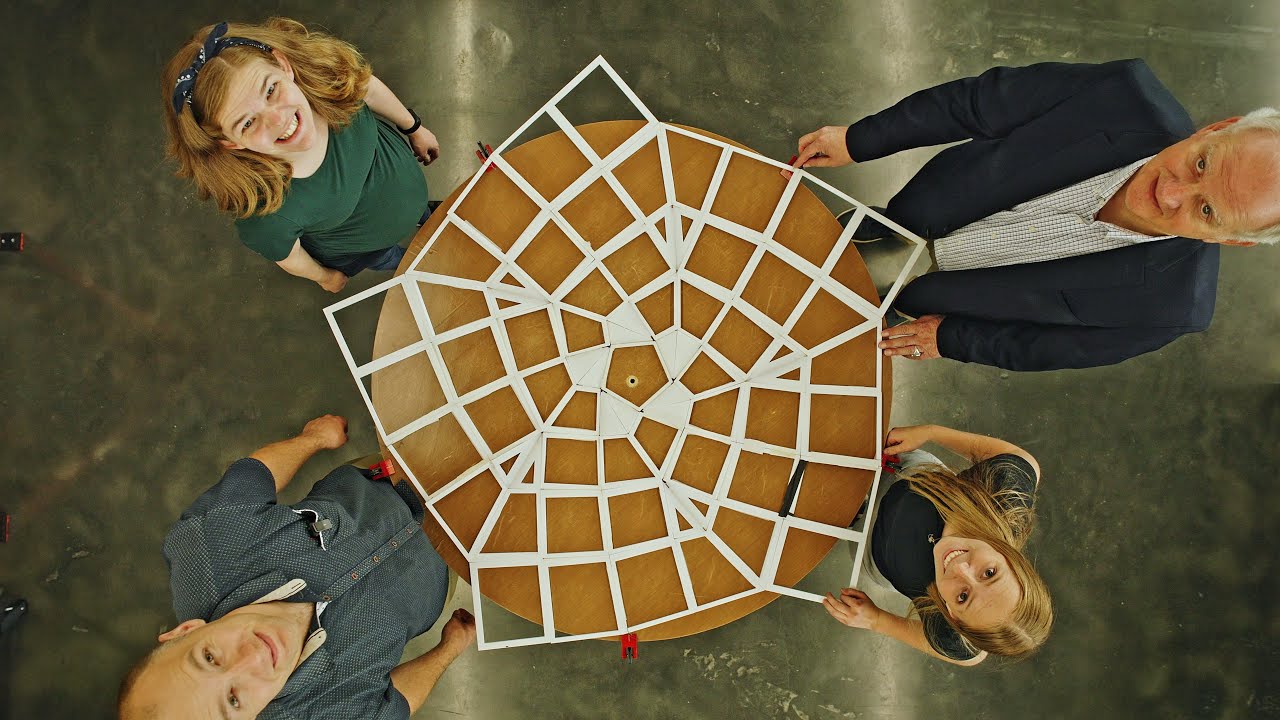
BYU mechanical engineers have created a self-deploying antenna array prototype that stows compactly and then unfolds flat, making it useful for space applications where devices must deploy hands-free, without any human assistance. Creating a large deployable device that unfolds to a flat surface in zero gravity was a challenge, since compliant mechanisms generally are floppy not rigid. BYU mechanical engineers in the Compliant Mechanisms and Robotics Lab, a lab inspired by the folding motions and mathematics of origami, used the university's own technologies for folding thick materials to create the prototype. As part of the process, they also designed a new patented bistable hinge, rugged enough for space, and utilized an unexpected tool (magnets) to create a self-deploying device that snaps into place every time. The antenna project, a collaboration between BYU and Florida International University, was sponsored by the US Air Force.
Read more from BYU News (written by Sharman Gill)
Origami-inspired space tech: BYU mechanical engineers create deployable antenna for NASA and U.S. Air Force
BYU’s Compliant Mechanisms Research lab, inspired by the ancient art of origami, is building a foldable, compact design that could help launch satellite-based systems to space in a rocket. After five years of research, the team led by professors Larry Howell and Spencer Magleby has succeeded in creating foldable antenna systems than can deploy off space rockets and permanently open to enhance satellite systems.
The lab now has two antenna prototypes that are being finalized to present to NASA and the US Air Force. The prototypes are inspired by two origami designs that the researchers adapted to meet their engineering needs of compact design, automatic deployment and long-term stability. They first experimented with origami designs on thin paper and then adapted them to thicker materials with adjustments for increased stability.
Magleby explains that the antenna “folds into a very, very compact cube. That system wants to open on its own, so it would be tied with a wire, and at some point in the flight (once it's in orbit and everything's ready) the wire would be cut, so to speak. And then the system would start to deploy and move away on these booms. So it's held in place, but it's ready to go all the time. There's no power required or anything; it's all strained in there like a spring, ready to start the opening process.”
The main challenge has been in designing a structure that unfolds to a permanently flat antenna. Regular hinges do not work in the harsh space environment. Engineers focused on magnetic hinges as a potential solution. Magnetic attraction naturally forms a “bistable” hinge—one that then requires energy input to separate the magnets. The engineers needed to manipulate this magnetic force.
Post-doctoral researcher, Hunter Pruett, published a paper in 2023 showing how to achieve that energy input or “monostability” in magnetic design. This involves different ways of layering the magnets as well as placing them side-by-side along a hinge, naturally manipulating rotations that pop the compact antenna open once a wire, holding the rectangular package in place, is remotely severed. In a single, stable position the antenna can open into a much larger and more powerful transmission device.
BYU’s highly collaborative group has involved multiple professors, post-doctoral researchers, students, and a continuing cooperation with electrical engineers at Florida International University. Research assistant, Katie Varela, thrives in the collaborative, inclusive, and hands-on environment:
“I love the people that I work with. I think that this lab is really good at being collaborative and supportive of ideas,” Varela said. “ It’s a great environment to learn in and feel like I would be prepared to go work in the real world.”
“[This accomplishment] represents a whole sequence of small inspirations that led to innovations,” Magleby said. “One thing I've loved about this project is that we have not only been able to be inspired by the Holy Ghost or by things that come to us, but also by the work of so many other people. As I look out and see what people have done with origami and art and other things, I think — wow — somehow those people have been inspired to create art that I love.”
Varela said there was no way they could have succeeded in the antenna project without applying the principles of origami. In fact, BYU is a leader in the origami-inspired systems that are transforming engineering. Magleby said the research is also transforming students.
“The product is not only the antenna; to me, the product is the students, and the learning that they've been able to accomplish, and the ways that they've been able to stretch their own thinking,” Magleby said.
Повторяем попытку...
Доступные форматы для скачивания:
Скачать видео
-
Информация по загрузке: