ازبکستان؛ رسم عجیب شب زفاف در ملاء عام🫣
Автор: گردشگر Traveller
Загружено: 2026-02-27
Просмотров: 50
Описание:
This video is a documentary about the country of Uzbekistan
Uzbekistan; The wedding night conducted in public view
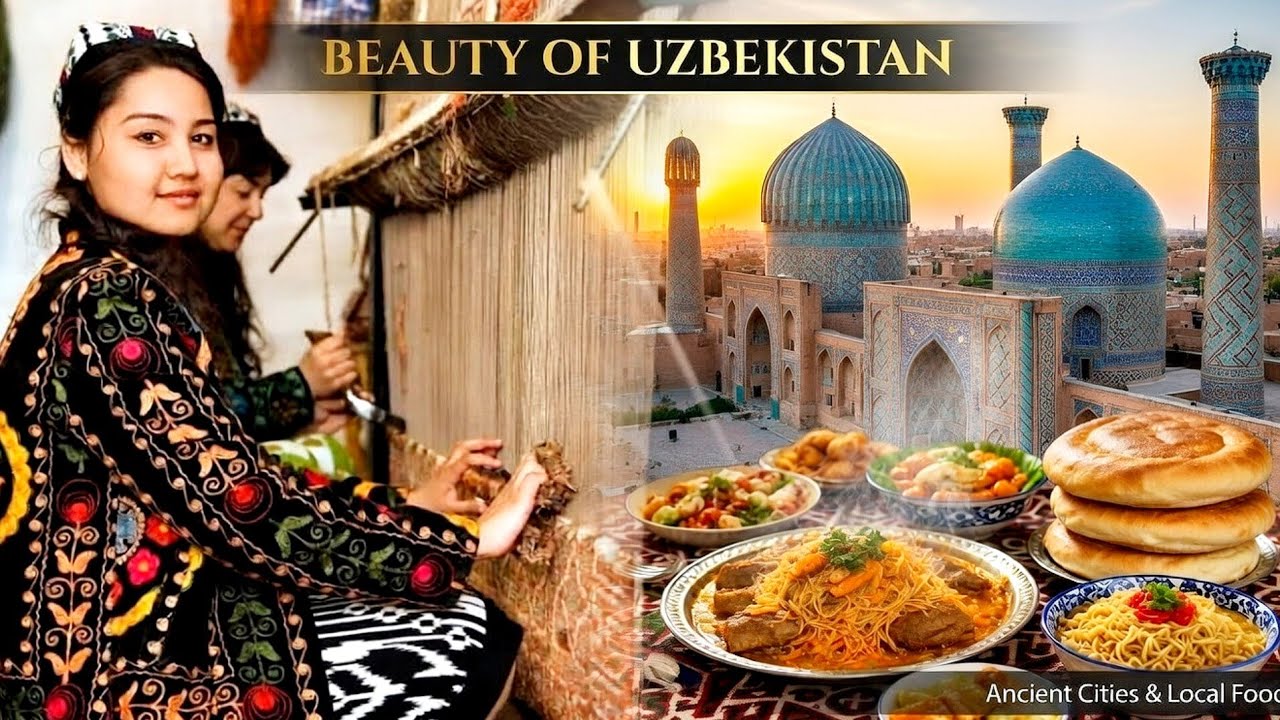
Sometimes, on the map of the world, there is a land whose name is seldom heard, yet its history resounds louder than many cries. A land that rose from the heart of deserts, yet its domes are the color of the sky. A place where a world-conquering conqueror rose from its soil, and in that very soil, a simple man with a lean donkey made the world laugh. Uzbekistan — the beating heart of the Silk Road, the land of Timur and the smiles of Nasreddin. Today, we journey to a country standing between tradition and modernity; a place where the past still breathes and the future slowly opens its eyes.
Uzbekistan is not merely a geography; it is a narrative of passing caravans, of the bells of camels echoing at desert dusk, and of cultures conversing in ancient bazaars. Not long ago in history, this land formed a highway linking China to the Mediterranean. Spicery, silk, gold, and ideas all passed across its soil. Bukhara and Samarkand were luminous beacons of knowledge; philosophy and mathematics were taught in their madrasas, and the stars were counted in their observatories. Yet history never remains tranquil, and at times it turns with the thunder of galloping hooves.
From this very soil arose a man whose name has echoed through centuries: Amir Timur. With iron resolve, he built a vast empire stretching from the shores of India to the gates of Anatolia. In some lands, his name is bound to destruction; yet in Uzbekistan he stands as a symbol of national strength and grandeur. He chose Samarkand as his capital and transformed it into the most splendid jewel of Central Asia — domes that still shimmer turquoise beneath the sun. Timur remains a dual figure in history: builder and destroyer, hero and a heavy shadow upon the memory of nations.
Alongside such grandeur and severity, another figure emerged from this land: Nasreddin. A man who spoke simply, yet whose words were deeper than many sermons. Through humor he critiqued power; through laughter he challenged dogma. Perhaps it is this spirit that has kept the people of this land resilient through centuries of upheaval.
In Uzbekistan, marriage is not merely the union of two individuals; it is the union of two families. Celebrations are expansive and magnificent; halls are adorned and music resonates until midnight. Yet in some traditional regions, older beliefs still persist — beliefs concerning a bride’s purity and its importance in the eyes of the family. In the past, this could become a symbol of familial honor. Today, however, in major cities such views are gradually fading. The younger generation approaches love and marriage differently, and dialogue, understanding, and choice are slowly replacing rigid traditions.
Uzbekistan is a predominantly Muslim country, yet its social structure bears a secular imprint shaped by decades under Soviet rule. In Tashkent, young women and men study side by side at universities; dress is a personal choice, and cafés and public spaces serve as meeting grounds for youth. Nevertheless, in smaller towns, tradition retains a stronger presence. Modern Uzbekistan stands in balance between reverence for the past and a longing for the future.
The nights of Tashkent are calm yet alive. Cafés glow, restaurants host families and young people, and soft music fills the air. Public safety gives visitors a sense of ease. Nightlife here is not marked by excess, but rather by a culture of quiet, respectful social gathering.
If Uzbekistan could be captured on a single plate, that plate would be plov — rice blended with carrots and meat, its aroma drifting through city streets. Samsa, clay-oven bread, lagman, and shashlik each form part of the identity of this cuisine. And green tea is ever present, a gentle bond between guest and host.
Samarkand is like a turquoise poem set within history. Bukhara, with its silent lanes and earthen walls; Khiva, a city where time seems to stand still; and Tashkent, a capital that carries both the Soviet past and a modern face side by side.
After the collapse of the Soviet Union in 1991, Uzbekistan gained independence. It is structured as a presidential republic. For many years it was governed under centralized leadership, and in recent years steps toward economic reform have begun. The country’s economy rests upon agriculture — especially cotton — as well as gold and natural gas, while tourism is gradually gaining importance.
@travellerfarsi
#Uzbekistan #SilkRoad #CentralAsia #Samarkand #Bukhara #Tashkent #AmirTimur #Nasreddin #SilkRoadHistory #IslamicArchitecture #TravelUzbekistan #CulturalHeritage #CentralAsianCulture #HiddenDestinations #HistoricalJourney
Повторяем попытку...
Доступные форматы для скачивания:
Скачать видео
-
Информация по загрузке: