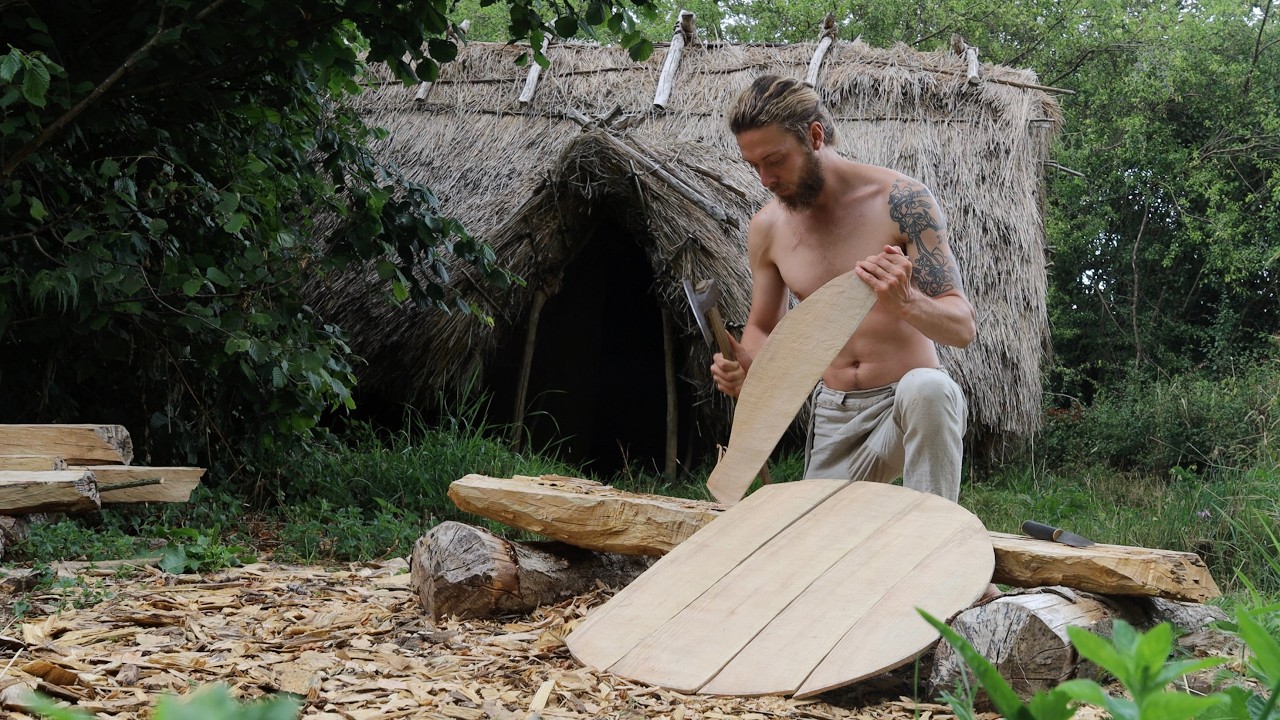
Building a Medieval Cob Oven and Baking Bread - Part II | Anglo-Saxon Romano-British Updraft Furnace
Автор: Gesiþas Gewissa | Anglo-Saxon Heritage
Загружено: 2024-11-27
Просмотров: 69664
Описание:
The Anglo-Saxons and Romano-British built clay ovens to cook food, bake bread, and heat their homes.
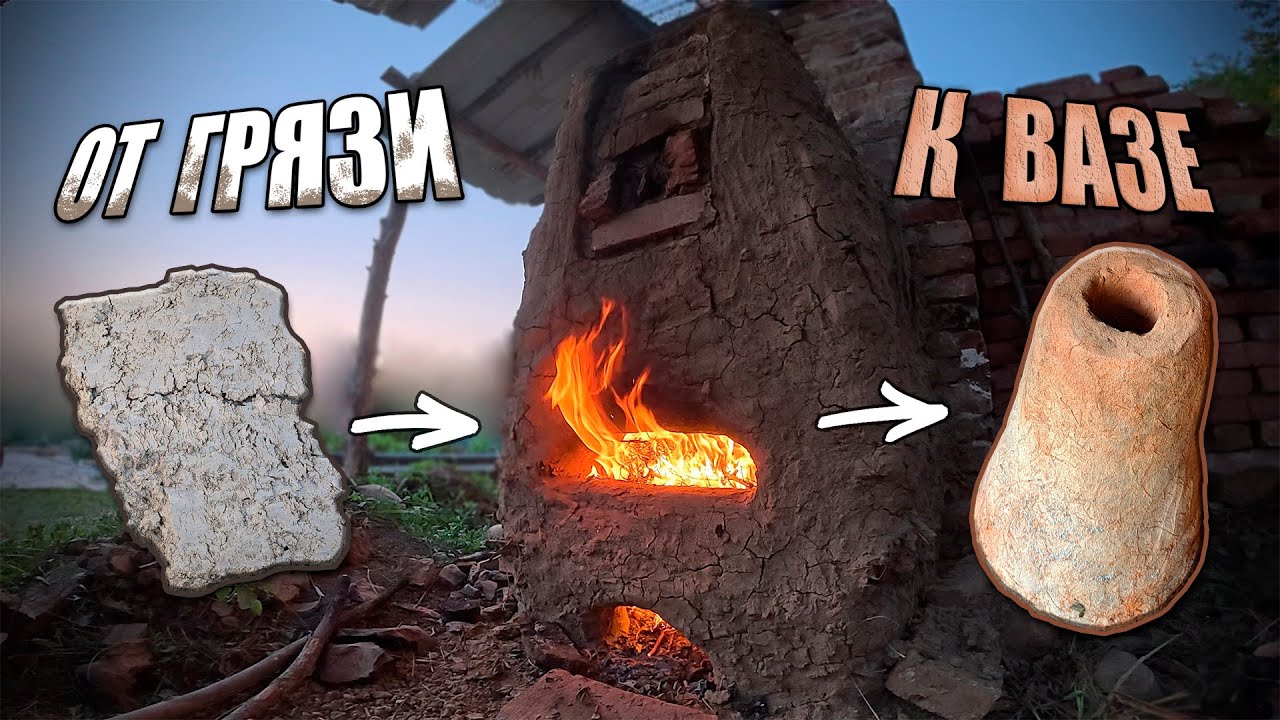
These ovens were built of cob; a mix of clay soil, sand, gravel and straw.
This oven design is based on an updraft kiln used by both the Romano-British and Anglo-Saxons. Early Anglo-Saxon examples have been found at Cassington, Oxfordshire. In these kilns, the fire is stoked from below, and is drawn up vertically through a flue or vent into a clay or turf dome above, with a smoke vent in the top or side of the dome.
These updraft kilns were primarily used for pottery, and there is no evidence that they were used indoors or for cooking. However, I wanted to create a design that aligned with the known technologies of the time, but allowed for a smoke free house!
Once the main body of the oven was complete, it took two weeks to dry with small fires lit inside, every couple of days. I was able to cook with a pot inside the oven, on these small fires, in order to make the most of the firewood.
Cracks formed as the oven dried, but these are expected and do not affect the integrity of the oven. They were filled in with cob mixture.
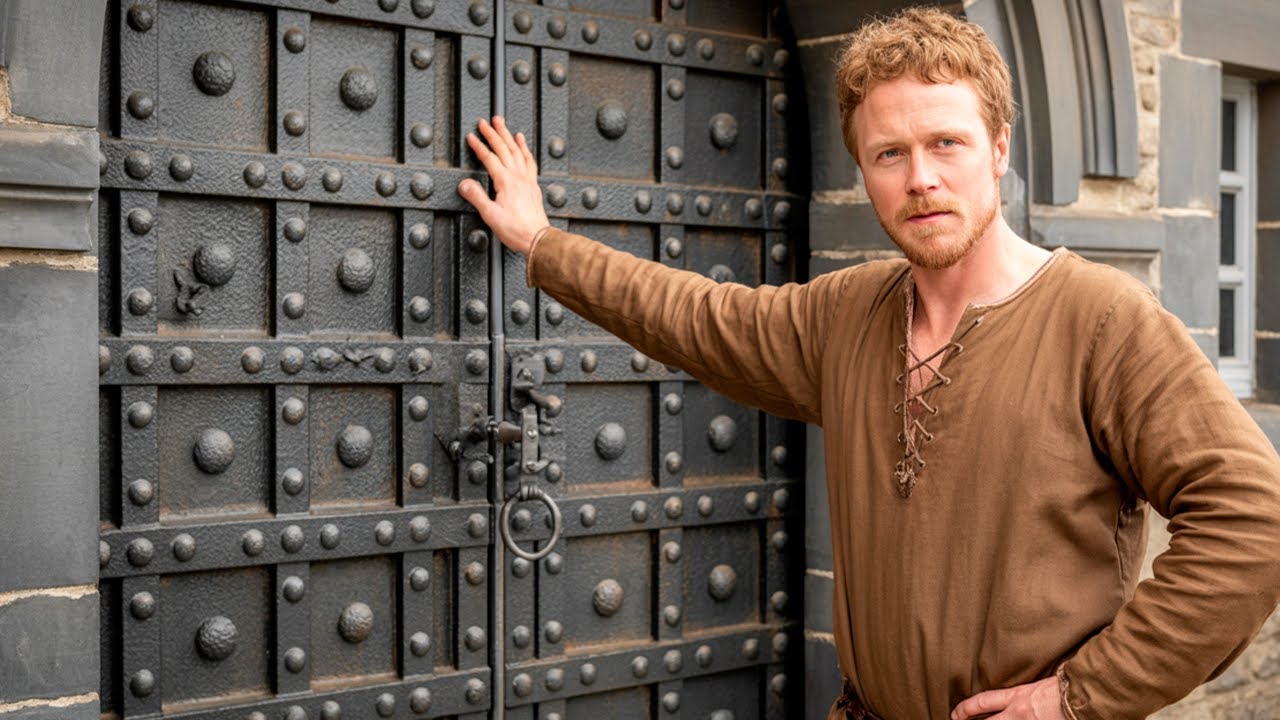
A door was made for the oven dome, fashioned of cob on a willow wicker frame, with cob handles for handling the door.
The door was set into the opening and moulded to fit, then left to dry for a couple of weeks.
With the oven and door dry, it was time to try baking! A simple dough was made of flour and water, kneaded, and mixed with some already risen sourdough to help it rise.
The Anglo-Saxons ate both unleavened and leavened bread. For their leavened loaves, they most likely made sourdough starters or simply saved some of their risen dough from every bake, to add to the next dough, thereby potentially keeping a generations old sourdough culture.
The Anglo-Saxons started their fires with a flint and steel, which needs to be used with char cloth and tinder. The char cloth was made by placing linen or bast cloth into a solid clay pot, turned upside down on the earth, with a fire built on top, so that the cloth inside burns without oxygen.
Various forms of tinder might have been used, depending on the local vegetation. For me, the local heath provides plentiful tinder in the form of dried grass, bracken, old man's beard, and thistle down. The tinder should be gathered on a dry windy day when it is as dry as possible.
This fire took me two attempts, as in my first bundle as dry as I hoped. For my second attempt I used both old man's beard with thistle down, wrapped with a layer or dry bracken, with the grass forming the outer layer, which worked much better.
Given the difficulty of coaxing a flame from an ember in this way, particularly in winter, the Anglo-Saxons may have always kept a small fire or candle burning to save having to light a new fire every time.
The Anglo-Saxons used beeswax or tallow for candles, such as the clay tallow lamp with linen wick shown here, used to keep a flame alive for lighting the oven.
The bread was set by the fire to stay warm and rise, while a stew was prepared of onion and lamb, browned in butter, followed by parsnip, beetroot and apple simmered in broth.
The Anglo-Saxon diet appears to have included less meat than modern Western diets, which may well have been quite common in the Medieval period, especially for the lower and middle classes, where livestock were far more precious kept for their milk, wool and eggs, rather than killed prematurely for meat. Meat was likely available when animals were slaughtered due to old age or sickness, but apart from that, the Early Medieval diet was mostly vegetarian, supplemented with dairy, eggs, fish and occasional game.
If an animal was to be slaughtered, it was often done in Autumn, to save having to feed the animal over winter. So fresh meat may have been more available during the colder months of the year.
The updraft oven was lit and the stew placed inside the oven to simmer, along with the risen dough to bake into loaves.
The oven works very well with its new door; producing a consistent heat that is not too high, perfect for simmering, slow cooking and baking bread. The loaves did need turning a couple of times as they baked, as the open flame means that the centre of the oven is hotter than the edges.
After three quarters of an hour, the meat in the stew was still tender, and the bread baked nicely. The loaves were had a nice crust and were quite solid, being made of wholemeal flour, but very tasty.
With thanks to:
Herknungr, Musician, playing 'Spekð".
Grzegorz Kulig, Silversmith, for making the pattern-welded knife.
If you would like to support me further, you can become a patron here:
/ gesithasgewissa
Join this channel to become a member:
/ @gesithasgewissa
Or make a one-off donation:
https://paypal.me/gesithasgewissa
/ gesithasgewissa
/ gesithasgewissa
Повторяем попытку...

Доступные форматы для скачивания:
Скачать видео
-
Информация по загрузке: