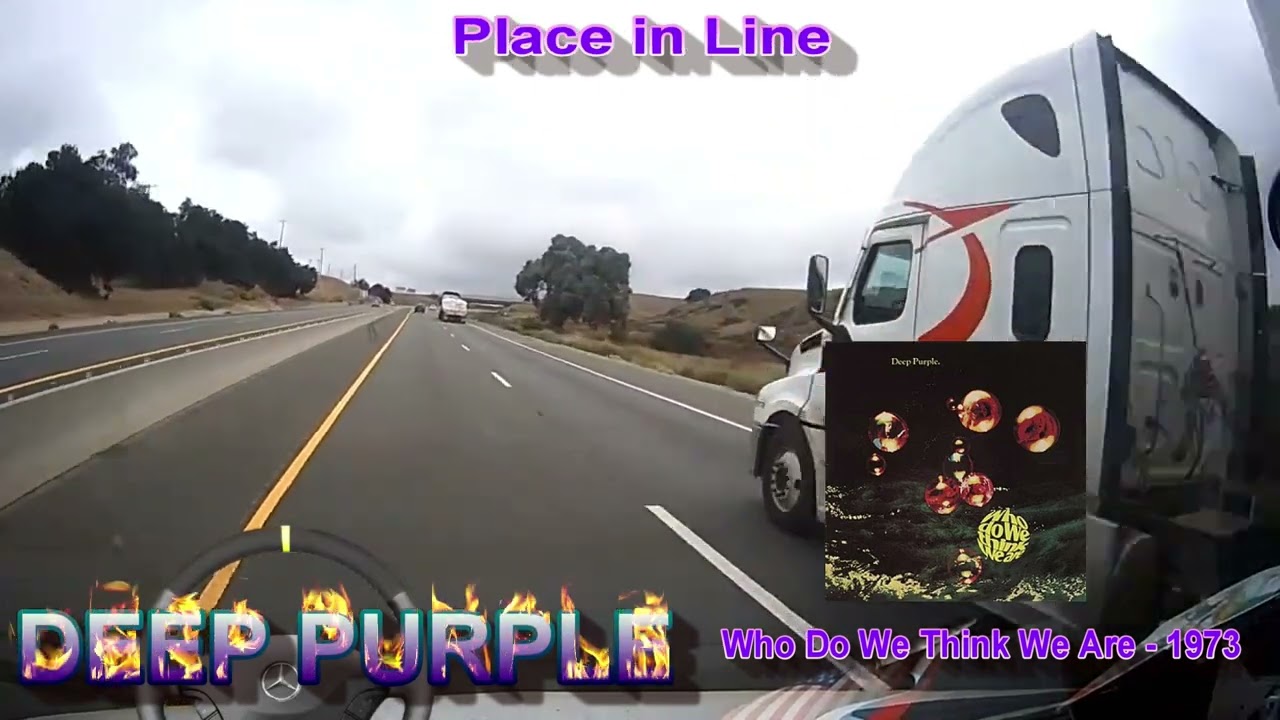
Deep Purple Mark II 1969 - 1973 (full-length albums)
Автор: Metal Music on the Road
Загружено: 2026-03-01
Просмотров: 2
Описание:
Deep Purple Mark II was formed in Hanwell Community Centre in West London in the summer of 1969. In search of a new vocalist, Blackmore set his own sights on 19-year-old singer Terry Reid. Though he found the offer "flattering", Reid was still bound by an exclusive recording contract with his producer Mickie Most and more interested in his solo career. Blackmore had no other choice but to look elsewhere. The band sought out singer Ian Gillan from Episode Six, a band that had released several singles in the UK without achieving any great commercial success. Six's drummer Mick Underwood – an old comrade of Blackmore's from his days in the Outlaws – introduced the band to Gillan and bassist Roger Glover. According to Nick Simper, "Gillan would join only with Roger Glover." This effectively killed Episode Six, which gave Underwood a persistent feeling of guilt that lasted nearly a decade, until Gillan recruited him for his new post-Purple band in the late 1970s. According to Blackmore, Deep Purple was only interested in Gillan and not Glover, but Glover was retained on the advice of Ian Paice.
Mark II's first release was a Roger Greenaway–Roger Cook tune titled "Hallelujah". At the time of its recording, Nick Simper still thought he was in the band and had called John Coletta to inquire about the recording dates for the song. He then found that the song had already been recorded with Glover on bass. The remaining original members of Deep Purple then instructed management to inform Simper that he had been officially replaced. Despite television appearances to promote the "Hallelujah" single in the UK, the song flopped. Blackmore had told the British weekly music newspaper Record Mirror that the band "need to have a commercial record in Britain", and described the song as "an in-between sort of thing"—a compromise between the type of material the band would normally record, and openly commercial material.
In September 1969, the band gained some much-needed publicity in the UK with the Concerto for Group and Orchestra, a three-movement epic composed by Lord as a solo project and performed by the band at the Royal Albert Hall in London with the Royal Philharmonic Orchestra, conducted by Malcolm Arnold. Alongside Days of Future Passed by the Moody Blues and Five Bridges by the Nice, it was one of the first collaborations between a rock band and an orchestra. This live album became their first release with any kind of chart success in the UK. Gillan and Blackmore were less than happy at the band being tagged as "a group who played with orchestras", both feeling that the Concerto was a distraction that would get in the way of developing their desired hard-rocking style. Lord acknowledged that while the band members were not keen on the project going in, at the end of the performance "you could have put the five smiles together and spanned the Thames." Lord would also write the Gemini Suite, another orchestra/group collaboration in the same vein, for the band in late 1970, although the band's recording of the piece would not be released until 1993. In 1975, Blackmore stated that he thought the Concerto for Group and Orchestra was not bad but that the Gemini Suite was horrible and very disjointed. Roger Glover later noted that Jon Lord had appeared to be the leader of the band in the early years.
On the album's development, Blackmore stated: "I got fed up with playing with classical orchestras, and thought, 'well, this is my turn.' Jon was into more classical. I said, 'well you've done that, I'll do rock, and whatever turns out best we'll carry on with.'" In Rock performed well, especially in the UK where it reached No. 4, while the "Black Night" single reached No. 2 on the UK Singles Chart, and the band performed the song live on the BBC's Top of the Pops. In addition to increasing sales in the UK, the band were making a name for themselves as a live act, particularly with regard to the sheer volume of their shows and the improvisational skills of Blackmore and Lord. Said Lord, "We took from jazz, we took from old fashioned rock and roll, we took from the classics. Ritchie and myself...used to swap musical jokes and attacks. He would play something, and I'd have to see if I could match it. That provided a sense of humour, a sense of tension to the band, a sense of, 'what the hell's going to happen next?' The audience didn't know, and nine times out of ten, neither did we!"
Повторяем попытку...

Доступные форматы для скачивания:
Скачать видео
-
Информация по загрузке:




![Droga ekspresowa S19, odcinek Babica-Jawornik, Polska - ULMA Construction [pl]](https://imager.clipsaver.ru/1_SAjTmL4VQ/max.jpg)