The Atlas Moth: King of Moths: Singapore Nature
Автор: Christian Bassett
Загружено: 2023-03-11
Просмотров: 1094
Описание:
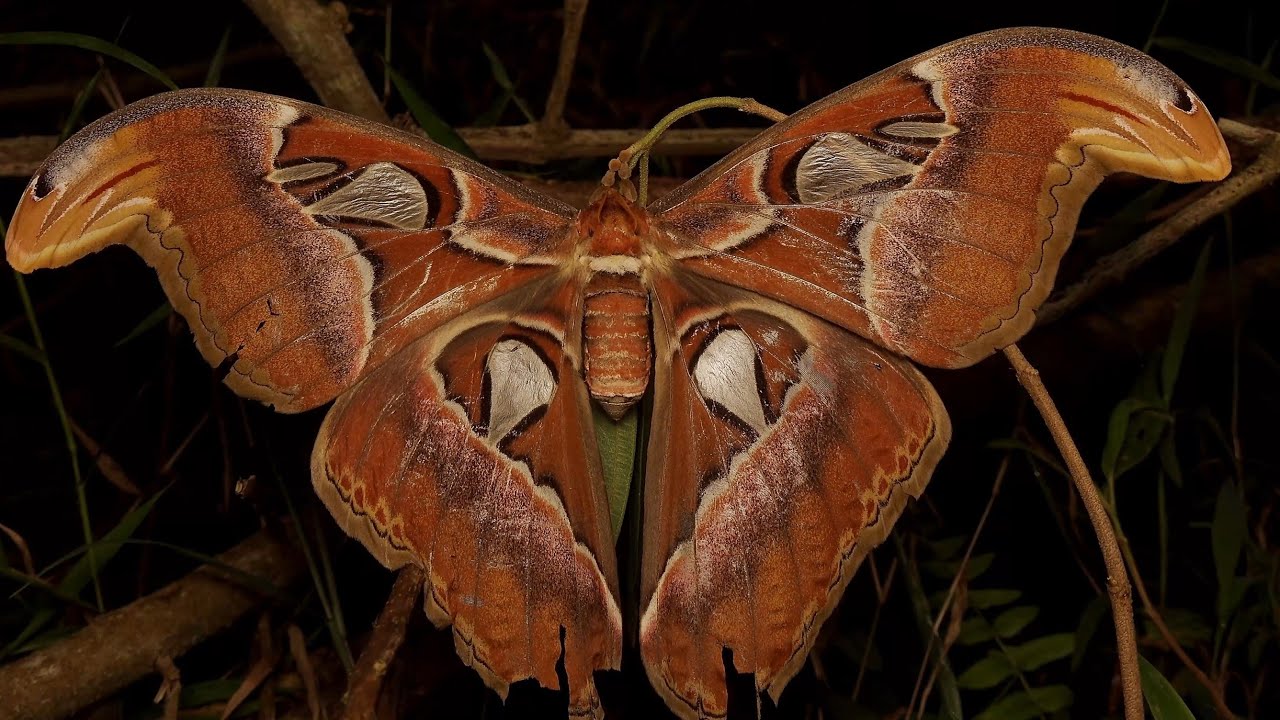
Found this giant atlas moth, Attacus Atlas, whilst herping in Singapore in the Central Catchment Forest, March 2023. One of the largest moths in the world, if not the largest. In Cantonese, it is named the 'Snake Heads Moth', due to the two snake heads on each tip of its wings. Thank you John...again, for spotting this evolutionary wonder.
Attacus atlas, the Atlas moth, is a large saturniid moth endemic to the forests of Asia. The species was first described by Carl Linnaeus in his 1758 10th edition of Systema Naturae.
The Atlas moth is one of the largest lepidopterans, with a wingspan measuring up to 24 cm (9.4 in) and a wing surface area of about 160 cm2 (≈25 in2). It is only surpassed in wingspan by the white witch (Thysania agrippina) and Attacus caesar, and in wing surface area by the Hercules moth (Coscinocera hercules). As in most Lepidoptera, females are noticeably larger and heavier than males, while males have broader antennae.
The body is disproportionately small compared to the wings. The upperside of the wings are reddish brown with a pattern of black, white, pink, and purple lines and triangular, scale-less windows bordered in black. The undersides of the wings are paler. Both forewings have a prominent extension at the tip, with markings that resemble the head of a snake, a resemblance which is exaggerated by movements of the wings when the moth is confronted by potential predators.
The Atlas moth has a very short, vestigial proboscis, and they do not eat once they have emerged from the cocoon, relying on fat storage for energy. Every flight takes valuable energy and can take days off their already short lives, as it has a very short life span of only one to two weeks.[7] They conserve energy by flying as little as possible. A female will wait for a male to come along and be fertilised, lay eggs and die.
Their habitat is primarily dry tropical forests, secondary forests, and shrublands across South Asia, East Asia, and Southeast Asia, including Borneo.
This species has been found outside of its native range on at least two occasions. An adult female was found in 2012 in Ramsbottom, England after it landed on a windowsill, and is presumed to have escaped from a private collection. Another specimen was photographed in Bellevue, Washington in July 2022, the first time this species has been detected in the United States.
Atlas moths are named after Atlas, the Titan of Greek mythology (due to their size). In Hong Kong, the Cantonese means "snake's head moth", referring to the prominent extension of the forewing which bears resemblance to the head of a snake.
Females release powerful pheromones through a gland on the end of the abdomen to attract a mate. The female does not stray far from the location of her discarded cocoon. She seeks out a perch where the air currents will best carry her pheromones. Males can detect and home in on these pheromones from several kilometers away using chemoreceptors located on their feathery antennae. Once fertilized, the female lays a number of spherical eggs, 2.5 mm (0.098 in) in diameter, on the undersides of the leaves of food plants.
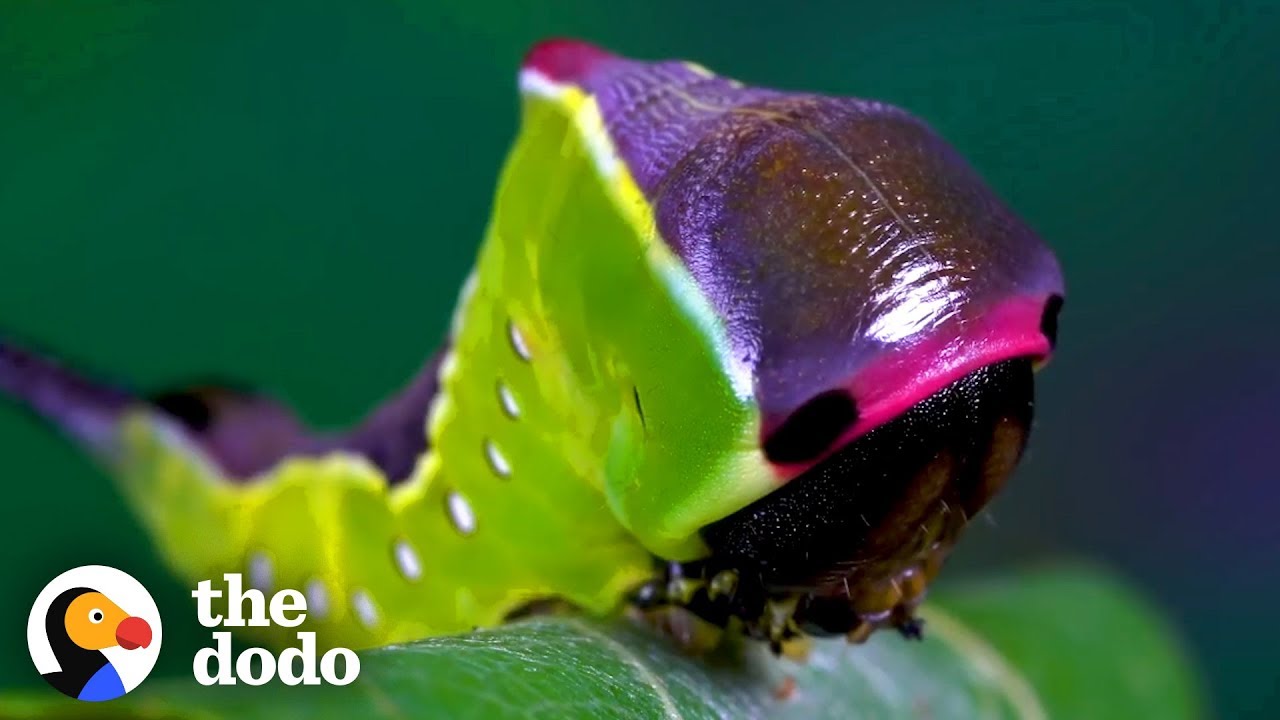
Dusty-green caterpillars hatch after approximately two weeks and feed voraciously on the foliage of citrus, cinnamon, guava, and evergreen trees. The caterpillars can grow to 11.5 cm (4.5 in) in length and 2.5 cm (0.98 in) in thickness. They are adorned with white, waxy, fleshy spines along their backs, which become more prominent at later instars. Beside the prolegs on the last abdominal segment, there is a large green spot surrounded by an orange ring. The majority of the time their first meal is their egg-shell.
After reaching a length of about 11.5 cm (4.5 in), the caterpillars are ready to pupate. They spin a 7–8 cm long papery cocoon interwoven with desiccated leaves and attach it to a twig using a strand of silk. The adult moths emerge from the cocoon after approximately four weeks depending on environmental factors.
Adult Atlas moths are weak, unsteady fliers. To conserve energy, the moths rest during the day and fly at night. As they lack fully formed mouthparts, the adults cannot eat, subsisting entirely on fat reserves accumulated during the larval stage. As a result, they live for only a few days during which their sole objective is seeking out a mate. Adults may be found on wing throughout the year but are most abundant between November and January. (Wiki)
#atlasmoth #mothssingapore #mothsasia #giantmoth #giantbutterfly #biggestmoth #singaporenature #singaporewildlife #herpingsingapore #attacusatlas
Videography:
Christian Bassett
Editing:
Christian Bassett
Camera:
Sony 4K FDR-AX700 Camcorder
Повторяем попытку...
Доступные форматы для скачивания:
Скачать видео
-
Информация по загрузке:
![Помогите! Рой мотыльков! Гигантские атласские мотыльки! [Attacus lorquinii]](https://imager.clipsaver.ru/RGZTtLppr_o/max.jpg)