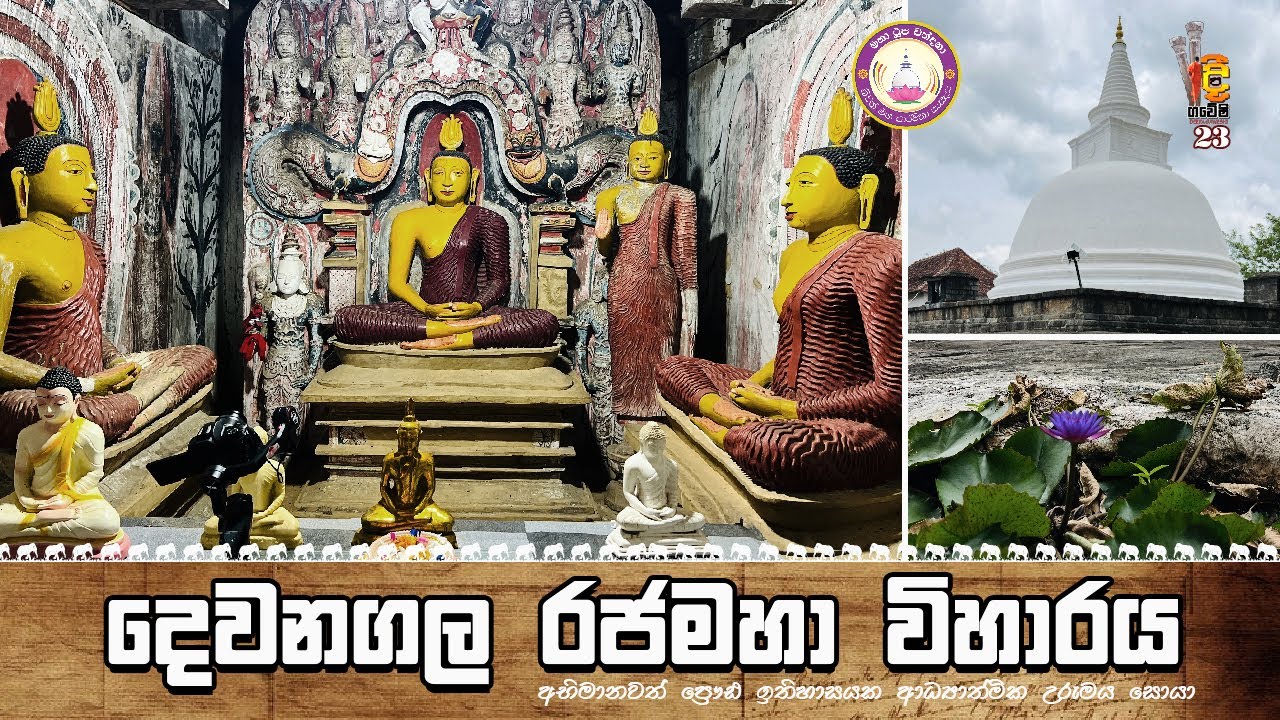
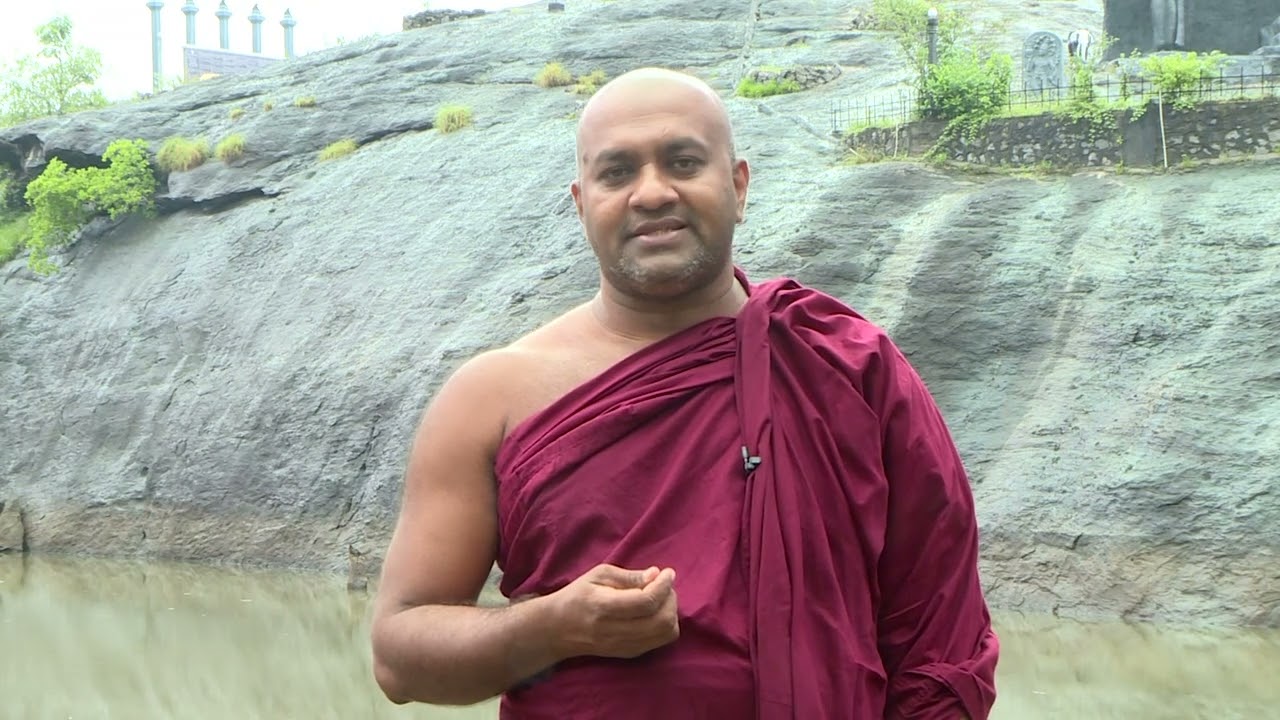
දෙවනගල රජ මහා විහාරය | Dewanagala Raja Maha Viharaya | Historical Place in Sri Lanka | Part 03
Автор: DT EYE
Загружено: 2024-12-23
Просмотров: 531
Описание:
Historical Devanagala Temple :-
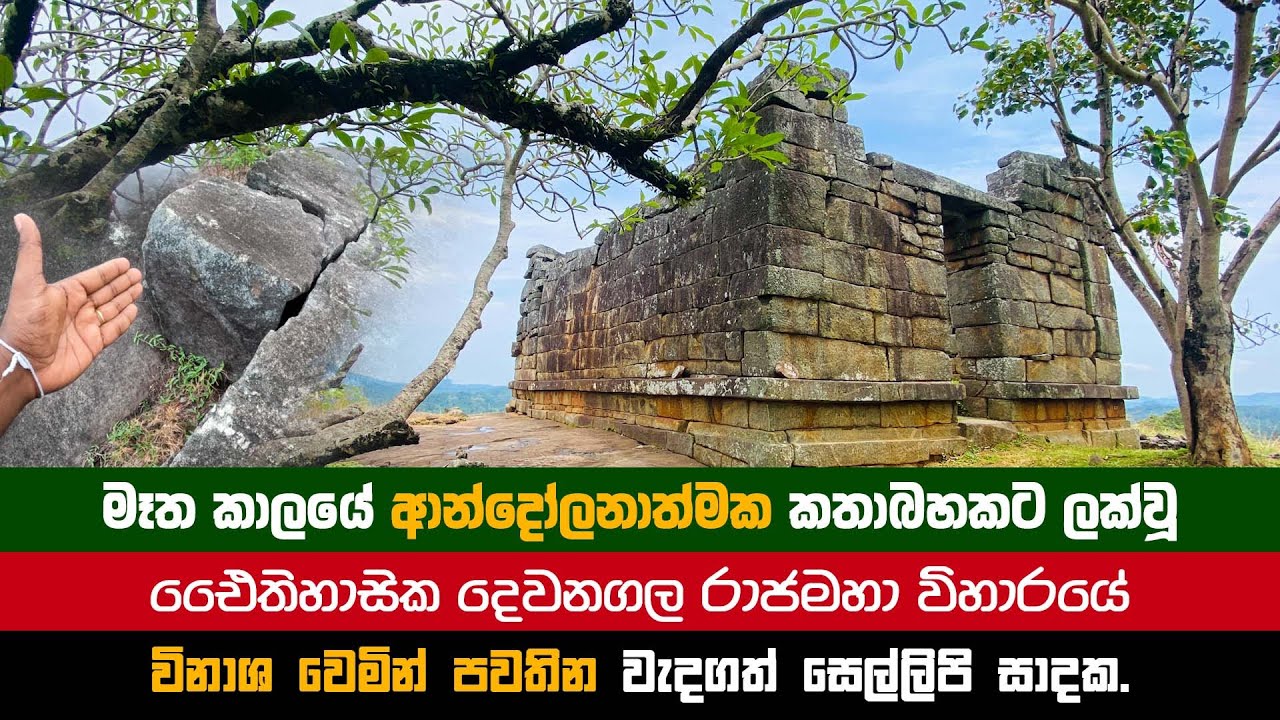
Approximately five kilometers from the Mawanella-Hemmathagama-Gampala route is the historic Devanagala Purana Rajamaha Viharaya, which is situated on a natural rock.
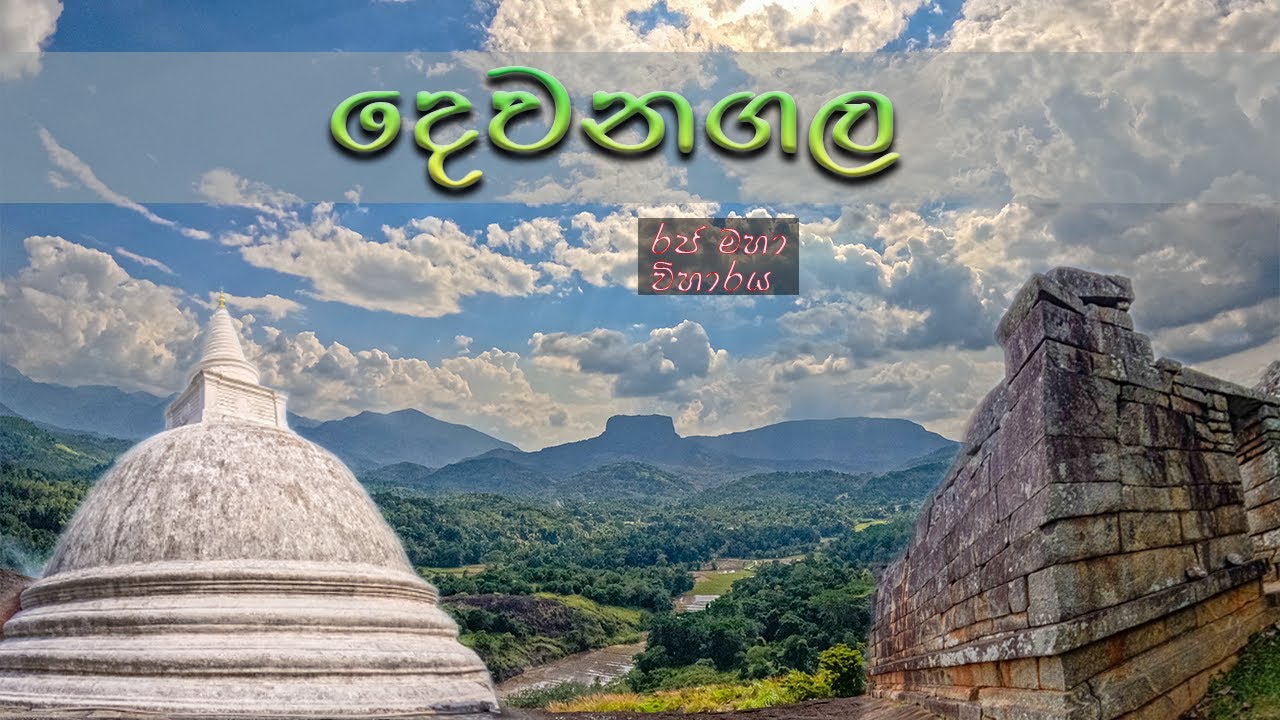
Situated in the middle of a stunning rock and encircled by breathtaking mountain ranges is Devanagala Rajamaha Viharaya. The Devanagala rock is accessible from three sides via steps carved out of the rock itself. Climbing in that direction allows you to observe the stunning mountain ranges that encircle the four corrals.
To the north of this temple are the Alagalla mountain range, to the northeast are the Kadugannawa mountain range, and to the east are the Kotagala mountain range, which is still growing. The southeast offers views of the lamp-shaped rock, Pimburagala, and the Ambuluwawa mountain range. Batale Gala, Ura Kanda, and the recently fallen Samasara Kanda may be seen from the southwest, while Vakirigala and Utuwan Kanda, which are mountain ranges of various sizes that reach in all directions, can be seen from the summit of Devanagala from the west and northwest, respectively.
The Maa Oya, which originates in the neighboring town of Attapitiya, and the streams that pour into it decorate the area where the Devanagala Rajamaha Viharaya is situated, giving it a picturesque appearance.
The Devanagala Raja Maha Viharaya can be accessed in three ways: Turn left by the historic Attapitiya Jayathilakarama old temple from the Attapitiya intersection on the Mawanella-Aranayaka road. Enter through the Udapamunuwa road, ascend the evenly cut stairs on the rock, and up a small slope. Turn right at the Katugahawatta Kadamandiya from the Hemmathagama road at Mawanella, then take the steep stairway. To go to the top of the rock, where the Devanagala Raja Maha Viharaya is situated, turn right in front of the Ayagama intersection from the center of Devanagala village and follow the equally carved steps on the rock.
It seems that the Devanagala Raja Maha Viharaya's history extends back to the Anuradhapura and Kandy periods based on the ancient monuments there. In light of this, King Dhatusena, who ruled in the fifth century AD, built the first temple in Devanagala. The Mahavamsa claims that King Dhatusena constructed eighteen temples and eighteen related tanks, which he then presented to the Mahaviharan monks.
The state supported this temple during the Pelonnaruwa period, the Parakramabahu I reign, and the Konappu Bandara or Wimaladharmasuriya I rule during the Kandy period, according to historical records.
A gazette issued on December 12, 1941, listed the Devanagala Rajamaha Viharaya region as an archaeological monument; nevertheless, a land survey, conducted under governmental patronage, was prepared in 1876 that encompassed the entire temple village and village property. Specifically, this territory spans three roods and more over 72 acres from the Devanagala rock to the Ruwandeniya settlement.
Devanagala Rajamaha Viharaya is a historical sacred site situated in the Aranayake Divisional Secretariat Division of the Kegalle District of the Sabaragamuwa Province. It is part of the Satara Korala and is situated in the center of the Galabada Korala. Along the Colombo-Kandy road, between Upper Kadugannawa Rock and Lower Kadugannawa, in the Kadugannawa area, one can see the point where the eye meets the Bible-shaped Batalegala Mountain. Devanagala is the location where the pagoda appears on a stunning natural rock peak in the shape of a pearl.
At around 312 meters above sea level, Devanagala Rock is a noteworthy religious location that has concealed numerous historical occurrences.
The reason this locality is called Devanagala, according to history buffs, is that the Devanagala temple is situated on the site of Devanagala (Devanagala), the Aluthnuwara deity. Gautama Buddha's contemporary is the Devanagala temple. His mother was Erandathi, a member of the Naga tribe, and his father was Purnaka, a Yaksha tribe general.
A different theory states that the god Aluthnuwara made two visits to Devanagala. Since the God Aluthnuwara first resided in the region where Devanagala was located, it is also known as "Parana Nuwara." Additionally, according to legend, Devanagala existed before Lord Vishnu's Rama Sari was relocated to Aluthnuwara.
According to legend, this locality was given the name Devanagala when a story about two golden coins being concealed there was told. The place is nicknamed "Amaragira" in reference to the rock where the God lived. According to the opposite view, the mountain where this area is situated was given the name Devanagala since it was ranked second only to Batalegala.
************************************
~~~~~~~Follow~~~~~~~
Facebook :- http://bit.ly/3ZQyUiS
Tiktok :- https://bit.ly/40a4TvV
~~~~~~~Devices~~~~~~~
Gopro Hero 12 Black
Samsung S24 Ultra
Huawei P50 pro
~~~~~~~Editing~~~~~~~
Adboe Premeire pro 2022
**************************************
Повторяем попытку...
Доступные форматы для скачивания:
Скачать видео
-
Информация по загрузке: