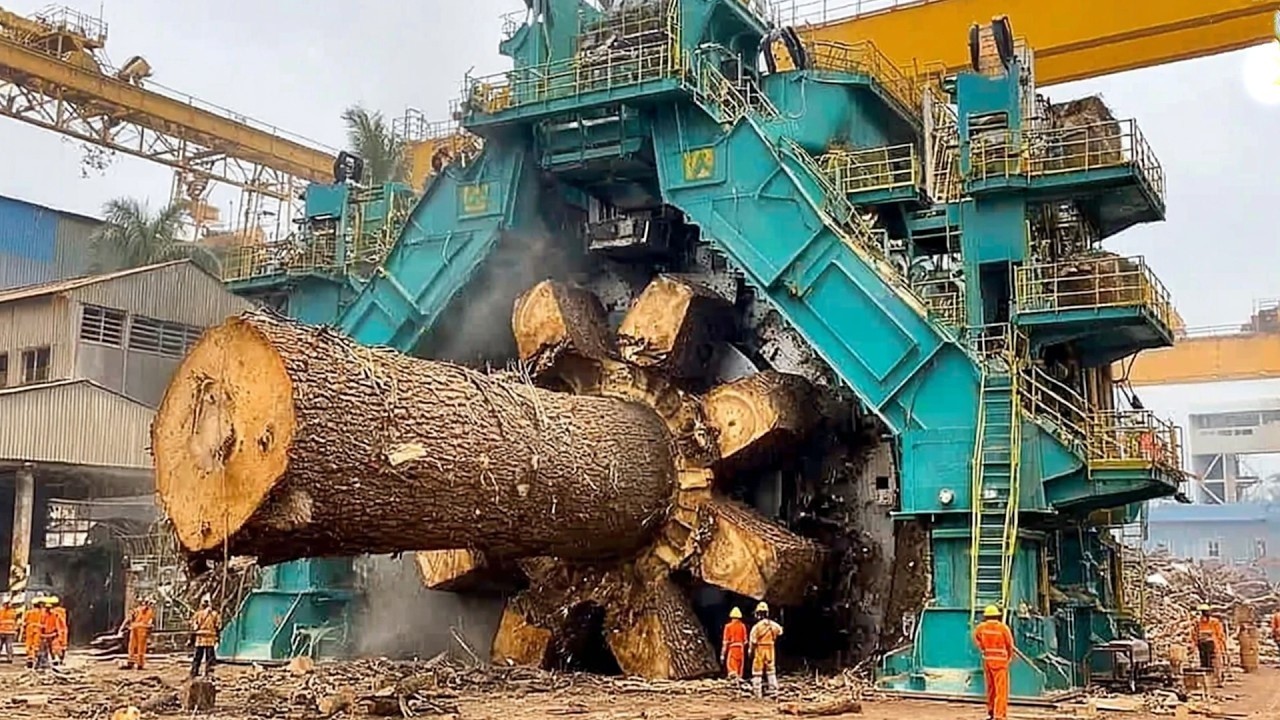
Heavy-Duty Industrial Operations: Mechanical Leverage and Large-Scale Cable Stripping Techniques
Автор: Wonder Workload — Вондер ВоркЛоуд
Загружено: 2026-03-06
Просмотров: 9722
Описание:
This method fundamentally overcomes the structural integrity of deep-rooted systems through the application of high-torque mechanical force and strategic leverage positioning. The process demonstrates the precise interaction between engine throttle management, blade elevation adjustment, and the vehicle’s center of gravity to induce a controlled structural collapse of the timber member. Compared to manual felling or chain-based pulling, this direct-push approach minimizes operational time and eliminates the logistical complexity of additional rigging. As global land development and infrastructure projects continue to expand, specialized mechanical clearing practices have evolved into a professional technical discipline that balances mechanical power, soil stability, and operational precision.
Technical Principles and Structural Characteristics
The mechanical tree removal process fundamentally overcomes gravitational and root-bond resistance through distributed hydraulic pressure and momentum-driven impact. Its functional mechanism is embodied in three key aspects: First, the dozer blade provides a broad contact surface that transfers the tractor’s kinetic energy directly into the tree’s primary structure. Second, the elevation of the push point maximizes the moment arm, significantly reducing the total force required to initiate the failure of the root system. Third, synchronized traction control ensures consistent forward movement, preventing wheel slippage on loose or uneven soil during high-resistance phases. From a structural engineering perspective, mature trees exhibit significant lateral stability, requiring substantial mechanical force to breach the soil-root interface. Typical tree diameters of 40–80 cm represent the practical limits for medium-sized industrial tractors. The uniform application of force is essential to prevent uncontrolled timber splitting during the removal process.
Construction Method
The tree removal process must strictly adhere to the principle of “steady-force application and synchronized momentum.” This involves the following phases:
Preparation Phase: Inspect machine hydraulic systems, assess the tree’s lean and root-zone stability, and clear the fall zone of personnel and obstacles. Establish clear operational boundaries and verify ground-bearing capacity.
Initial Contact Phase: Engage the tractor’s drive system and position the blade at the optimal leverage height. Apply initial forward pressure to establish a firm engagement with the timber surface.
Penetration Phase: Incrementally increase the throttle while monitoring the soil’s reactionary movement around the base. Adjust the blade’s angle to maintain maximum traction and prevent the front axle from lifting.
Final Extraction Phase: Coordinate the final forward surge as the root system fails. Verify the complete extraction of the primary root mass and ensure the stability of the surrounding terrain before concluding the operation.
Key Features and Advantages
High Operational Efficiency: Allows for the rapid clearing of large areas, significantly reducing project timelines compared to traditional felling and stump-grinding methods.
Improved Site Logistics: Eliminates the need for multiple specialized machines by utilizing a single high-torque tractor for both felling and initial debris movement.
Immediate Terrain Adaptation: Real-time operator feedback allows for instant adjustments to blade pressure and vehicle trajectory, ensuring safe operation regardless of subsurface root variations.
Construction Key Points
Operator Coordination: Insufficient focus on the tree’s fall trajectory leads to equipment damage or safety hazards; ensure continuous monitoring of the timber’s lean and weight shifts.
Load Distribution: Improper blade positioning causes excessive stress on the tractor’s hydraulic system. Determine optimal leverage points through rigorous mechanical assessment.
Safety Margins: Operating heavy machinery during felling poses significant crush and debris-ejection risks. Protect personnel with established no-access zones and robust canopy protection systems.
Soil Stability: Incomplete assessment of ground conditions can lead to vehicle immobilization or unexpected tree behavior. Ensure stability through pre-operational site evaluations.
Material Handling: Fallen timber, exposed roots, and pressurized hydraulic lines pose pinch and rupture risks. Prevent injuries with protective equipment and established maintenance protocols.
Operational Limits: Exceeding the machine’s maximum torque or weight capacity poses risks of mechanical failure. Prevent attempts that risk machine damage through objective evaluation of the tree’s mass.
Weather Conditions: Wind loads, soil moisture, and ambient temperature affect traction and wood fiber strength. Schedule operations to comply with environmental standards for optimal safety.
Повторяем попытку...

Доступные форматы для скачивания:
Скачать видео
-
Информация по загрузке: