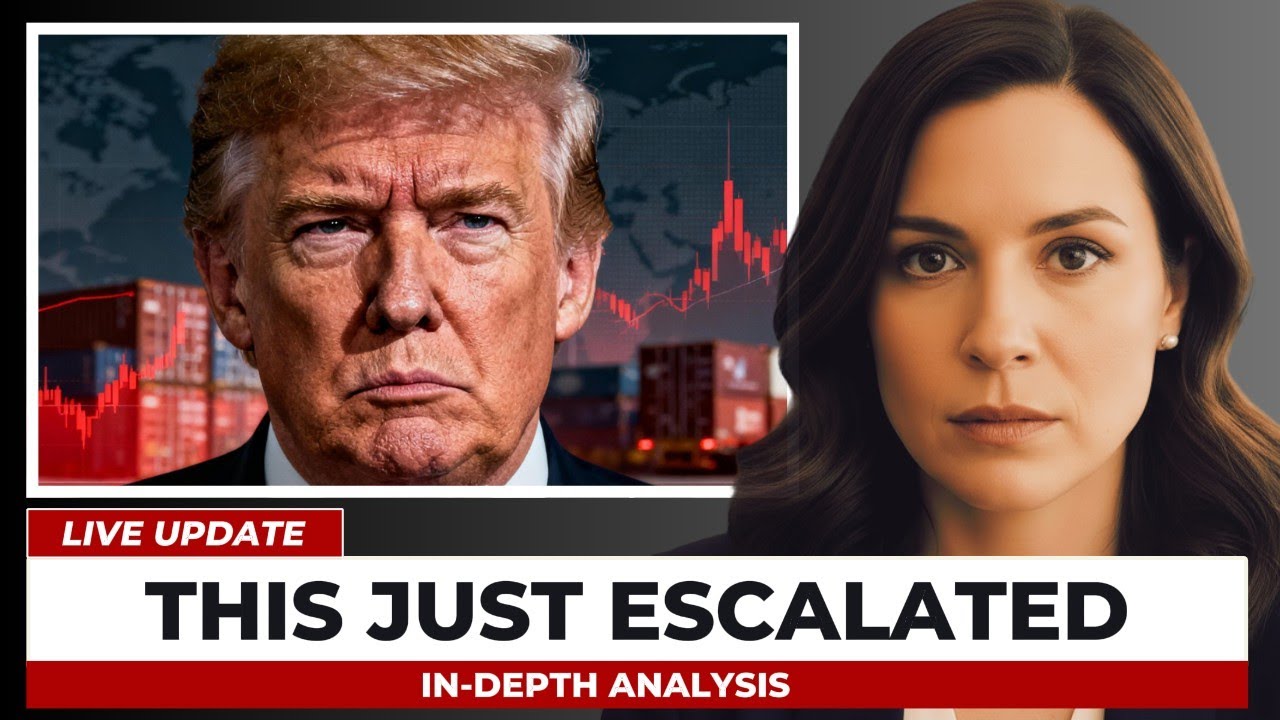
Gas +$0.70? Maritime Insurance Quietly Rewrites the Global Economy | Trump, Iran, 2026
Автор: Rebecca Stone
Загружено: 2026-02-01
Просмотров: 1
Описание:
What if higher gas prices and rising living costs don’t start with a war — but with an insurance clause most people never see?
In early 2026, tensions involving the United States and Iran did not close shipping lanes or halt oil flows through the Strait of Hormuz. Tankers kept moving. Markets stayed open. Yet behind the scenes, maritime insurers began repricing war risk, quietly raising premiums for vessels transiting one of the world’s most critical energy chokepoints.
That change matters because insurance costs don’t stay in the insurance market. They move downstream — into shipping contracts, energy prices, transport costs, and eventually household budgets.
This analysis connects several under-reported signals:
• Maritime insurers increasing war-risk premiums for Hormuz-linked shipping, even without active conflict, reflecting heightened probability rather than actual disruption
(reported by Insurance Journal and multiple maritime risk briefings)
• Shipping and logistics firms adding temporary-but-persistent surcharges tied to geopolitical risk, which are increasingly treated as standard contract terms
(Bertling Logistics market updates)
• Energy markets pricing risk rather than shortages, with oil volatility driven by uncertainty around security, insurance, and transport rather than supply cuts
(Associated Press energy reporting; Guardian market coverage)
• U.S.–Iran tensions under the Trump administration creating ambiguity rather than resolution, a condition that raises commercial risk even when military escalation is avoided
(AP News, Reuters geopolitical coverage)
• Global insurers and traders reacting faster than governments, embedding higher costs into the system long before political decisions are finalized
(Insurance Journal, Reuters analysis on market reactions to geopolitical risk)
In this video, we explain how a small change in maritime insurance can translate into higher fuel prices, inflation pressure, and slower global growth — without a single dramatic headline. We break down why this type of escalation is difficult to see, why it’s hard to reverse, and why its effects often reach households before policymakers acknowledge the shift.
This is not about panic or prediction.
It’s about understanding how risk moves through systems — and why the global economy in 2026 may feel more expensive even when nothing appears to be “wrong.”
Повторяем попытку...
Доступные форматы для скачивания:
Скачать видео
-
Информация по загрузке:


![Best of Driving Deep House [2026] | Chill Vocal Mix to Boost Focus, Maximize Concentration #7](https://image.4k-video.ru/id-video/CDnUiT9PNWc)


