How was the Indian Rupee Created? | The Complete History of Notes, Coin @Valueofcuriosity
Автор: Value of Curiosity
Загружено: 2026-06-10
Просмотров: 56
Описание:
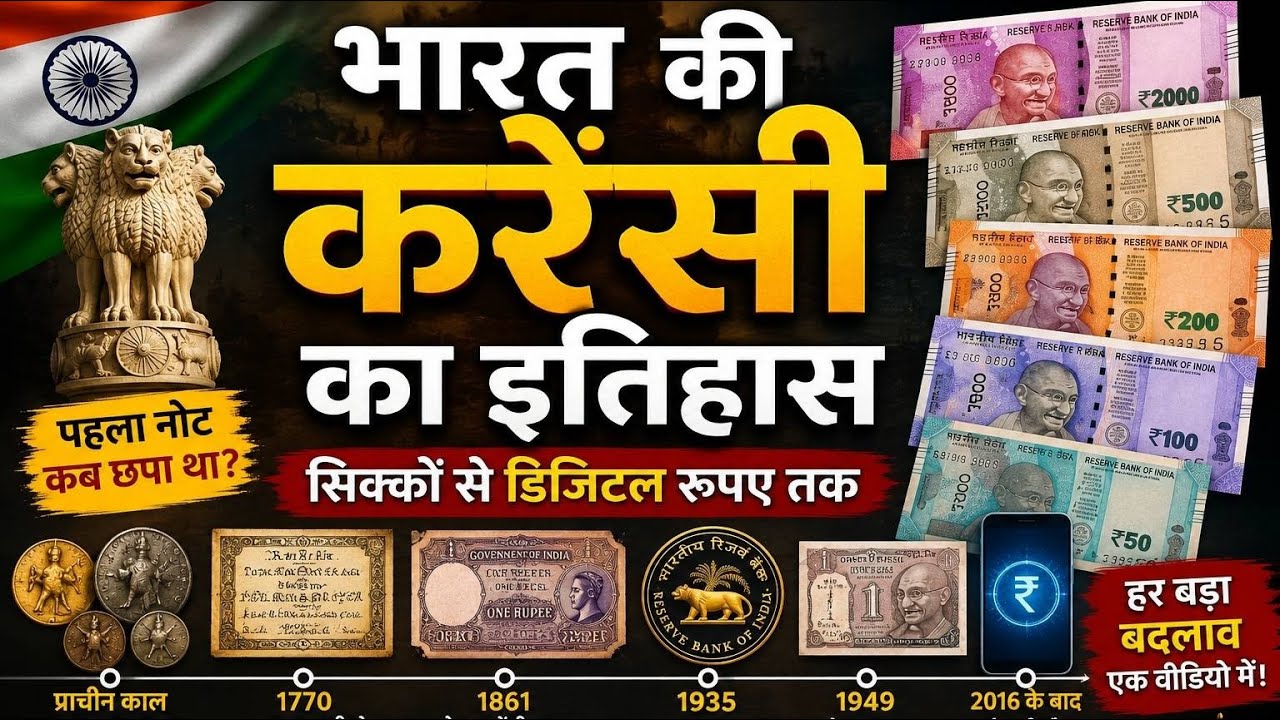
#currency #note #rbi #papercurrencyact #currencyact 2016 #pmmodi #notebandi For centuries in India, transactions were carried out using coins made of gold, silver, and copper. Kings and rulers issued their own currencies. However, as trade expanded, carrying heavy coins became difficult. This is where the need for paper currency was first felt.
In 1770, the Bank of Hindostan issued the first paper notes in India. Later, the Bank of Bengal and other banks also printed their own notes. However, these notes were accepted only in limited regions and not throughout the country.
In 1861, the Paper Currency Act came into effect. After this, private banks lost the authority to print currency notes, and this power was transferred directly to the British government. Around the same time, the Victoria Portrait Series of notes was introduced.
In 1935, the Reserve Bank of India (RBI) was established. In 1938, the RBI issued its first ₹5 note featuring the portrait of King George VI. This marked the beginning of India's modern currency system.
After independence, the identity of Indian currency changed. In 1949, the first ₹1 note bearing the Ashoka Pillar emblem was issued. In the following years, new notes reflecting India's national identity continued to be introduced.
In 1996, the Mahatma Gandhi Series was launched. With enhanced security features and a new design, this series became the new identity of Indian currency.
In 1956, the Minimum Reserve System was implemented. Earlier, the amount of gold held had to correspond to the volume of notes issued. The new rules allowed the RBI to issue currency according to the country's needs while maintaining only a prescribed minimum reserve.
From April 1, 1957, the decimal system was adopted in India. One rupee was officially divided into 100 paise, making calculations across the country simpler and more modern.
In 1978, the government demonetized high-denomination ₹1,000, ₹5,000, and ₹10,000 notes. The objective was to curb black money and illegal transactions.
On November 8, 2016, the old ₹500 and ₹1,000 notes were demonetized nationwide. Subsequently, new ₹500 and ₹2,000 notes were introduced. In 2017, a new law legally prohibited transactions involving the old notes.
The new Coinage Act of 2011 consolidated earlier laws related to coins and modernized the legal framework. Under this law, melting coins was declared an offense, and the government was empowered to issue coins of higher denominations.
The history of Indian currency is not merely the story of notes and coins but also the story of the nation's economic journey. With changing laws and advancing technologies, Indian currency has continuously evolved, and in the future, digital currency may become its next major chapter. #valueofcuriosity #viral #trending
Повторяем попытку...
Доступные форматы для скачивания:
Скачать видео
-
Информация по загрузке: