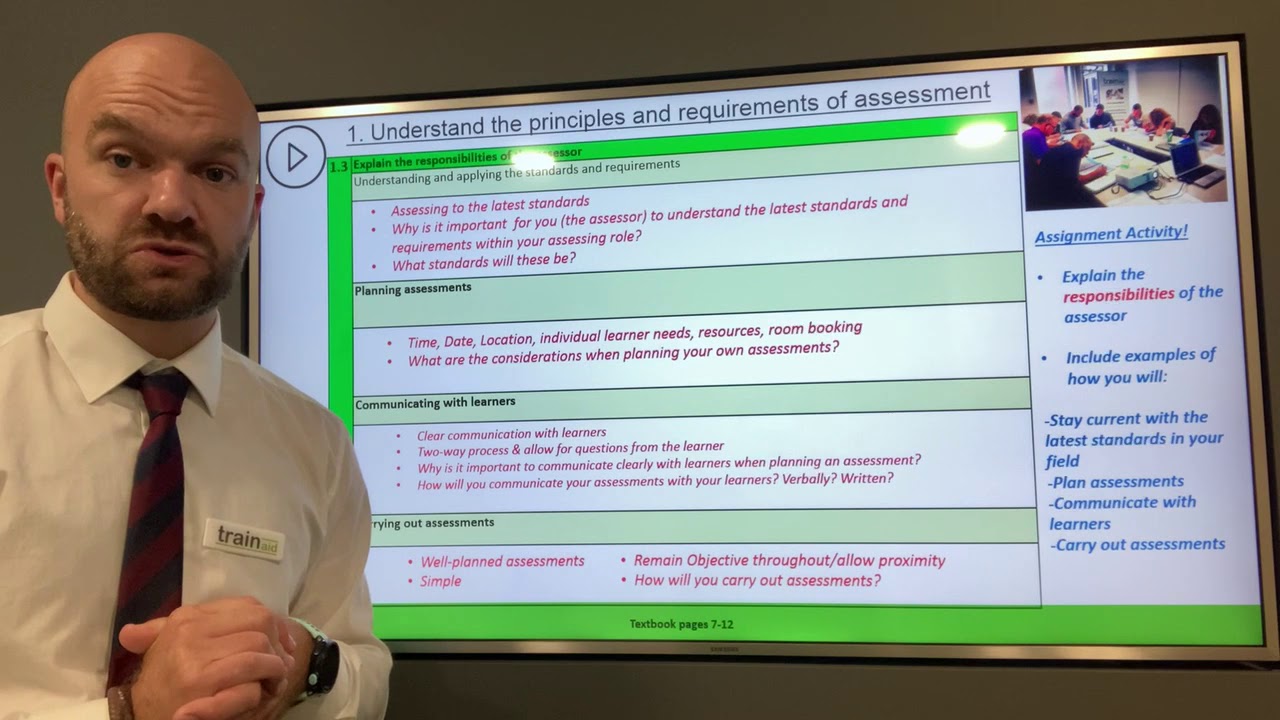
The 5 Stages of the Assessor Training Cycle: Key Steps for Successful Learning
Автор: Brooks and Kirk Assessor Training
Загружено: 2014-10-14
Просмотров: 18817
Описание:
If you're involved in training and development or seeking to enhance your understanding of effective learning processes, you've come to the right place. In this video, we explore the 5 Key Stages of the Assessor Training Cycle. Guiding you through each stage, from planning to evaluation. Let’s dive into the 5 key stages that form the foundation of the training cycle and revolutionise your approach to training.
Looking to establish yourself as a revered and valued Assessor, cherished by both peers and learners? Embark on an exciting path towards becoming a certified NVQ Assessor with our highly acclaimed Level 3 Certificate in Assessing Vocational Achievement (CAVA) course. Kickstart your career transformation today by visiting our website: https://brooksandkirk.co.uk/assessor
***************************************
TIMESTAMPS
[00:00] Introduction
[00:15] Identifying Training Needs
[00:50] Preparation
[01:05] Training Delivery
[01:17] Applying Learning
[01:32] Evaluation
[01:59] The Training Cycle Loop
Ready to take your assessment practices to the next level? Gain a deeper understanding of the importance of organised record-keeping, learn practical tips for documenting assessment outcomes, and discover digital solutions that can simplify the process. Get started here: • record keeping who will need it
***************************************
SUMMARY
What are The 5 Stages of The Assessor Training Cycle? We aim to answer this today. The Assessor Training Cycle, consisting of five distinct stages, is a comprehensive framework that ensures the effectiveness of training initiatives. The first stage, ""Identifying Training Needs,"" involves conducting thorough assessments and analysing the specific requirements of learners. This stage helps trainers gain a deep understanding of the skills and knowledge gaps that need to be addressed.
Once the training needs are identified, the next stage, ""Preparation,"" comes into play. During this phase, trainers meticulously plan and design the training program, considering factors such as learning objectives, content selection, instructional methods, and resources required. A well-prepared training program sets the foundation for successful learning outcomes.
Moving on to the ""Training Delivery"" stage, trainers employ various teaching techniques, including lectures, workshops, interactive activities, and simulations, to deliver the training content. This stage emphasizes engaging learners and creating an interactive and supportive learning environment that fosters active participation and knowledge retention.
As learners progress through the training, the ""Applying Learning"" stage comes into play. Here, participants are encouraged to apply their newly acquired skills and knowledge in practical settings. This stage may involve hands-on exercises, role-plays, case studies, or real-life projects that simulate authentic scenarios. The aim is to bridge the gap between theory and practice, allowing learners to transfer their knowledge into real-world situations.
Lastly, the ""Evaluation"" stage assesses the effectiveness of the training program and its impact on learners. This stage encompasses various assessment methods, including initial assessment to gauge learners' baseline knowledge, formative assessment to monitor progress during the training, and self-assessment and peer assessment for learners to reflect on their performance and receive feedback from their peers.
Once the evaluation stage is completed, the Training Cycle does not end—it becomes a continuous loop. The insights and feedback gathered during evaluation are invaluable for refining and improving future training initiatives. Trainers use this information to identify areas of improvement, modify training content or delivery methods, and ensure that subsequent training programs are even more effective.
By embracing the iterative nature of the Training Cycle, trainers can continuously enhance their training practices and adapt to the evolving needs of learners. This cyclical approach allows for ongoing growth and development, ensuring that each training program builds upon the knowledge and experiences gained from previous cycles.
In essence, the Training Cycle serves as a dynamic framework that supports continuous improvement in training and development. It emphasizes the importance of evaluation as a means to inform and shape future training endeavours, fostering a culture of learning and refinement.
#trainingcycle #the5stagesofthetrainingcycle #assessment
***************************************
Want to get more amazing content? Check out our socials or visit our website and browse our suite of accredited and CPD Verified courses…
🔗 Brooks and Kirk Assessor Training: https://brooksandkirk.co.uk/assessor/
🔗 LinkedIn: / brooks-and-kirk
🔗 Facebook: / brooksandkirk
***************************************
Повторяем попытку...

Доступные форматы для скачивания:
Скачать видео
-
Информация по загрузке:
![Навыки фасилитации [МЕТОДЫ И СЕКРЕТЫ ФАСИЛИТАЦИИ]](https://imager.clipsaver.ru/VgRiQlLnGcM/max.jpg)