How to use HAVE vs HAVE GOT in Everyday English | Learn English with Real Conversations Podcast | A1
Автор: English Around Us
Загружено: 2026-02-17
Просмотров: 23
Описание:
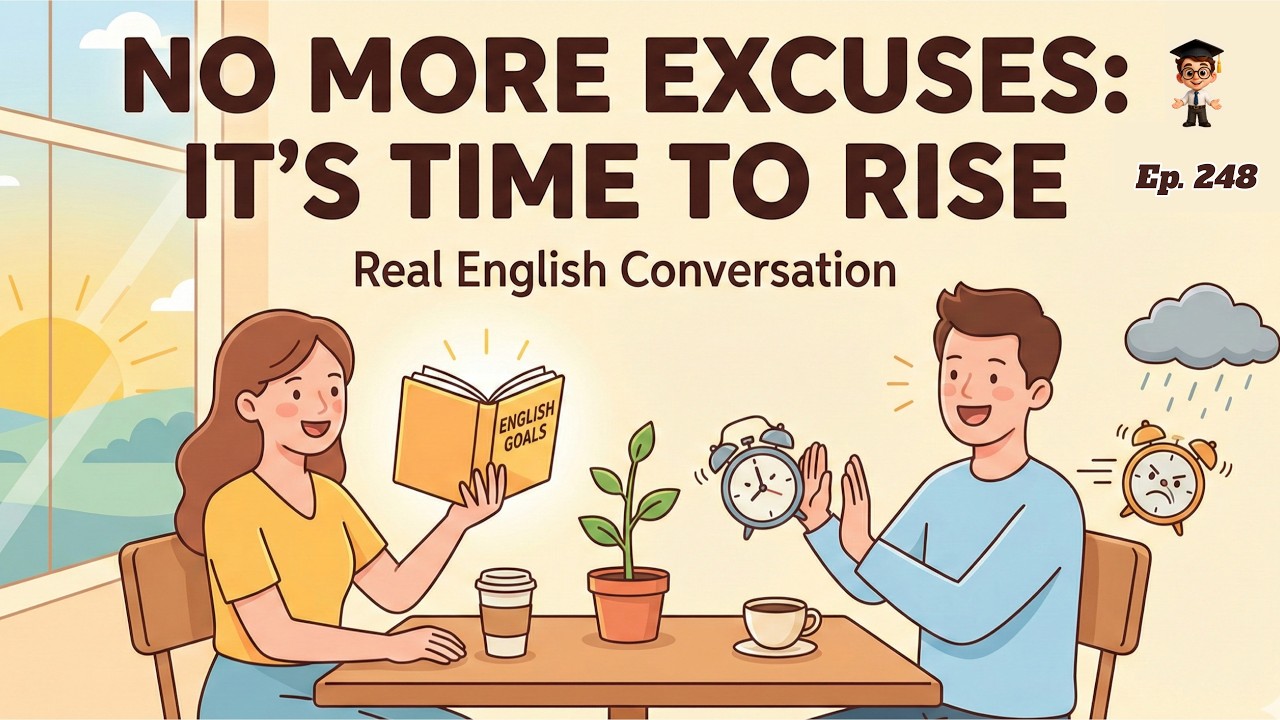
In this episode of Learn English with Real Conversations Podcast, you’ll learn the difference between HAVE and HAVE GOT in everyday English — and why native speakers use both.
Many English learners ask:
“Is have got different from have?”
“Is have got British English?”
“Why do people say I’ve got so fast?”
In this calm, beginner-friendly lesson, Leo and Emma explain everything step by step using real conversations, natural examples, and simple practice — no grammar pressure.
You’ll learn that HAVE and HAVE GOT have the same meaning (possession), but a different style:
HAVE → standard, clear, safe (writing, work, formal situations)
HAVE GOT → casual, friendly, spoken English (movies, daily talk)
This lesson also helps you understand contractions like:
I’ve got
She’s got
He’s got
So you don’t confuse “she’s got” (she has) with “she’s” (she is).
⏱️ TIMESTAMPS
00:00 Welcome to Our English Around Us
00:15 Review: HAVE vs HAS
00:27 “I have” vs “I have got” — what’s the difference?
01:09 Same meaning: possession explained simply
01:31 HAVE (standard) vs HAVE GOT (casual English)
02:20 Why native speakers use contractions
02:36 I’ve got / She’s got explained clearly
03:13 Be careful: “She’s got” ≠ “She is”
03:45 Questions with HAVE vs HAVE GOT
04:05 Do you have…? vs Have you got…?
04:30 Which form beginners should use
04:51 Speaking practice challenge
05:32 Final recap: meaning vs style
05:44 Daily practice idea + comments prompt
🎧 WHAT YOU’LL LEARN IN THIS EPISODE
✅ The real difference between have and have got
✅ Why both forms mean the same thing (possession)
✅ When to use have and when to use have got
✅ Natural contractions: I’ve got, she’s got, he’s got
✅ How native speakers really talk in movies and daily life
✅ How to ask questions:
Do you have…?
Have you got…?
✅ Why “Do you have…?” is safer for beginners
✅ How to understand British English without confusion
🌟 THE ENGLISH AROUND US METHOD
🔹 Learn English through real conversations
🔹 Slow, clear English for easy listening
🔹 One verb → many real-life situations
🔹 Focus on meaning, feeling, and natural use
🔹 Speaking confidence through repetition
Real English Conversations to Improve Your Speaking Step by Step
⭐ With English Around Us, you’ll learn how English is really spoken — through slow, clear, podcast-style conversations made especially for beginners and lower-intermediate learners.
🚀 PERFECT FOR
• A1–A2 English learners
• Beginners confused by HAVE vs HAVE GOT
• Learners who understand grammar but struggle to speak
• Fans of podcast-style English lessons
• Anyone who wants to sound natural in daily English
📘 CONTINUE LEARNING
▶️ Previous Episode: HAVE vs HAS in Everyday English
▶️ Next Episode: How to Use LIVE in English (live in / live with / live alone)
▶️ Playlist: Power Verbs for Beginners (BE · HAVE · LIVE)
🔑 KEYWORDS (Search)
learn english podcast, have vs have got, difference between have and have got, how to use have got, have got meaning, english podcast for beginners, real english conversations, spoken english daily, everyday english podcast, british english have got, contractions in english, ive got shes got, english listening practice, english speaking practice, common english verbs, english grammar for beginners, a1 english, a2 english, english around us podcast
#️⃣ HASHTAGS
#LearnEnglish
#EnglishPodcast
#EnglishConversation
#SpokenEnglish
#EnglishForBeginners
#HaveVsHaveGot
#EnglishGrammar
#RealEnglish
#EverydayEnglish
#EnglishSpeakingPractice
#EnglishListening
#A1English
#A2English
#BritishEnglish
#EnglishAroundUs
Повторяем попытку...

Доступные форматы для скачивания:
Скачать видео
-
Информация по загрузке: