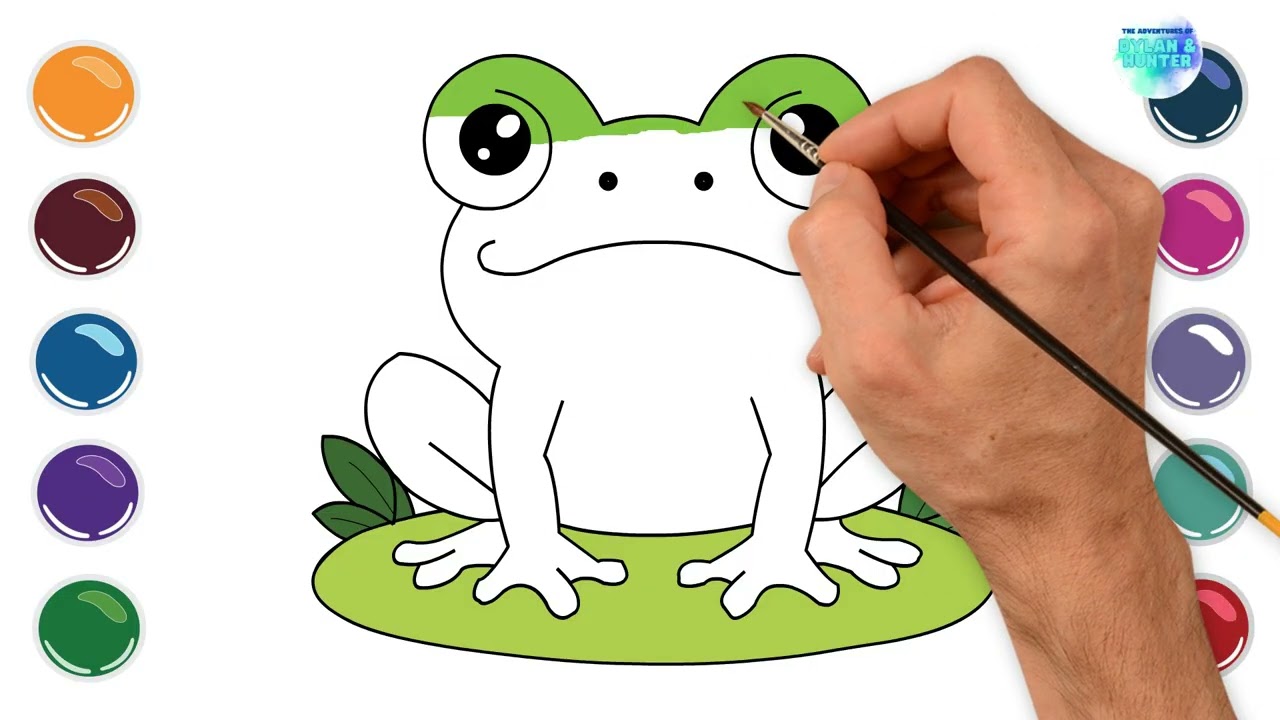
Let's Draw a Frog!
Автор: Draw with Dylan and Hunter
Загружено: 2026-02-07
Просмотров: 66
Описание:
A frog is a small amphibian known for its smooth skin, powerful jumping legs, and unique life cycle that includes both aquatic and terrestrial stages. Belonging to the order Anura, frogs are found on every continent except Antarctica and thrive in wetlands, forests, grasslands, and even urban environments. Their croaking calls, diverse colors, and ecological importance make frogs a key species in biology and environmental education.
Key Characteristics
Scientific order: Anura
Habitat: Ponds, streams, marshes, forests, and tropical rainforests
Diet: Carnivorous—primarily insects, worms, spiders, and small invertebrates
Size: Ranges from under 1 inch to over 12 inches depending on species
Lifespan: Typically 4–15 years in the wild
Behavior and Adaptations
Frogs are known for their remarkable jumping ability, aided by strong hind legs and flexible joints. Their permeable skin allows them to absorb water and oxygen, making them sensitive indicators of environmental health. Frogs communicate through a variety of vocal calls, especially during mating season. Their life cycle—from egg to tadpole to adult frog—is a classic example of metamorphosis and a common topic in science education.
Ecological and Educational Importance
Frogs play a vital role in ecosystems by controlling insect populations and serving as prey for birds, fish, and mammals. Because they are highly sensitive to pollution and climate change, frogs are important bioindicators that help scientists monitor environmental conditions. In classrooms and nature programs, frogs provide valuable lessons about life cycles, adaptation, and the importance of protecting freshwater habitats.
Повторяем попытку...
Доступные форматы для скачивания:
Скачать видео
-
Информация по загрузке: