Family poaceae | Gramineae or Grass family | economic importance | class 11
Автор: Visible Science
Загружено: 2023-08-20
Просмотров: 3410
Описание:
Aslam o alikum
I am Hassam ur Rahman and I am teaching Fsc biology since 2014 .I am always trying to improve myself and provide best lecture to students.i am taking content for the lecture from authentic and relevant sources but human errors are possible . you are requested to please highlight the mistakes.My lectures are equally reliable for Fsc and mdcat students
#visiblescience #mdcatbiology #alevelbiology #neetbiology #familypoaceae
This lecture is about
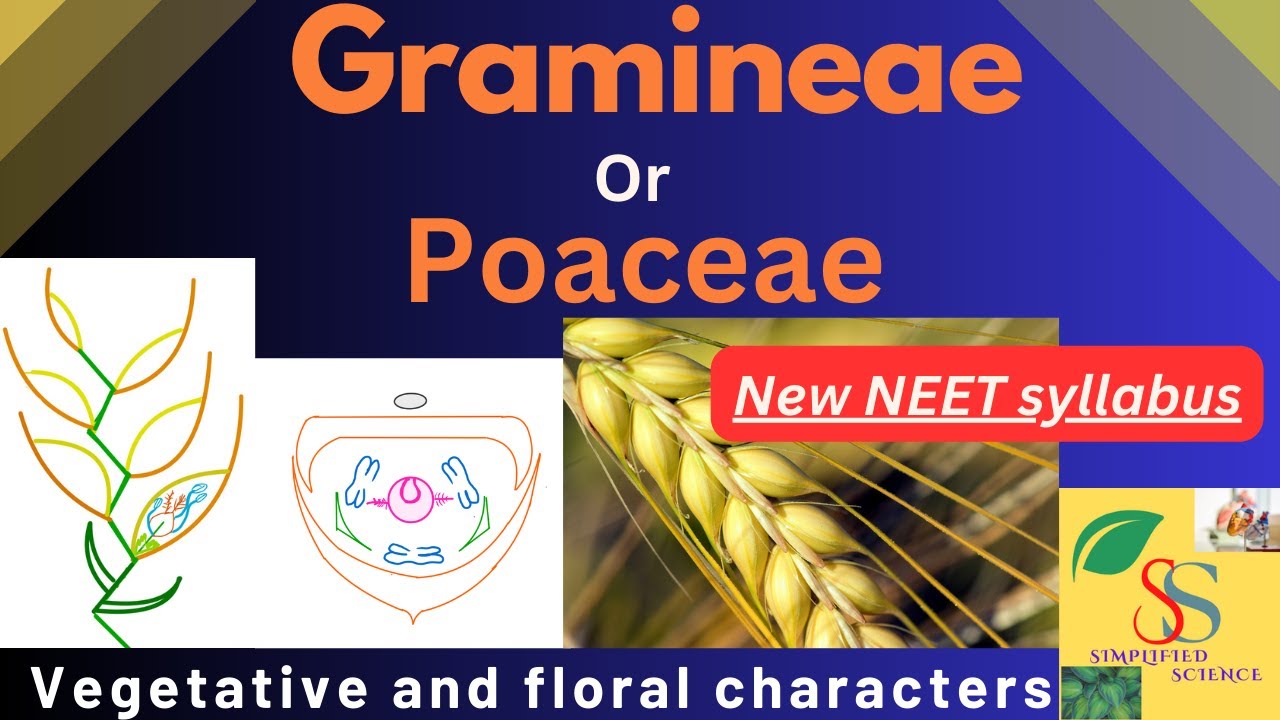
POACEAE: (Gramineae) Grass Family
Distributed throughout the world wherever vascular plants can survive. It includes about 600
genera, 10,000 species. In Pakistan it is represented by 158 genera and 492 species.
The traditional family name Gramineae takes its name from the Latin Grammar which was used as a
‘generic’ name for certain grasses, is permitted by the International Code of Binomial Nomenclature,
which also provides for the use of Poaceae, based upon the type genus Poa Linn.
Familiar Plants: Triticum vulgare, Wheat; Zea mays, Com; Avena sativa, Oats; Oryza sativa, Rice;
Bambusa, Bamboo; Saccharam oicinarum Sugar Cane etc.
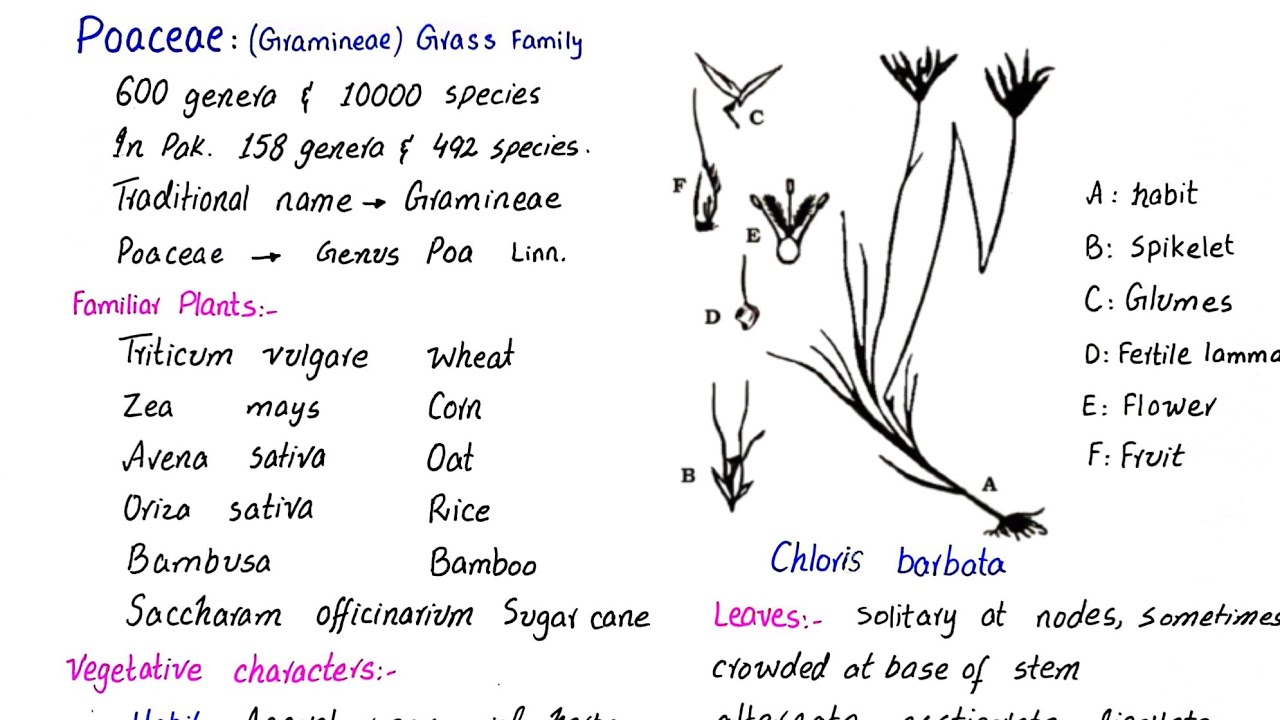
Vegetative Characters : Habit: Annual or perennial, herbs. Stem: Jointed usually hollow, at the
internodes, closed at the nodes. Leaves: Solitary at the nodes, sometimes crowded at the base of
the stem, alternate, exstipulate, ligulate, mostly sessile, leaf-base mostly sheathing, simple.
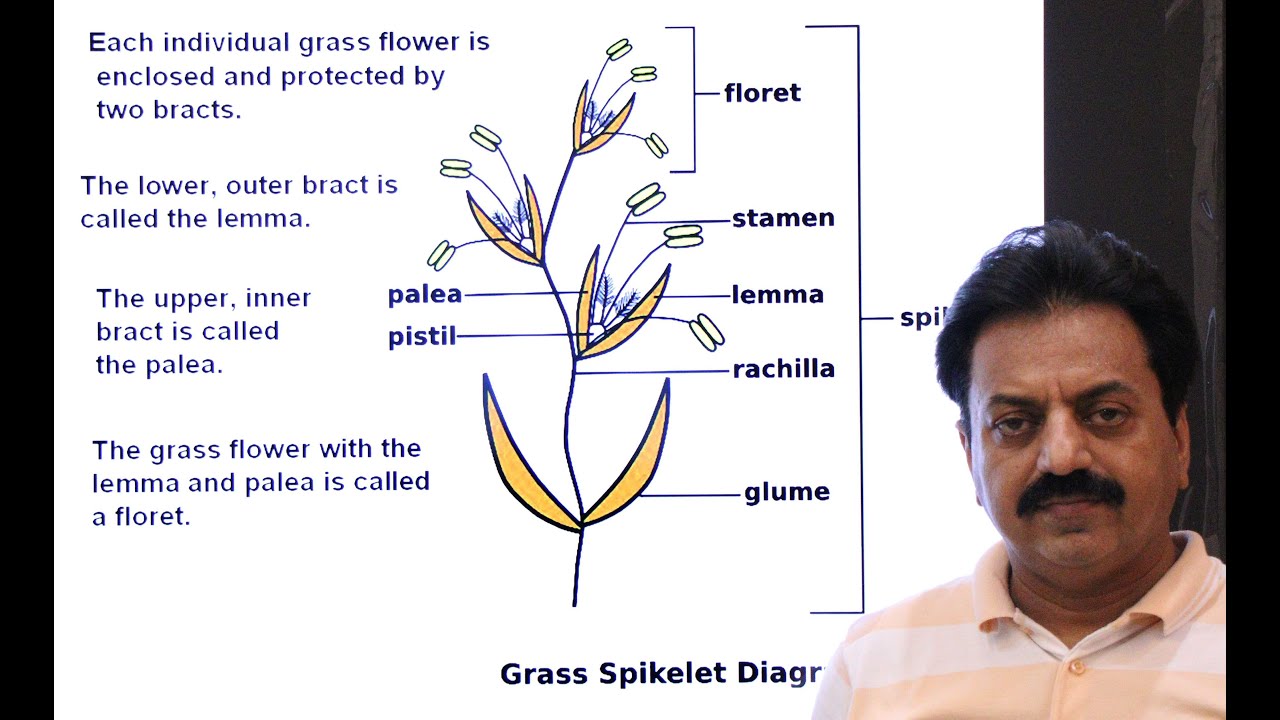
Inlorescence: Mostly compound composed of units called spikelets which are variously arranged
(indense clusters as in wheat, compound spike, or loosely on branched axis-as in oats , spikelets
consisting of bracts, arranged along a slender axis (called rachilla) the two lower bracts (called
glumes) which are empty; the succeeding lemmas enclosing a lower and opposed by a hyaline
scale called palea. The Whole (lemma, palea, and lower) termed as loret; the glumes or lemmas
often bearing one or more stif bristles (called awns); this basic pattern of spikelet structure is
consistent throughout the family. Spikelets of grasses vary widely in diferent genera, particularly
as to number of fertile lorets in each, and deposition of sexes with them.
Flowers: Usually bisexual, sometimes unisexual, small and inconspicuous, sessile, bracteate,
incomplete, zygomorphic, hypogynous. Perianth: Absent or represented by 2, (rarely 3), minute
hyaline or leshy scales called lodicules. Androecium: Stamens 1 to 6, usually 3. with delicate
ilaments. Gynoecium: A compound pistil of 3 united carpels, anthers versatale, though only one
is functional free; stigmas usually large feather like. Fruit : Grains or Caryopsis (caryopsis a dry,
indehicent fruit in which fruit wall (pericarp) is completed, fused with seed coat).
Economic Importance : Economically family Poaceae has greater importance than any other family
of lowering plants. It has great economic importance to both man and animals. Cereals and millets
which constitute the chief food stuf of mankind, belongs to this family. Most of the fodder crops,
which are equally important to domestic animals, also belong to this family.
Plants providing food for man includes: Triticum sp. (wheat), Avena sativa (Oats), Zea mays (Corn,
Maize), Oryza sativa (Rice), Hordeum vulgare (Barley), Secale cereale (Rye), Penisetum typhoideum;
Sorghum vulgare etc
The dried stem and leaves of the cereal crops are used as fodder for the cattle. Sugar is obtained
from the juice of Saccharum oicinarum (Sugar Cane). Many grasses are used in the lawns e.g.
Agrostis, Poa, Festuca etc. and have ornamental signiicance.
Bambusa (Bamboo) are used as building material for the thatching huts, making boats, carts, pipes
etc. and the split stem are woven into mats, baskets, fans, hats, course umbrella. Leaves are also
given to horses as a cure of cough and cold etc. Certain grasses yield aromatic oils, e.g. Cymbopogon
citratus (lemon grass) which yield lemon grass oil is used in perfumes and soap industry and for
making infusions. Some species of the grasses are used in making papers.
Ethyl alcohol and many other kind of beverages are also prepared from cereals for example whisky
from Rye, barley, corn and rum molasses from sugar cane. Fibers obtained from the leaves of
Saccharum munja which is used in making ropes.
Повторяем попытку...
Доступные форматы для скачивания:
Скачать видео
-
Информация по загрузке: