How America’s Air Defense System Protects the Sky | US Missile Defense Explained
Автор: Air Power Explained
Загружено: 2026-08-05
Просмотров: 4210
Описание:
How does the United States detect and respond to an airborne threat before it reaches its target?
America’s air defense is much more than a single missile launcher or radar station. It involves a broader network of sensors, command-and-control systems, aircraft, ground-based defenses, and other military assets designed to detect, track, identify, and respond to potential threats.
In this short military technology documentary, we break down the basic concept behind America’s layered air defense network and explain how different systems can work together to protect critical areas and monitor the skies.
The process begins with detection.
Once something is detected, tracking becomes extremely important.
Instead of simply knowing that an object exists somewhere in the sky, defense networks attempt to build a clearer picture of its movement. Information from different sensors can help commanders understand what is happening and determine whether an unidentified object represents a potential threat.
Airborne early-warning aircraft can also contribute to this larger picture. Operating high above the ground, these aircraft can carry powerful sensors and communication equipment that support surveillance and coordination.
But detection alone is not enough.
Information has to reach the people and systems responsible for making decisions.
This is where command and control becomes a critical part of modern air defense.
Information collected by different sensors can be combined into a broader operational picture. Military personnel can then evaluate the situation and coordinate an appropriate response.
Depending on the type of threat and circumstances, different defensive options may be available.
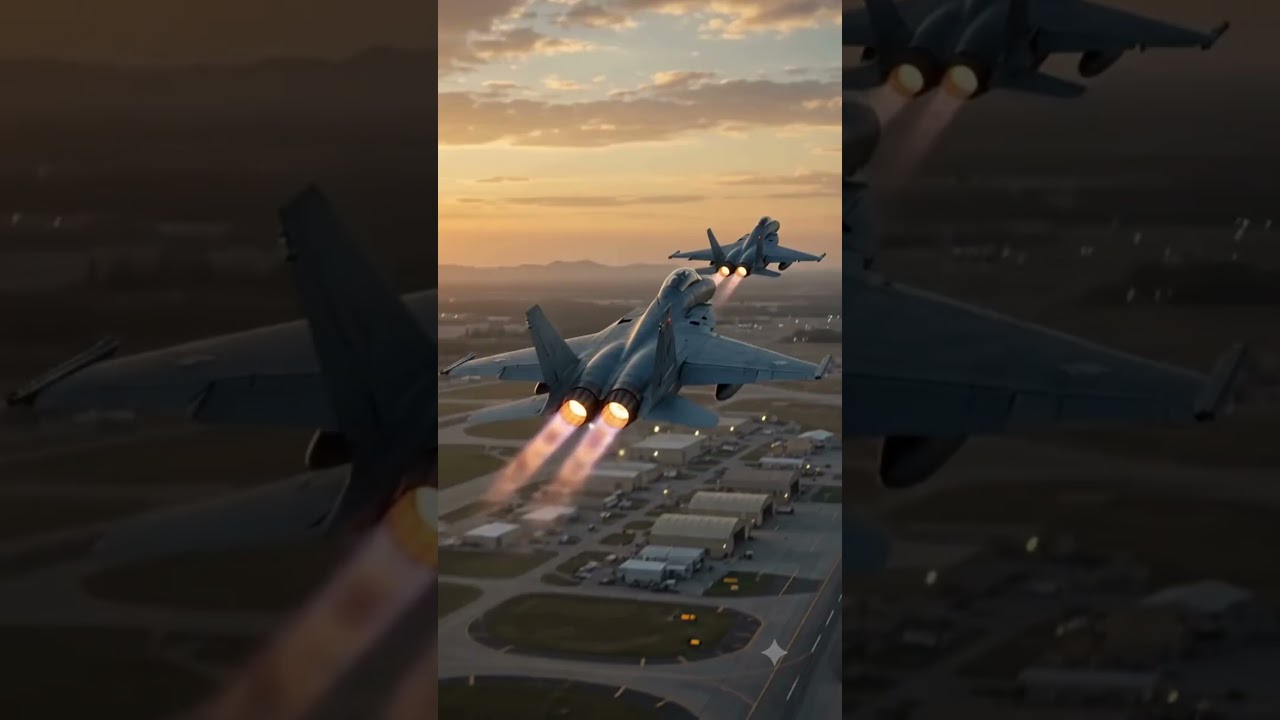
Fighter aircraft can be used to investigate or respond to airborne threats. Ground-based air defense systems can provide another layer of protection. Other specialized systems may be designed for particular types of missile threats.
This is why modern air defense is often described as “layered.”
There is no single defensive system that is ideal against every possible threat.
An aircraft, a small drone, a low-flying cruise missile, and a ballistic missile can present very different challenges. Different sensors and defensive systems are therefore designed for different roles.
When these capabilities are connected, they can form multiple layers of detection and defense.
If an incoming threat is identified and an interception is required, a defensive interceptor may be launched.
But one of the most important ideas behind modern air defense is something that is less visually dramatic than a missile launch: networking.
Modern military defense increasingly depends on information.
Radar stations, airborne sensors, command centers, aircraft, and defensive units can contribute information to a shared operational picture.
That means the effectiveness of an air defense network is not determined only by how fast an interceptor can fly or how powerful a radar may be.
Coordination matters.
Detection matters.
Tracking matters.
Communication matters.
And decision-making matters.
Together, these elements create a much broader defensive architecture.
This video provides a simplified educational overview of those concepts. Real-world U.S. air and missile defense is significantly more complex, and capabilities can differ depending on mission, service branch, location, and threat.
No classified procedures, sensitive deployment information, exact operational ranges, or restricted technical details are presented in this video.
And as aerial threats continue to evolve, defense technology continues to evolve with them.
Drones are becoming more capable.
Cruise missiles can approach at low altitude.
Ballistic missiles can travel enormous distances at tremendous speeds.
All of these challenges make surveillance, communication, sensor integration, and layered defense increasingly important.
So when you see an interceptor missile launch in a military video, remember that the launch itself is only one part of a much larger process.
Information may already be moving between different parts of the defense network.
That interconnected network is one of the central concepts behind modern air defense.
If you enjoy videos about military technology, fighter jets, missile defense, radar systems, stealth aircraft, aviation technology, and modern defense systems, subscribe to the channel for more short military explanation documentaries.
This content is created for educational, documentary, and informational purposes.
Visual sequences may include AI-generated or digitally created representations intended to explain general concepts and should not be interpreted as footage of an actual military operation.
Thanks for watching.
Subscribe for more military technology explained.
#AirDefense #USMilitary #MissileDefense #MilitaryTechnology #AirDefenseSystem #MilitaryDocumentary #USAirForce #Radar
Повторяем попытку...
Доступные форматы для скачивания:
Скачать видео
-
Информация по загрузке: