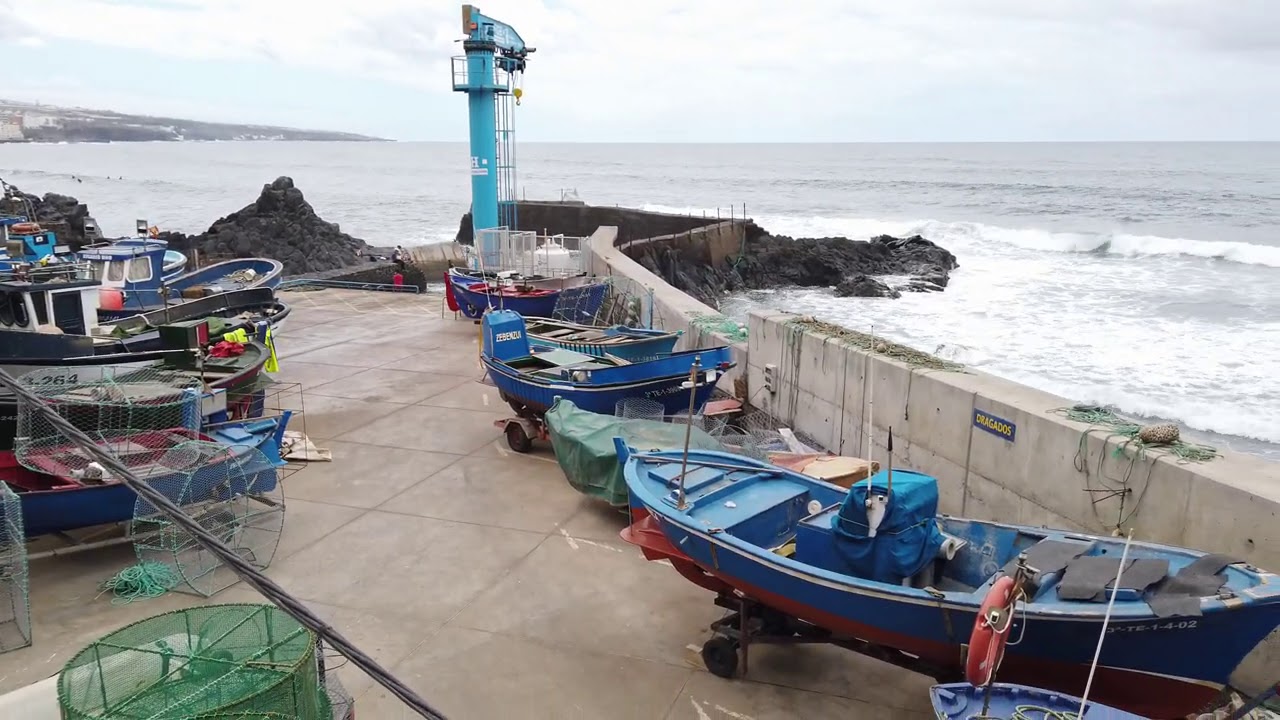
Acquaintance with Punta del Hidalgo - north of Tenerife, a walk in September 2020.
Автор: Путеводитель на русском
Загружено: 2020-09-28
Просмотров: 1535
Описание:
Find low price hotels: https://tripguides.info/recommends/ho...
Punta del Hidalgo, also known as Punta Hidalgo or simply La Punta, is a coastal population entity of the municipality of San Cristóbal de La Laguna, on the island of Tenerife —Canarias, Spain
It is one of the most important tourist areas of La Laguna, also conserving a fishing and agricultural character. Administratively, it is included in Zone 5 of the municipality.
In the town there are different bathing areas, which makes it a summer area for many people from Tenerife.
Features
Punta del Hidalgo is located to the northwest of the Anaga massif, being settled for the most part on a coastal platform created about one hundred thousand years ago by the eruption of the volcano known as El Morro or Las Rozas volcano. It is also the most salient point of the island of Tenerife.
It is located about 16 kilometers from the municipal center and at an average altitude of 62 meters above sea level, its maximum altitude being located at the elevation known as Roque del Moquinal at 796 meters above sea level.6
It occupies a total area of 7.98 km² that includes not only the urban nucleus, but also a large natural area included in the protected area of the Anaga rural park.
Punta del Hidalgo Lighthouse.
La Punta can be divided into the different inhabited nuclei of: Punta del Hidalgo, La Hoya -Alta and Baja-, El Homicián and Urbanización Tesesinte.
The town has a parish church dedicated to San Mateo Apóstol –built with stones extracted from Jardina and Bajamar and which stands out for its red color–, two hermitages, several public squares and playgrounds, a doctor's office, a Red Cross post , a citizen center, a pharmacy, a bank branch, a Post Office, the CEIP Punta del Hidalgo, a park, the San Gregorio cemetery, several apartments Altagay, Atlantis Park and Ocean-, as well as sports facilities -Municipal Soccer Field, sports center and skate park and a wide range of bars and restaurants. It also has a small fishing port with its fishermen's brotherhood, with a camping area, several viewpoints and a modern lighthouse.6
Along its coast there are the beaches of El Arenal, El Roquete, Arenisco and Los Troches. It also has natural pools and pools adapted for bathing.
It also has a replica of the Tower of the Count of San Sebastián de La Gomera, and with the monuments dedicated to the folk group Los Sabandeños, which emerged in the town, and Sebastián Ramos el Puntero, an exponent of traditional Canarian music.
In its landscape, the elevations known as Roque de los Dos Hermanos, Aguacada and Roque la Pedrera stand out.
History
In the Guanche era, the territory of La Punta formed a political unit independent from the rest of the kingdoms or menceyatos, remaining between the Anaga and Tegueste sides. Tradition speaks of two of its rulers, known as Aguahuco and Zebensuí, the latter participating in the events of the conquest.
During the conquest of the island between 1494 and 1496, Punta del Hidalgo was part of the so-called war bands, those Guanche kingdoms that fought the Europeans.
After the war ended in 1496, Alonso Fernández de Lugo began with the distribution of land and other assets between the conquerors and settlers. La Punta was given to Diego Sardina in 1504.
Diego Sardina. A ravine with its water called Tedixe, which is at the end of all the plains of Punta del Hidalgo at the foot? of the mountain that is on the cove, with the lands that with it you can take advantage of. 14.10.1504. That I say that you give the said (waters) if it is not given on the condition that if it is water to irrigate that you are forced to draw it and make a beast mill, which I command the clerk to agree. The Adelantado.
Las Datas de Tenerife (First Book of Datas by testimony). Francisca Moreno Fuentes.
Other beneficiaries in the area were Alvar González de las Alas, Sebastián Norman, Bartolomé Rodríguez de Porcuna, Francisco de Flandes, Afonso González and the Gomeran Hernando Aguaberque and his son, Juan Remandes and Pedro Mexacar.
Punta del Hidalgo was populated from the beginning of the 16th century by Portuguese and Gomeran settlers.
La Punta had a petty or local mayor since the seventeenth century, becoming a municipality in 1812 under the Constitution of Cádiz. Its territory covered the area from the San Juan ravine and the Lomo de Isogue to the summit in the west, and the Taborno ravine in the east. The municipality included the payment of Las Montañas, formed by the hamlets of the Anaga de Las Carboneras, Chinamada, Bejía and Los Batanes massif.
#tenerife
Повторяем попытку...
Доступные форматы для скачивания:
Скачать видео
-
Информация по загрузке:


![🏝️🚐 CANARIAS en AUTOCARAVANA➡️[QUÉ VER en PUNTA DEL HIDALGO] Tenerife en camper 🚌 Canarias en camper](https://image.4k-video.ru/id-video/cy73_DYYO7g)


![TENERIFE | Natural Pool Punta del Hidalgo [Incredible Place!] 🤗 Aug 2021 | Walking Tour [4K]](https://image.4k-video.ru/id-video/43m4P9b1dOM)


