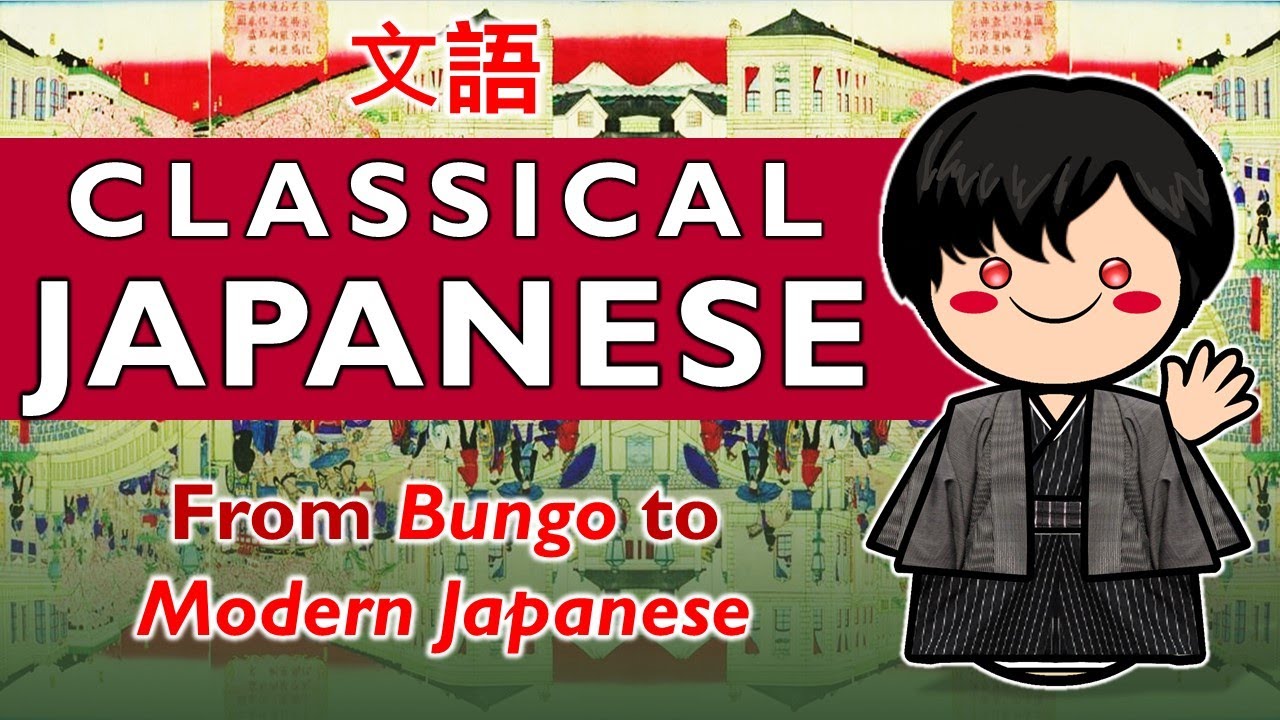
When Japan Spoke in Poetry: Classical Japanese (Bungo) & Heian Culture
Автор: ILoveLanguages!
Загружено: 2025-07-28
Просмотров: 8018
Описание:
When Japan Spoke in Poetry: Classical Japanese (Bungo) & Heian Culture
I love languages, Classical Japanese, Bungo, 文語, Heian period, Heian culture, Japanese history, The Tale of Genji, Murasaki Shikibu, Sei Shonagon, Kokin Wakashu, Manyoshu, Japanese literature, Japanese language history, Learn Classical Japanese, Ancient Japanese language, Court culture Japan, Mono no aware, Wabi sabi, Early Middle Japanese, Japanese poetry, Aristocratic Japan, Kyoto Heian, Classical Japanese grammar, Japanese philology
Welcome to my channel! This is Andy from I love languages. Let's learn different languages/dialects together.
CHAPTERS:
Introduction: 0:00 - 1:59
Numbers: 2:00 - 2:26
Greetings & Phrases: 2:27 - 2:54
Vocabulary: 2:55 - 3:19
Sample Text: 3:20 - 6:34
Special Thanks to Hachia :)
Please subscribe! / @hachia_channel
Ya! Waga na wa Andy nari. Tsutsuganashi ya.
Hello! My name is Andy. How are you?
Let's talk about the Classical Japanese language.
Classical Japanese Language:
Classical Japanese, known as bungo (文語), refers to the written form of the Japanese language used from the Heian period (794–1185) until the early 20th century. It is based on the grammar and vocabulary of Early Middle Japanese, particularly as codified during the Heian era, and remained the standard for literature, official documents, and scholarly writing for over a millennium. Classical Japanese differs significantly from Modern Japanese in terms of verb endings, particles, and syntax, though much of its vocabulary and kanji usage has carried over. Key works such as The Tale of Genji, Manyōshū, and Kokin Wakashū exemplify the elegance and complexity of this language. Even into the modern period, Classical Japanese was taught as a formal subject, much like Latin in the West.
Classical Japanese People/Culture:
The people of the Classical Japanese period, especially during the Heian era, were shaped by a highly refined court culture centered in Kyoto, where aristocrats engaged in poetry, calligraphy, music, and seasonal rituals. Society was hierarchical and deeply influenced by Chinese Confucian and Buddhist thought, but uniquely Japanese aesthetics like mono no aware (the pathos of things) and wabi-sabi (appreciation of simplicity and impermanence) began to flourish. The era saw the rise of influential female writers, such as Murasaki Shikibu and Sei Shōnagon, whose works reveal the emotional depth and daily life of the nobility. While the imperial court enjoyed luxury and sophistication, the provincial warrior class was gradually gaining power, eventually leading to the shift from aristocratic to samurai rule in later centuries.
This video is created for educational, language awareness, and language preservation purposes. It aims to provide valuable insights and knowledge to viewers, enhancing their understanding and appreciation of different languages and their unique characteristics. By raising awareness about linguistic diversity, the video seeks to foster a greater respect and recognition for various languages, particularly those that are endangered or underrepresented. Additionally, it contributes to the preservation of languages by documenting and sharing linguistic knowledge, thus ensuring that these languages and their cultural heritage are not lost to future generations.
Please feel free to subscribe to see more of this.
I hope you have a great day! Stay happy!
Please support me on Patreon!
https://www.patreon.com/user?u=16809442.
Please support me on Ko-fi
https://ko-fi.com/otipeps0124
Follow me on Instagram. See you there! ✨✨✨
@ itsmeandy24
https://www.instagram.com/itsmeandy24...
If you are interested to see your native language/dialect featured here.
Submit your recordings to [email protected].
Looking forward to hearing from you!
Повторяем попытку...
Доступные форматы для скачивания:
Скачать видео
-
Информация по загрузке:


![[Kanji Test] Minna No Nihongo N4 Level [Day 6]](https://image.4k-video.ru/id-video/BZYF_Ew-Q1M)


