Ventricular Tachycardia (VTach)
Автор: Nursing School Explained
Загружено: 2020-09-09
Просмотров: 1657
Описание:
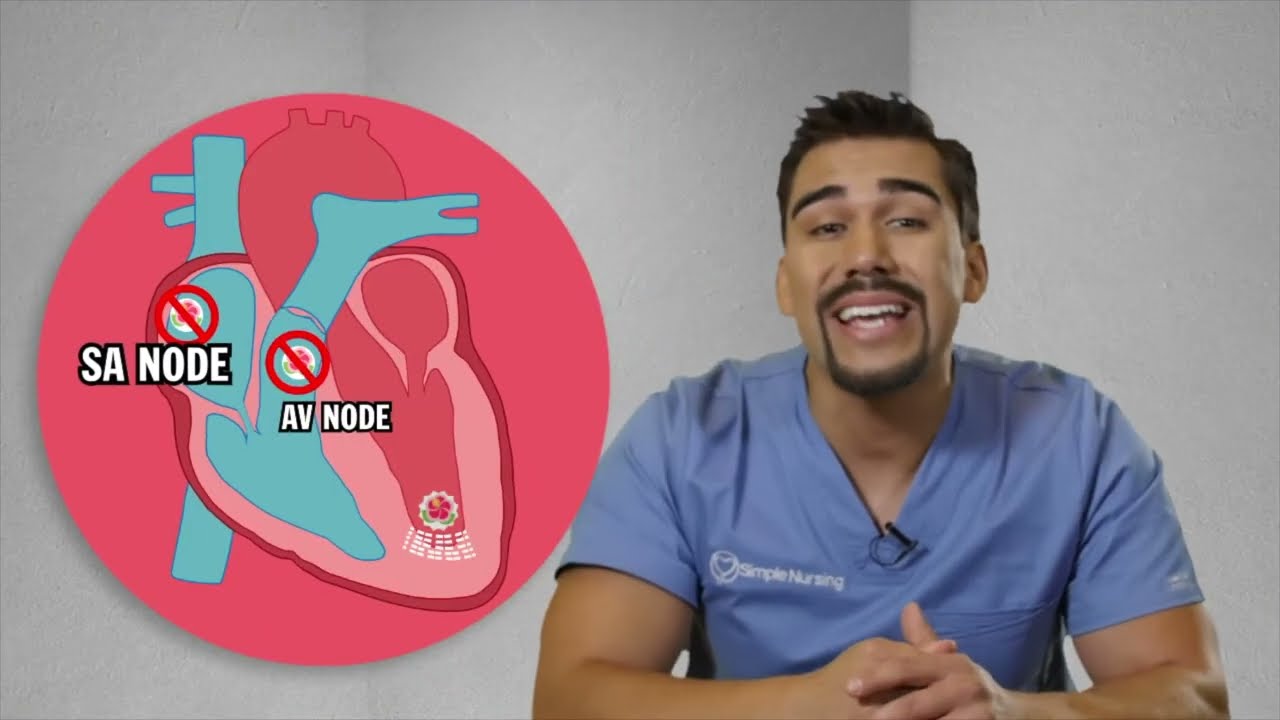
This video discusses the origin of ventricular tachycardia, its characteristics, causes, signs & symptoms as well as interventions. It distinguishes between monomorphic and polymorphic ventricular tachycardia, which is also referred to as Torsades de Pointes.
Please refer to the “Ventricular Dysrhythmias” Playlist for more videos about premature ventricular contractions/complexes (PVCs), ventricular atrial fibrillation (Vfib), asystole aka cardiac standstill, and pulseless electrical activity (PEA).
Ventricular Tachycardia RULES:
(** indicates deviation from normal**)
1. Rate:
**101-250 bpm
2. Rhythm:
Essentially regular
3. P-wave:
** May be visible (depends on rate) but has no relationship to QRS
4. Intervals:
**PRI: none
**QRS: Greater than 0.12, WIDE & BIZARRE, often difficult to differentiate between QRS and T wave
For more videos about this important topic please refer to the other EKG Interpretation playlists of my channel Nursing School Explained. The videos in this playlist are intended to be watched in succession for best results: Basic Electrophysiology, EKG Interpretation - The Basics: EKG paper and Determination of Heart Rate, EKG Interpretation - The Basics - Normal Intervals and RULE to Memorize, Sinus rhythms, Atrial rhythms, AV blocks, and Ventricular rhythms.
Повторяем попытку...

Доступные форматы для скачивания:
Скачать видео
-
Информация по загрузке: