Why is Capillary Condensation Dependent on Pore Geometry and Curvature?
Автор: Arts
Загружено: 2014-10-30
Просмотров: 18801
Описание:
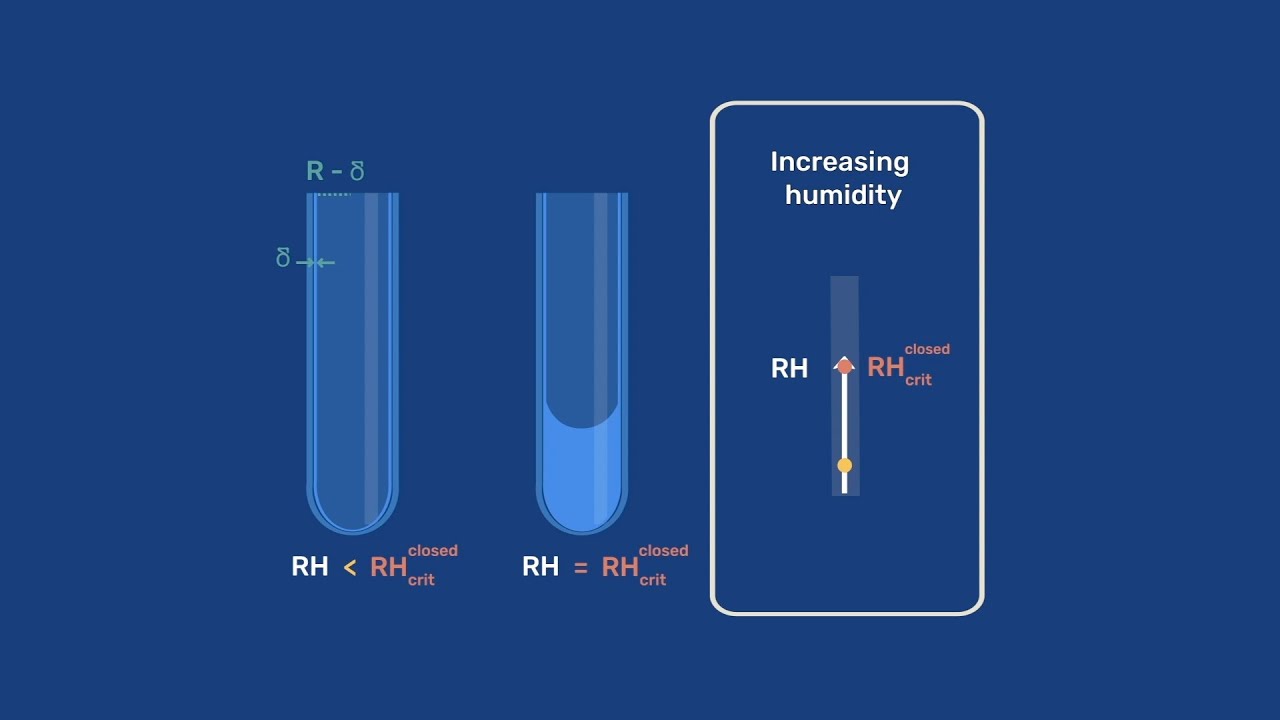
Capillary condensation is a process by which multilayer (more than one layer) adsorption (when a particle attaches itself on to a surface) occurs in a porous medium from vapour to liquid phase to the point where the pore spaces become filled with the condensed liquid. Capillary condensation is unique, as unlike regular condensation, capillary condensation occurs below saturation vapour pressure of a pure liquid. However, the condensation that occurs is slightly similar to that seen in our everyday lives (eg. during a hot shower, drinking a cold beverage and dew formation on leaves). The principle is that when vapour phase particles are in a confined space, the distance between each particles is very close. This increases the van der Waals forces of attraction between each particle. Hence, less pressure is required for condensation inside a capillary to occur. Eventually, the particles attach themselves onto the capillary wall. This is mainly due to the effect of adhesive forces (unlike molecules attract) between the particles and the wall of the capillary. As more vapour phase particles enter the capillary, the particles attract to each other. This is due to the cohesive forces (like molecules attract) between each particle. This process continues until many layers form on top of each particle (multilayer adsorption) and will soon fuse to form a meniscus at the liquid-vapour interface.
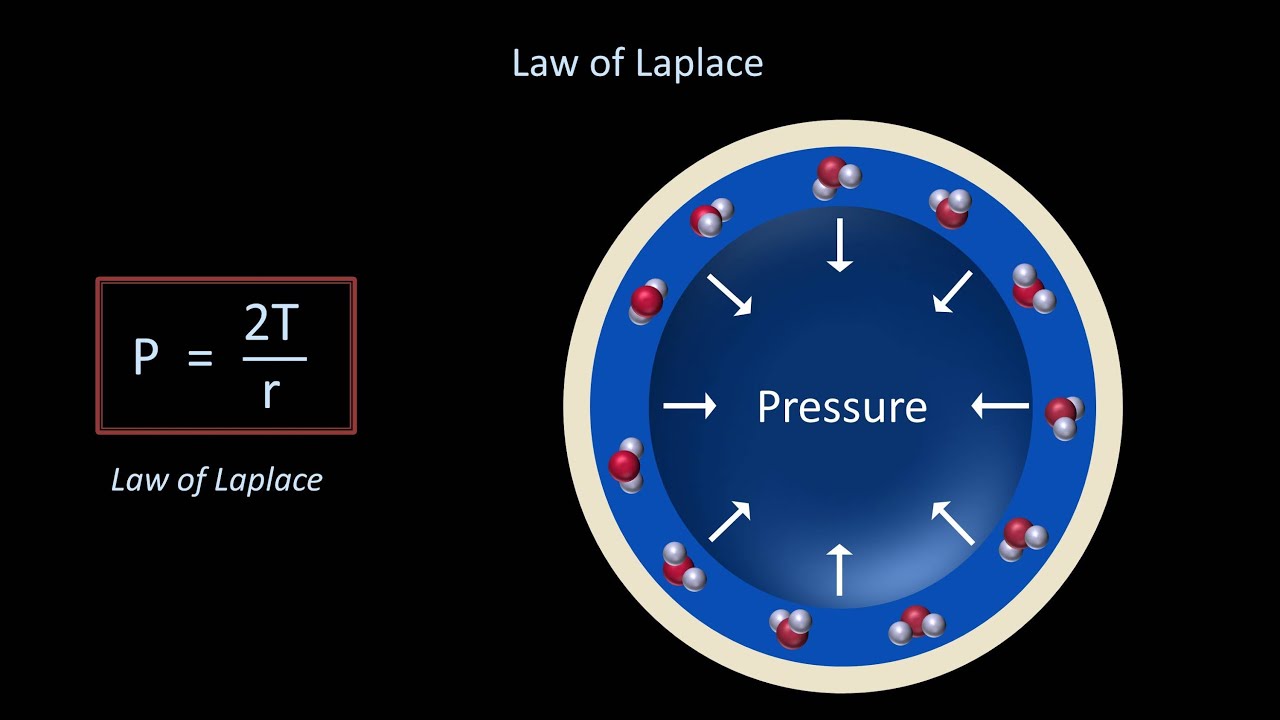
Capillary condensation can best be described using the Kelvin equation. The Kelvin equation describes the change in vapour pressure due to a curved interface (a meniscus is curved-so it’s related).
This is the Kelvin Equation:
ln Pv/Psat = -(2HγVl)/RT
*Only Pv & H effect capillary condensation
where;
Pv = equilibrium vapour pressure
Psat = saturation vapour pressure
H = mean curvature of meniscus
γ = liquid/vapor surface tension
Vl = liquid molar volume
R= ideal gas constant
T= temperature
Pore geometry effects capillary condensation as different pore geometries (pore shapes) have different curvatures of meniscus. The geometry of the pores and capillaries are never perfectly cylindrical in both natural and synthetic porous structures. Capillary condensation occurs faster in cylindrical pores where the radius is constant. Since non uniform pores give varying curvatures of meniscus, the Kelvin equation should be represented differently whenever the meniscus changes.
A curvature is the interface between two fluids that form a meniscus. Since the Kelvin equation is dependent on the value of H (H= 1/2rm + 1/2rc). As the shape becomes more curved or flatter, the radius of the meniscus, rm changes. The radius of the meniscus is found by extrapolating a circle from the meniscus and measuring the length of the radius of the extrapolated circle. Hence, based on the Kelvin equation Pv increases as H increases. Thus, a larger H creates a flatter meniscus and more capillary condensation occurs.
Among the applications of capillary condensation related to chemical engineering include sintering, which is a shaping process that combines dust particles and solids using heat(eg. for ceramic). Besides that, distillation in petroleum refining separates components using selective vapourisation and condensation.
© 2014 Copyright | University of Nottingham
Повторяем попытку...

Доступные форматы для скачивания:
Скачать видео
-
Информация по загрузке:



![Как из хаоса рождается порядок? [Veritasium]](https://imager.clipsaver.ru/HmmYtopGx7Y/max.jpg)