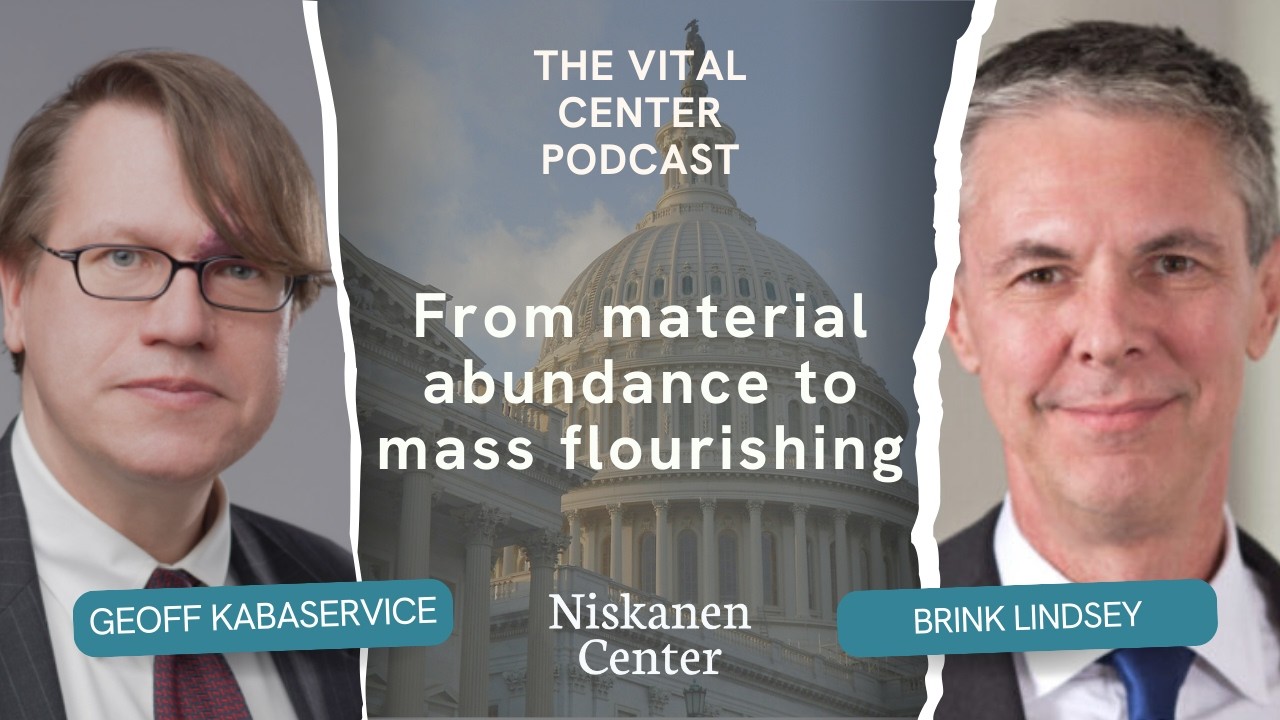
From material abundance to mass flourishing, with Brink Lindsey
Автор: Niskanen Center
Загружено: 2026-02-05
Просмотров: 44
Описание:
Since our species first emerged on the planet some 300,000 years ago, the overriding problem for most humans has been the struggle for food and shelter. But in 1930, the British economist John Maynard Keynes foresaw that economic growth (despite the Great Depression) would mean that in a century, the vast majority of people in developed societies would enjoy mass plenty and only a small number of unfortunates would still struggle with material deprivation. This would mean that “for the first time since his creation man will be faced with his real, his permanent problem — how to use his freedom from pressing economic cares, how to occupy the leisure which science and compound interest will have won for him, to live wisely and agreeably and well.” But Keynes worried that transitioning to this new problem would present huge difficulties for humanity: “there is no country and no people, I think, who can look forward to the age of leisure and abundance without dread.”
Brink Lindsey, senior vice president at the Niskanen Center, has written a visionary new book addressing Keynes’ conundrum. In The Permanent Problem: The Uncertain Transition from Mass Plenty to Mass Flourishing, Lindsey ponders the paradox that people in developed countries live in conditions of unparalleled wealth, health, and technological progress — and yet most people feel disappointment rather than gratitude at the results. We enjoy an abundance of material goods, yet most people are missing out on the sense of meaning, purpose, and belonging that define human flourishing.
In this podcast discussion, Lindsey describes the “triple crisis of capitalism” that has brought material prosperity but also social disintegration, sputtering dynamism, and dysfunctional politics. But he also sees encouraging signs that point toward how mass flourishing might be accomplished in developments that include new technological breakthroughs and the growing Abundance movement. Ultimately he hopes for a future in which people will have closer relationships with each other as well as the natural world, and in which humanity’s drive to explore and understand will reach into the larger universe. “Our destiny is up to us,” he concludes, “and therefore we should make the most of that chance. We ought to aim high.”
Повторяем попытку...
Доступные форматы для скачивания:
Скачать видео
-
Информация по загрузке: