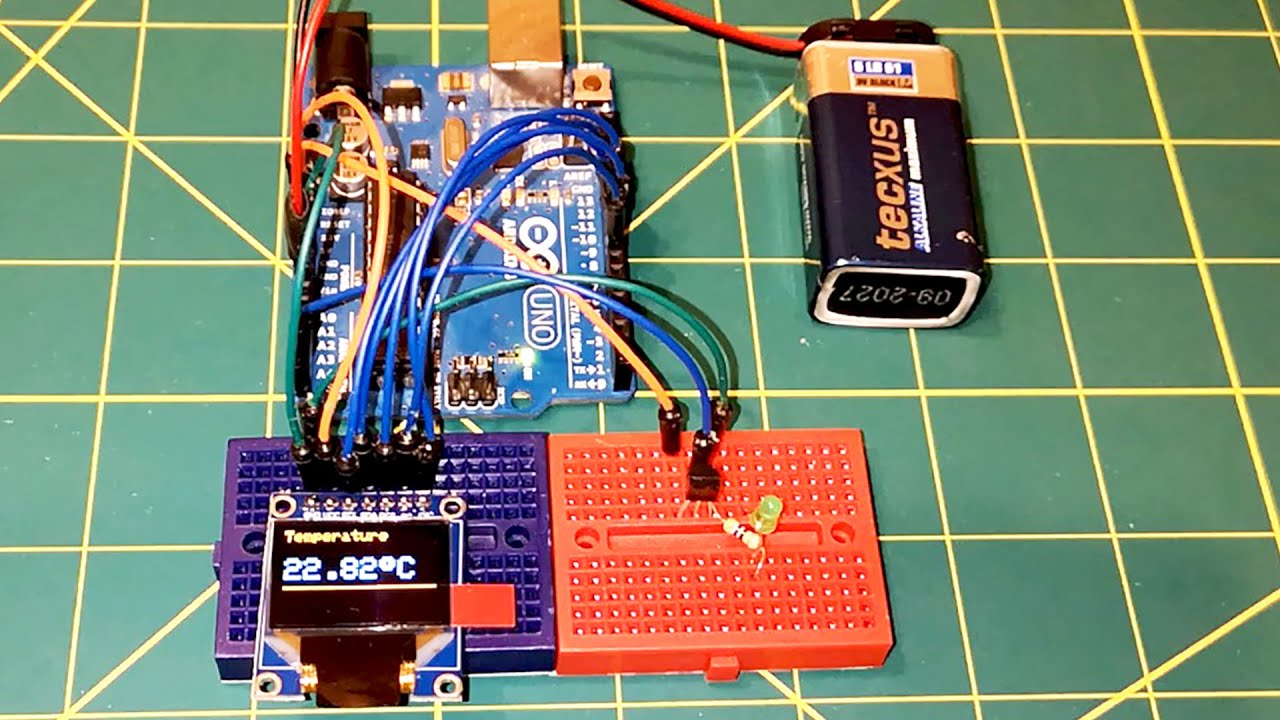
Arduino Scrolling Text and using the INT function - GeekCreit Temp & Humid OLED PCB module
Автор: FlixMySwitch
Загружено: 2020-01-19
Просмотров: 349
Описание:
This video has now been uploaded in HD see notes below. ESP8266 OLED screen lets get them working.
*******************************************************************************
This video has been re up loaded in true HD • ESP8266 Scrolling Text and #0004 INT funct...
*******************************************************************************
Basic scrolling text and using the INT function to create better code which is much easier to change.
We are using this board - Geekcreit® ESP8266 IoT Development Board +DHT11 Temperature and Humidity + Yellow Blue OLED Display SDK Programming Wifi Module.
You will find the json file to place in your board manager to add both esp8266 and esp32 boards
ESP32: https://dl.espressif.com/dl/package_e... 29
ESP8266: http://arduino.esp8266.com/stable/pac...
Just copy and paste the line of code and paste it in to the Arduino IDE. And it will give you both the esp8266 and 32 boards
Here is a link to the code used in this video
https://ko-fi.com/s/5d7bcd43fc
If you would like to follow along with this series of videos using the GeekCreit board show please use this affiliate like to purchase one. As it will help this channel out by earning a very small commission and will not cost you anything extra.
https://www.banggood.com/custlink/DDm...
If you have found this video useful please consider if you are able to TIP me using the link below. I love my coffee it keeps me going.
https://ko-fi.com/flixmyswitch
The ESP8266 is a low-cost, Wi-Fi-enabled System-on-Chip (SoC) microcontroller manufactured by Espressif Systems, ideal for Internet of Things (IoT) projects due to its integrated Wi-Fi capabilities and affordable price. It features a built-in TCP/IP stack, allowing it to connect to networks, and can host its own applications or be used to add Wi-Fi functionality to other devices, making it a popular choice for DIY electronics and rapid prototyping.
Key Features & Capabilities:
Wi-Fi Connectivity:
Supports the 802.11 b/g/n protocol, enabling it to act as a client or access point to a Wi-Fi network.
Microcontroller Functionality:
Includes a 32-bit Tensilica Xtensa processor and memory, allowing it to run embedded applications.
TCP/IP Stack:
Has a full TCP/IP stack, simplifying network communication and making it IP-addressable.
Programmability:
Can be programmed with its own code, supporting platforms like Arduino IDE and MicroPython, or controlled using AT commands via a UART interface.
General-Purpose Input/Output (GPIO):
Features multiple GPIO pins for interfacing with sensors, LEDs, and other electronic components.
Affordable Price:
Its low cost makes it accessible for hobbyists and developers to incorporate wireless capabilities into various projects.
Common Uses:
IoT Projects: Widely used for creating connected devices that can monitor and control things over the internet.
Remote Control:
Allows you to control devices remotely through a Wi-Fi connection.
Embedded Systems: Can function as a standalone application processor or offload network tasks from a larger system.
A MAX7219 LED matrix display is a module that uses a MAX7219 driver IC to control an 8x8 grid of LEDs, allowing it to display characters, symbols, and simple animations. It's a popular component for hobbyists and developers due to its ability to simplify controlling individual LEDs, its compatibility with microcontrollers like Arduino and Raspberry Pi via a serial interface, and its daisy-chaining capability to expand the display by connecting multiple modules together.
Music by: https://www.bensound.com
Повторяем попытку...

Доступные форматы для скачивания:
Скачать видео
-
Информация по загрузке:





![Massive Attack • Portishead • Thievery Corporation- Special Coffeeshop Selection [Seven Beats Music]](https://imager.clipsaver.ru/YPJD1hF2kIY/max.jpg)