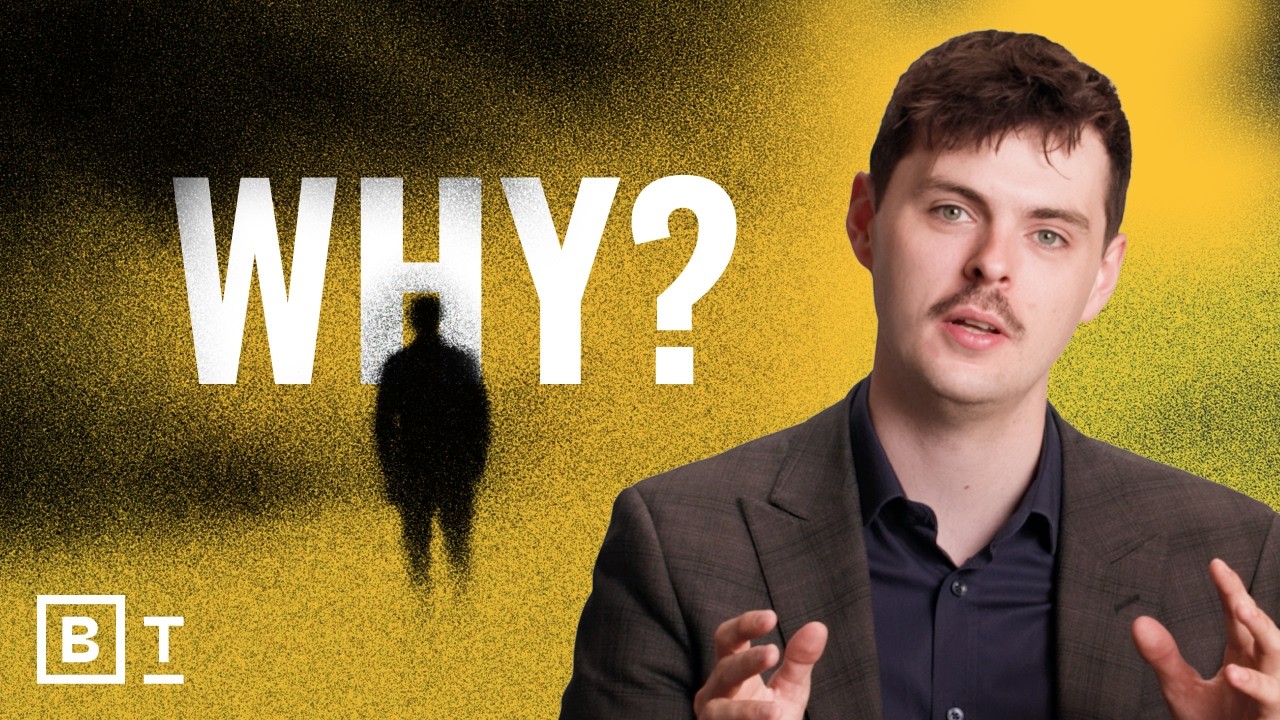
John Temple on the Future of Newspapers | Big Think
Автор: Big Think
Загружено: 2012-04-23
Просмотров: 3805
Описание:
John Temple on the Future of Newspapers
New videos DAILY: https://bigth.ink/youtube
Join Big Think Edge for exclusive videos: https://bigth.ink/Edge
----------------------------------------------------------------------------------
John Temple on what’s next for newspapers.
----------------------------------------------------------------------------------
John Temple:
John Temple is the former editor of the Rocky Mountain News, the Denver newspaper that ceased publication in 2009. Under his editorship, beginning in 1998, the paper won four Pulitzer Prizes and numerous other awards for journalistic excellence. He also held the titles of president and publisher.
Temple joined the Rocky in 1992 as metro editor. He was named managing editor in 1995. Before joining the paper, he was managing editor of The Albuquerque Tribune, another E.W. Scripps Co. newspaper. He has also worked at The Toronto Star, Canada’s largest newspaper.
Temple also served as VP/News for Scripps’ newspaper division since 2006. In that capacity, he acted as a sounding board for editors and publishers to help them explore and develop print and online initiatives. Temple has a master’s degree in journalism from Northwestern University and a bachelor’s degree from the University of Toronto. He is married to artist Judith Cohn and has three children.
----------------------------------------------------------------------------------
TRANSCRIPT:
Question: Will we stop printing ink on paper?
Temple: You know, I don’t think it will actually because it’s still a great medium. Until somebody invents a cheap electronic paper, different from a Kindle which I think is too complex and too expensive for the average person, I think there still going to be a place for newspaper but what I do think is 7 day a week, large metropolitan papers or even smaller community papers, it’s not viable based on the revenue that’s coming… and that really, we have to start… what you’ll see is news organizations that do not identify themselves with a form of distribution, they’re information companies, knowledge companies that then distribute on video, they distribute databases or they make available databases, they do print additions, they do specialty magazines, they do whatever works for the customer and the advertiser and whatever makes sense financially. If it doesn’t make sense to produce something, we’re going to have to find… financial sense to do it, we have to a different way to do it.
Question: How can newspapers become more efficient?
Temple: We spent an enormous amount of money doing things that don’t have much value like why does the New York Post and New York Daily News… why do they have to have separate people producing the NBA box scores in their newspaper? What added value for the customer are they producing? Shouldn’t we put our efforts where they really provide value to the user wherever the user is, you know? Wanted to read on his kitchen table, riding a bus, you know, being halfway across the world and wanting to know what’s going on in New York City, why can’t we create value that way and I think we can because you can see people paying for content but they pay for content but they pay for content that they perceive provides them benefit or value, entertainment or otherwise.
Question: How will newspaper articles evolve?
Temple: I think they’ll become more of a conversation along the line of a blog where the readers participate and expertise from outside starts to moderate what we see published. You know, if you look at Wikipedia, Wikipedia is a brilliant and successful media initiative, I mean, they created a new form of encyclopedia that’s living, it’s breathing, and the idea of a Wikipedia for our community, like shouldn’t the local news organization be the in-depth resource for our community so if you know more about healthcare, for example, and healthcare financing, healthcare insurance, why shouldn’t you be able to work with me as we’re explaining, you know, how the Obama administration’s policies will affect Colorado. So I think the involving and bringing people in will be a very important part of whatever anything looks like, that this… that interactivity, that conversation, that inclusiveness, that… it’s not us telling you, it’s actually us working with you and trying to understand and answers your questions but you… the reader will be answering questions as well. I think we’re in a much more participatory world. I actually think that that’s better and we might have more information but we have to think of ourselves, maybe as more curators and moderators and not just as originators. Typically, with local media companies, they thought that they have to produce everything that was the only way to trust anything.
Read the full transcript at https://bigthink.com/videos/john-temp...
Повторяем попытку...

Доступные форматы для скачивания:
Скачать видео
-
Информация по загрузке: