The Psychology of A Child Who Grew Up Too Fast
Автор: QuietStrength
Загружено: 2026-02-28
Просмотров: 22870
Описание:
The psychology of growing up too fast - why childhood trauma reshapes how you love, work, and rest as an adult.
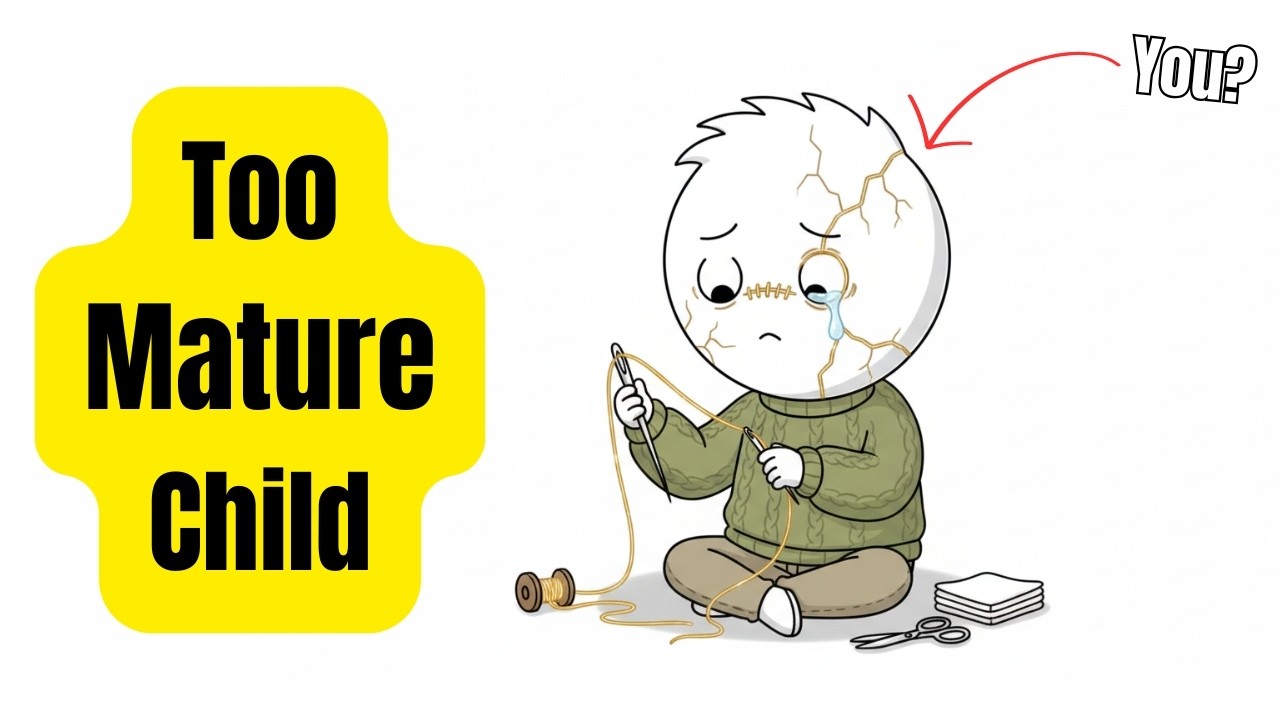
If you were the responsible one, the one who never needed anything, the one scanning the room while other kids played, this video is for you.
Psychologists call it parentification: when a child is forced into the role of caregiver before they're ready. Researcher Michael Newcomb identified this as pseudomaturity - looking like an adult on the outside while the inner child never gets to finish growing.
In this video, we break down the science behind a child who grew up too fast, including:
• The ACE Study (17,000+ participants) and its dose-response findings on childhood trauma psychology
• How early adversity rewires the prefrontal cortex and amygdala connection
• Why hyperindependence is a trauma response, not a strength
• How parentification psychology explains your patterns in love, work, and friendships
• The difference between armor and genuine strength (post-traumatic growth)
• Why society rewards children who suffer in silence (adultification bias)
If you grew up too fast, this isn’t about fixing what’s broken. It’s about understanding what happened - and choosing what to keep.
📚 Sources:
Boszormenyi-Nagy, I., & Spark, G. M. (1973). Invisible loyalties: Reciprocity in intergenerational family therapy. Harper & Row.
Felitti, V. J., Anda, R. F., Nordenberg, D., Williamson, D. F., Spitz, A. M., Edwards, V., Koss, M. P., & Marks, J. S. (1998). Relationship of childhood abuse and household dysfunction to many of the leading causes of death in adults: The Adverse Childhood Experiences (ACE) Study. American Journal of Preventive Medicine, 14(4), 245–258.
Bowlby, J. (1988). A secure base: Parent-child attachment and healthy human development. Basic Books.
Walker, P. (2013). Complex PTSD: From surviving to thriving. Azure Coyote Publishing.
Callaghan, B. L., & Tottenham, N. (2016). The neuro-environmental loop of plasticity: A cross-species analysis of parental effects on emotion circuitry development following typical and adverse caregiving. Neuropsychopharmacology, 41(1), 163–176.
Newcomb, M. D., & Bentler, P. M. (1988). Impact of adolescent drug use and social support on problems of young adults. Journal of Abnormal Psychology, 97(1), 64–75.
Dariotis, J. K., Bumbarger, B. K., Duncan, L. G., & Greenberg, M. T. (2008). How do implementation efforts relate to program adherence? Examining the role of organizational, implementer, and program factors. Journal of Community Psychology, 36(6), 744–760.
Tedeschi, R. G., & Calhoun, L. G. (2004). Posttraumatic growth: Conceptual foundations and empirical evidence. Psychological Inquiry, 15(1), 1–18.
#psychologyofgrowinguptoofast #childhoodtraumapsychology #parentificationpsychology #grewuptoofast #quietstrength
Explore the full behavioral psychology playlist here: • Psychology of Introverts
Disclaimer: This channel is for educational purposes only and is not a substitute for professional mental health advice.
Повторяем попытку...
Доступные форматы для скачивания:
Скачать видео
-
Информация по загрузке: