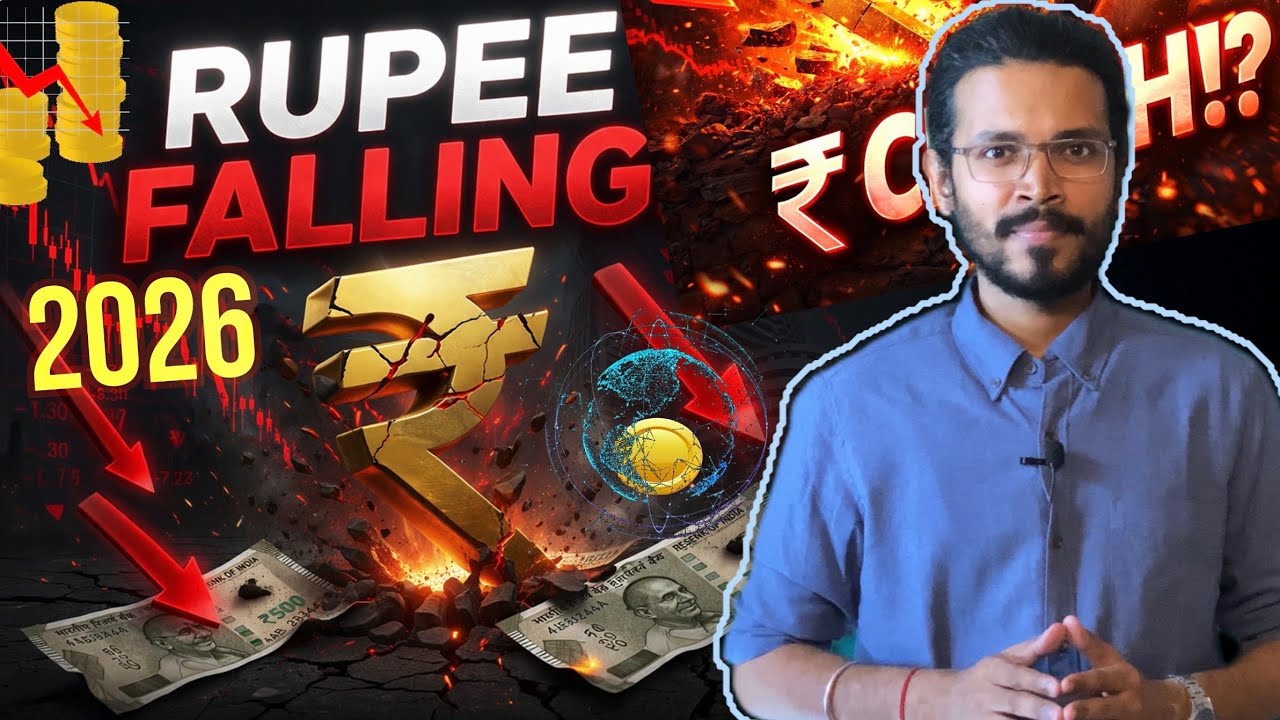
Why Indian Rupee is Falling in 2026? 📉🇮🇳 | Real Reasons Explained (Shocking Truth )
Автор: Logic & Life
Загружено: 2026-03-27
Просмотров: 464
Описание:
Why Indian Rupee is Falling in 2026? 📉🇮🇳 | Real Reasons Explained )| @Logic_N_Life
Why is the Indian Rupee falling in 2026? What does it really mean for you, your future, and India’s economy? In this deeply researched and thought-provoking video, we break down the real reasons behind the depreciation of the Indian Rupee, the global economic forces influencing it, and the long-term consequences for India’s youth, middle class, and overall growth story.
The fall of a currency is not just a number changing on a screen — it reflects the strength, stability, and global perception of an economy. When the Rupee weakens against the US Dollar, it sends signals about trade imbalances, capital flows, geopolitical risks, and internal economic challenges. In 2026, multiple factors have come together to create pressure on the Rupee, and understanding them is crucial if you want to stay financially aware and future-ready.
📉 What’s Happening to the Rupee in 2026?
The Indian Rupee has been under consistent pressure, primarily due to a combination of external shocks and internal structural weaknesses. One of the major reasons is the strengthening of the US Dollar, with the Dollar Index crossing 100+, indicating global demand for the dollar as a safe-haven currency. Whenever global uncertainty rises, investors shift their money towards stronger economies like the United States, causing emerging market currencies like the Rupee to weaken.
At the same time, foreign institutional investors (FIIs) have withdrawn nearly ₹9000 crore in March 2026, reflecting declining investor confidence and risk aversion. This capital outflow reduces the demand for the Rupee in global markets, accelerating its depreciation.
🛢️ Oil Dependency – India’s Biggest Weakness
India imports more than 80% of its crude oil requirements. This heavy dependence on oil imports makes the economy extremely vulnerable to global oil price fluctuations. When oil prices rise or supply chains get disrupted, India needs more dollars to pay for imports. This increases demand for the dollar and puts downward pressure on the Rupee.
In 2026, geopolitical tensions and disruptions in key oil supply routes like the Strait of Hormuz have further intensified this issue. Since a significant portion of global oil trade passes through this route, any instability directly affects oil prices and supply. As a result, India’s import bill increases, widening the trade deficit, and weakening the Rupee even further.
🌍 Global Factors Affecting the Rupee
The fall of the Rupee is not just an India-specific issue; it is deeply connected to global economic trends. Some of the key global drivers include:
Strong US Economy & High Interest Rates: Higher interest rates in the US attract global investors, pulling capital away from emerging markets like India.
Dollar Dominance: The US Dollar remains the global reserve currency, and during times of uncertainty, demand for it surges.
Geopolitical Instability: Conflicts, trade tensions, and disruptions in global trade routes increase volatility and risk aversion.
Global Inflation Trends: Rising inflation worldwide impacts trade balances and currency stability.
These factors collectively create a situation where the Rupee faces continuous depreciation pressure.
📊 Consequences of a Falling Rupee
The depreciation of the Rupee has wide-ranging effects on different sections of society and the economy:
1. Impact on Middle Class & Consumers
A weaker Rupee makes imports more expensive. This leads to higher fuel prices, increased transportation costs, and ultimately inflation in essential goods. The middle class feels the maximum burden as their purchasing power decreases.
2. Impact on Students & Professionals
Students planning to study abroad face higher expenses as tuition fees and living costs increase when converted to dollars. Similarly, professionals working with international markets may see cost pressures in business operations.
3. Impact on Businesses
Companies dependent on imports face rising input costs, reducing profit margins. While exporters may benefit in the short term, the overall uncertainty affects long-term planning and investments.
4. Impact on Economy
A falling currency increases the trade deficit, raises inflation, and can slow down economic growth if not managed properly. It also impacts government finances and policy decisions.
#india #economy #education
Повторяем попытку...
Доступные форматы для скачивания:
Скачать видео
-
Информация по загрузке: