Economic history of India | Wikipedia audio article
Автор: wikipedia tts
Загружено: 2018-11-12
Просмотров: 749
Описание:
This is an audio version of the Wikipedia Article:
Economic history of India
Listening is a more natural way of learning, when compared to reading. Written
language only began at around 3200 BC, but spoken language has existed long ago.
Learning by listening is a great way to:
increases imagination and understanding
improves your listening skills
improves your own spoken accent
learn while on the move
reduce eye strain
Now learn the vast amount of general knowledge available on Wikipedia through
audio (audio article). You could even learn subconsciously by playing the audio
while you are sleeping! If you are planning to listen a lot, you could try using
a bone conduction headphone, or a standard speaker instead of an earphone.
You can find other Wikipedia audio articles too at:
/ @wikipediatts983
In case you don't find one that you were looking for, put a comment.
This video uses Google TTS en-US-Standard-D voice.
SUMMARY
=======
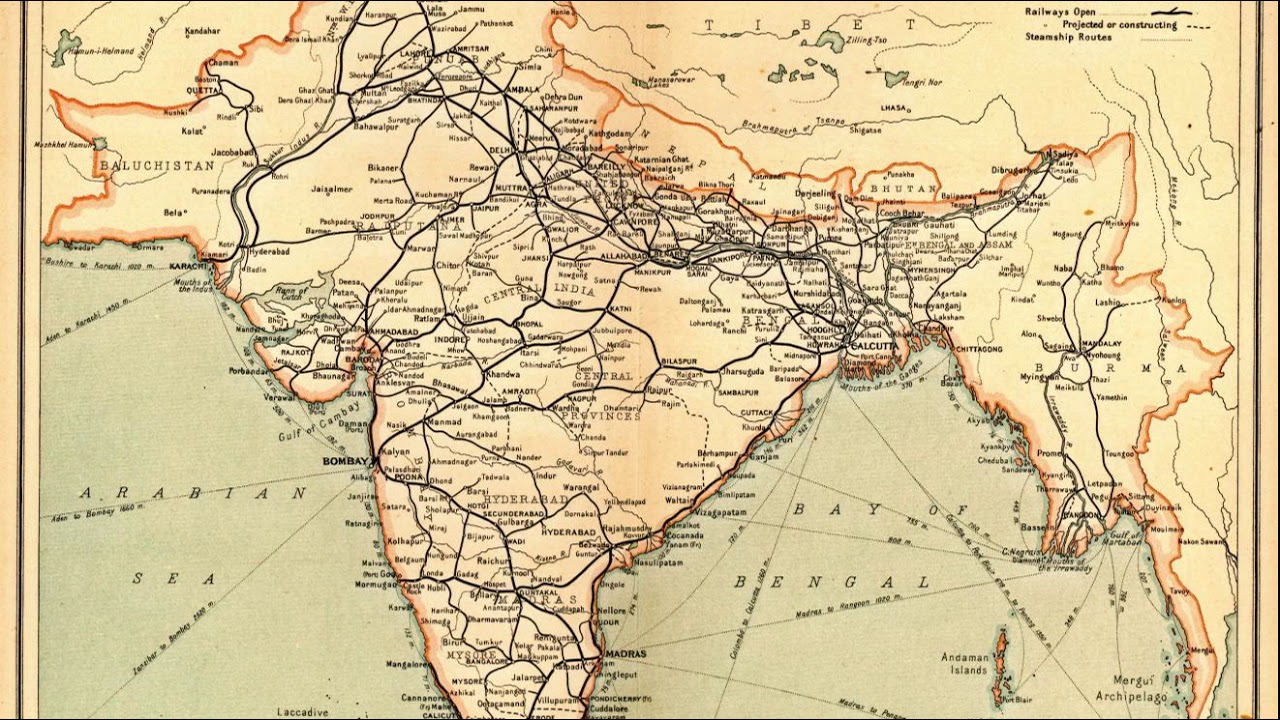
The economic history of India is the story of India's evolution from a largely agricultural and trading society to a mixed economy of manufacturing and services while the majority still survives on agriculture. Prior to 1947 that history encompasses the economy of the Indian subcontinent, corresponding to the modern nations of India, Pakistan, Nepal, Sri Lanka, and Bangladesh.
This history begins with the Indus Valley Civilization (3300–1300 BC), whose economy appears to have depended significantly on trade. Around 600 BC, the Mahajanapadas minted punch-marked silver coins. The period was marked by intensive trade activity and urban development. By 300 BC, the Maurya Empire had united most of the Indian subcontinent. The resulting political unity and military security allowed for a common economic system and enhanced trade and commerce, with increased agricultural productivity.
The Maurya Empire was followed by classical and early medieval kingdoms, including the Cholas, Guptas, Western Gangas, Harsha, Palas, Rashtrakutas and Hoysalas. During this period, Between 1 CE and 1000 CE, the Indian subcontinent is estimated to have accounted for one-third, to one-fourth of the world's population, and product, though GDP per capita was stagnant. India experienced per capita GDP growth in the high medieval era after 1000, during the Delhi Sultanate, but was not as productive as 15th century Ming China. After most of the subcontinent was reunited under the Mughal Empire, the empire became the largest economy by 1700, producing about a quarter of global GDP, before fragmenting, and being conquered over the century. According to the Balance of Economic Power, India had the largest and most advanced economy for most of the interval between the 1st century and 18th century, the most of any region for a large part of the last two millennia.During the Mughal Empire, India was the world leader in manufacturing, producing 25% of the world's industrial output up until the mid-18th century, prior to British rule. Due to its ancient history as a trading zone and later its colonial status, colonial India remained economically integrated with the world, with high levels of trade, investment and migration. India experienced deindustrialization under British rule, which along with fast economic and population growth in the Western World resulted in India's share of the world economy declining from 24.4% in 1700 to 4.2% in 1950, and its share of global industrial output declining from 25% in 1750 to 2% in 1900.The Republic of India, founded in 1947, adopted central planning for most of its independent history, with extensive public ownership, regulation, red tape and trade barriers. After the 1991 economic crisis, the central government launched economic liberalisation, allowing it to emerge as one of the world's fastest growing large economies.
Повторяем попытку...
Доступные форматы для скачивания:
Скачать видео
-
Информация по загрузке: