How Unemployment, Interest Rates & Housing Trends Impact Your Business And How The Feds React
Автор: Real Estate by Shari
Загружено: 2025-11-13
Просмотров: 1
Описание:
If you’re a business owner, real estate professional, or entrepreneur — this video is for you. Today, we’re breaking down how unemployment, interest rates, mortgage trends, and housing affordability are shaping our economy — and what that means for your business and your clients.
What Is the Unemployment Rate?
Let’s start with the basics.
The unemployment rate tells us how many people are actively looking for work but can’t find it. It’s one of the clearest signals of economic health — and it directly affects consumer spending, hiring, and business confidence.
Recent Trends in Unemployment & Job Openings
Since 2001, unemployment has steadily declined, hitting a low of 3.6% in 2020. In many parts of Kentucky, including Fayette County, we’re back near that level in 2025.
Meanwhile, job openings hit a record 20.94 million in 2020. When job openings outpace the number of unemployed people, it creates a tight labor market — driving up wages and competition for talent.
Why the Fed Cares
The Federal Reserve watches these numbers closely.
When unemployment is low and inflation rises, the Fed raises interest rates to cool things down. When unemployment spikes, they lower rates to stimulate borrowing and investment. It’s a balancing act — and it affects all of us.
What’s Happening Now
In 2025, mortgage rates are projected to average 6.70%, slightly down from 6.72% in 2024. Inflation is easing, projected at 2.9%, which is close to the Fed’s 2% target. That’s why we’re seeing some relief in borrowing costs.
Monthly Mortgage Rate Trends
Here’s where it gets interesting:
In January 2025, mortgage rates peaked at over 7%.
By September, they dropped to 6.26%.
In October, they fell again to 6.17%.
That’s a big shift — and it’s already fueling a wave of refinancing and renewed buyer interest.
Home Prices — Above Trend
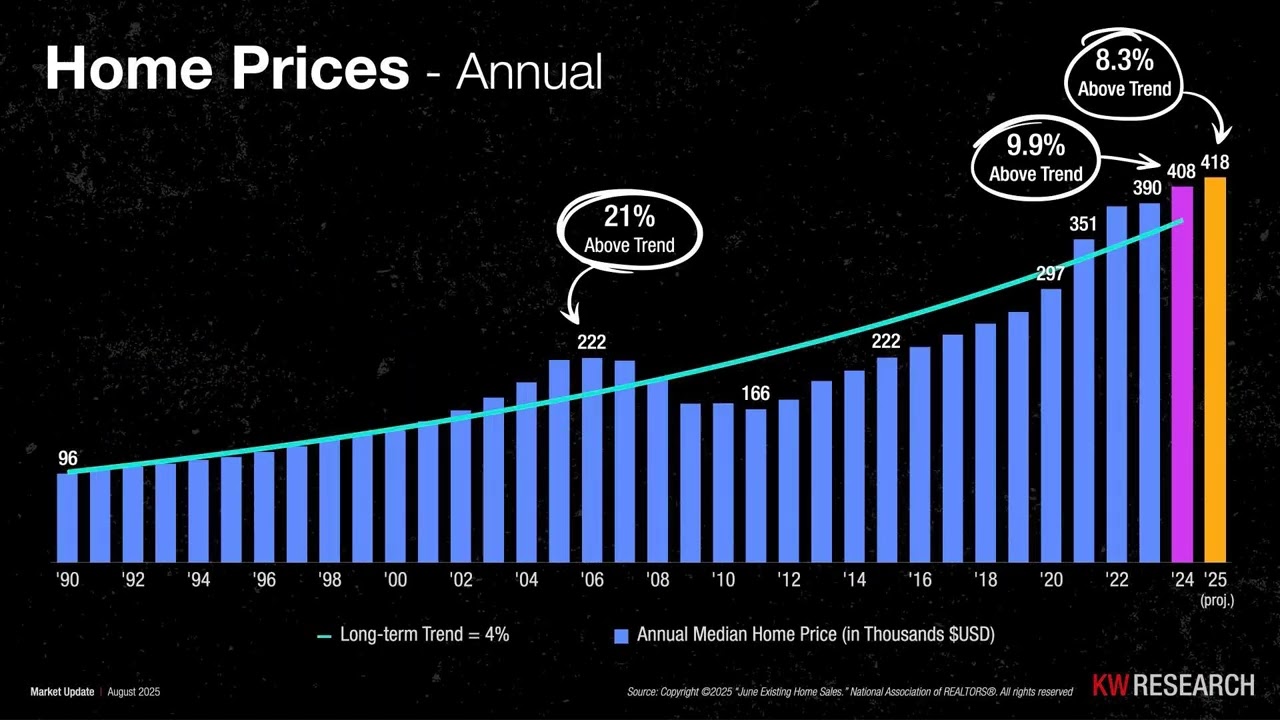
Nationally, the median home price is projected at $418,000 in 2025 — that’s 21% above the long-term trend.
In Fayette County, prices range from $315,000 to $350,000 — making it 15–25% more affordable than the national average.
Affordability Challenges
But affordability is still a challenge.
In 2012, the average mortgage payment took up 17% of household income. Today? It’s 33%. That’s nearly double — and it’s putting pressure on first-time buyers and middle-income families.
What This Means for Your Business
So what does all this mean?
💼 Hiring is competitive — you may need to offer better wages or benefits.
🏦 Borrowing is still expensive — timing matters.
🛍️ Consumer spending is steady — but sensitive to housing costs.
🏘️ Real estate is active — but buyers need creative financing and support.
Final Takeaway
Unemployment, interest rates, mortgage trends, and affordability — they’re all connected.
And they shape how we hire, sell, invest, and grow.
By staying informed, we can make smarter decisions — and better serve our communities.
Thanks for watching — and here’s to your continued success.
Shari Frasure with Keller William Commonwealth
Real Estate Transition Specialist
📍 Based in Lexington
📬 Email: [email protected]
🌐 Website: www.sharifrasure.com
📱 Instagram: @ShariFrasure
🔗 LinkedIn: linkedin.com/in/sharifrasure
📍 Local & Regional
#FayetteCountyKY
#LexingtonKY
#KentuckyRealEstate
#KYHousingMarket
#CentralKYBusiness
#WinchesterKY
📊 Economic & Housing Trends
#UnemploymentTrends
#InterestRates2025
#MortgageRates
#HousingAffordability
#HomePrices2025
#RealEstateInsights
💼 Business & Strategy
#SmartBusinessMoves
#LocalEconomy
#CommunityGrowth
#EntrepreneurInsights
#MarketUpdate
#DataDrivenDecisions
Повторяем попытку...
Доступные форматы для скачивания:
Скачать видео
-
Информация по загрузке: