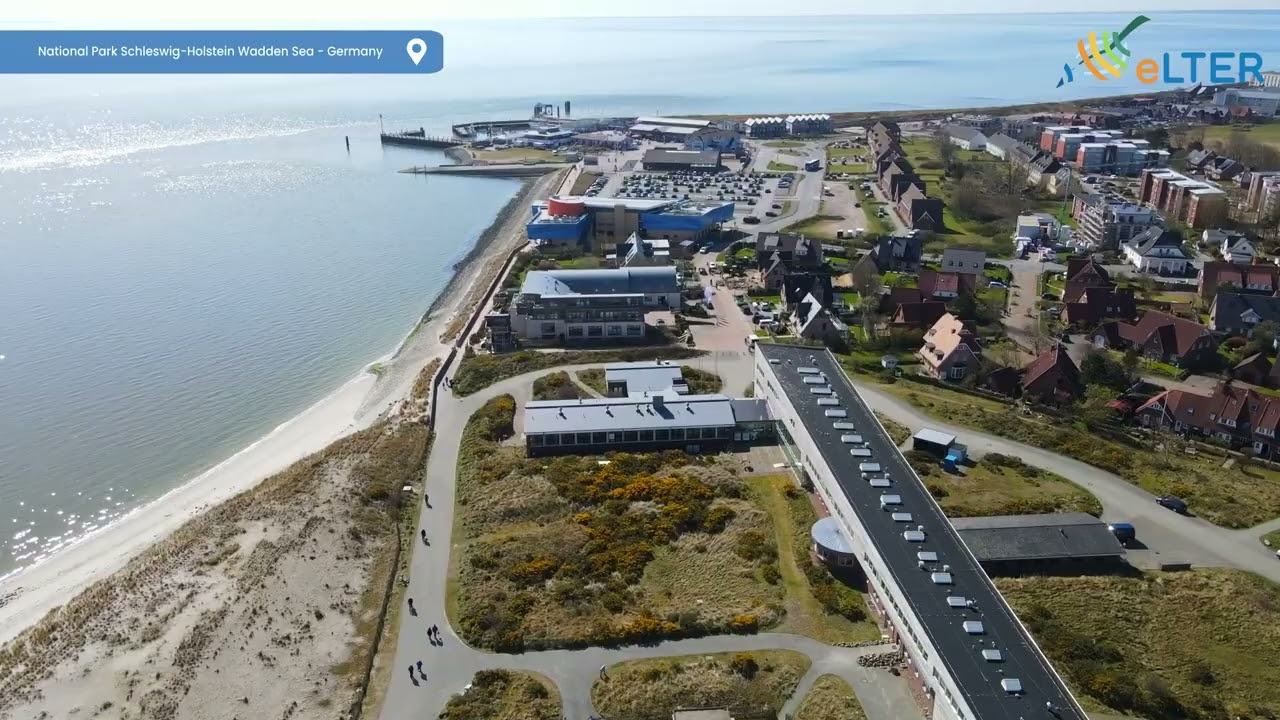
National Park Schleswig-Holstein Wadden Sea - Germany
Автор: eLTER
Загружено: 2025-11-10
Просмотров: 62
Описание:
eLTER responds to the challenge of understanding the complex interactions between people and nature and the human impacts on ecosystems over the long term. Through its research infrastructure and transdisciplinary expertise, eLTER enables the development and application of evidence-based solutions for the wellbeing of current and future generations. https://www.elter-ri.eu/
eLTER presents:
National Park Schleswig-Holstein Wadden Sea
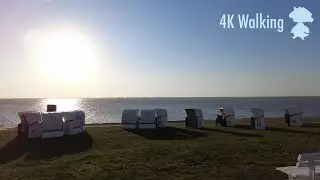
The National Park Schleswig-Holstein Wadden Sea, located along the German North Sea coast, represents one of Europe’s most extensive and dynamic coastal ecosystems. Stretching across tidal flats, salt marshes, dunes and barrier islands, the site forms part of the largest continuous tidal flat system in the world, extending from Den Helder in the Netherlands to Esbjerg in Denmark.
Designated as a National Park in 1985, the area is internationally recognised for its ecological value and natural dynamics. Together with the neighbouring Lower Saxony Wadden Sea, the Hamburg Wadden Sea and the Dutch sector, it has been inscribed on the UNESCO World Heritage List (2009) as part of the transboundary Wadden Sea World Heritage Site.
Since 1994, the area is an operational Long-Term Ecological Research (LTER) site and a member of the long-term observation networks LTER-D (Germany), LTER Europe, ILTER, and eLTER. It provides an exceptional setting for long-term ecological and environmental research. Its near-natural character allows scientists to study coastal and marine ecosystem processes, sediment dynamics, biodiversity, climate change impacts, and conservation management in a large-scale, low-disturbance environment.
Location and size: The Wadden Sea off the North Sea coast of Schleswig-Holstein, between the Elbe estuary in the south and the Danish border in the north. It covers an area of 4,380 square kilometers. The islands of Sylt, Amrum, Föhr, and Pellworm, as well as the five larger and inhabited Halligen (small, low-lying islands), are not part of the national park.
Origin: The Wadden Sea was formed after the last Ice Age, 10,000 years ago. As the glaciers melted, the water level rose. Organic and inorganic sediments were deposited in the shallow coastal regions, creating the fine-grained mudflats and the coarser sandy flats.
Animals: Approximately 3,200 species, of which around 250 are found only in the salt marshes of the Wadden Sea.
Birds: The Wadden Sea is the richest bird habitat in Central Europe, a key stopover on the East Atlantic Flyway for coastal birds. Between 10 and 12 million birds rest in the Schleswig-Holstein Wadden Sea each year, and around 100,000 pairs breed in the national park.
Fish: 63 species have been identified, but there are probably more. The Wadden Sea is the nursery for plaice, herring, and sole of the North Sea.
Marine mammals: seals, grey seals, porpoises.
Human activities: Tourism, fishing, coastal protection, grazing, shipping and air traffic, military testing, oil production, gravel and sand extraction are the most important uses.
Responsibilities: The National Park Administration within the Schleswig-Holstein State Agency for Coastal Protection, National Park and Marine Conservation is responsible for the protection of nature, environmental monitoring in the National Park and public relations.
Services: National park rangers and guides, as well as volunteers from nature conservation organizations, inform visitors and locals and monitor compliance with the park's regulations. There are approximately 20 information centers and numerous information pavilions and panels. Over 5,000 nature excursions are conducted annually.
Learn more: https://deims.org/f1e16c20-c13e-426a-...
https://www.nationalpark-wattenmeer.d...
This video is part of the eLTER Sites and Platforms Series
Filming location: National Park Schleswig-Holstein Wadden Sea - Germany
Cinematography and Sound: Evgeni Dimitrov
Video editing: Evgeni Dimitrov and Damjan Gjonov
Production management: Pensoft Publishers
Executive producer: eLTER
We would like to thank our colleagues from LTER Germany and The National Park Schleswig-Holstein Wadden Sea, and especially Karen Wiltshire and Jörn Kohlus for their help during the production of this video!
The Integrated European Long-Term Ecosystem, critical zone and socio-ecological Research (eLTER) receives funding from the European Union's Horizon 2020 research and innovation programme under GA No 871126 (eLTER PPP) and GA No 871128 (eLTER PLUS), and the European Union's Horizon Europe research and innovation programme under GA No 101131751 (eLTER EnRich).
Повторяем попытку...
Доступные форматы для скачивания:
Скачать видео
-
Информация по загрузке: