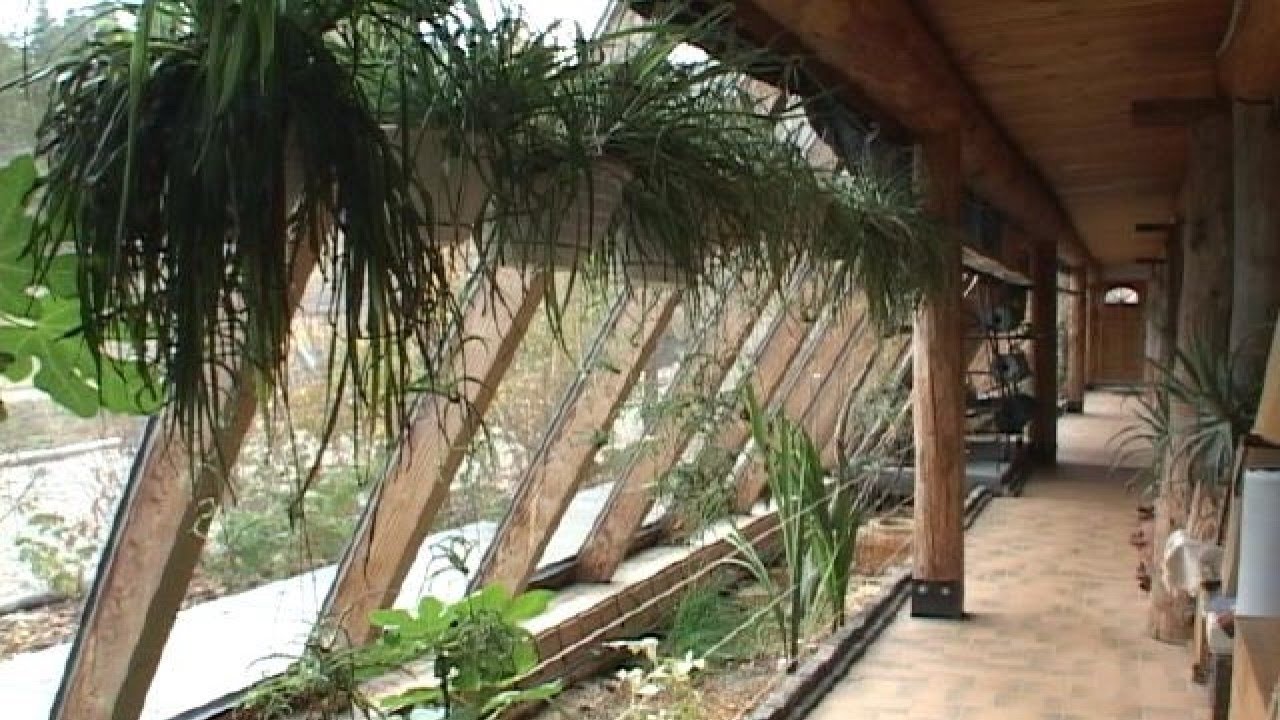
Passive Solar Heating
Автор: usinspect
Загружено: 2010-11-09
Просмотров: 18896
Описание:
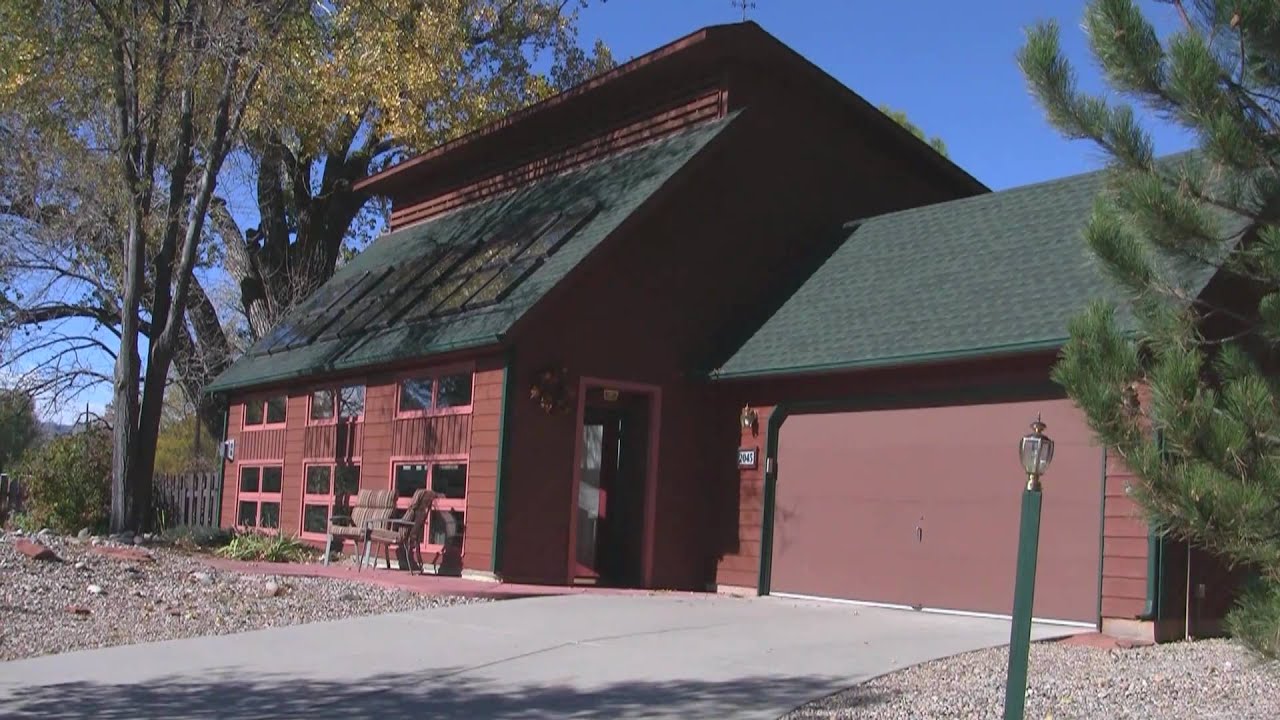
Have you ever wondered how passive solar heating worked? Here's a one and a half minute explanation using a house built by builder Dean Koski of Loveland, Colorado, in 1986f.
Dean took an idea from artistic/ecological building designer Lee Porter Butler and proceeded to build this "Double Envelope" house, incorporating a passive heat distribution system complete with 36 separate window/skylight panes facing exactly 170 degrees southeast.
The home gets it name from a "house within a house." Thermal energy from the sun is captured in the southeast facing solarium (Pictured above). The warm air is then passively circulated by a natural convection flow loop in the cavity surrounding the interior structure.
Warm air (less dense) rises from the solarium into the attic, then cooling (more dense) and falling down the north/backside wall of the home creating a pressure differential that keeps the air moving and circulating without a forced convection system (furnace).
In the summer, strategically placed shade trees deflect direct solar gain and residual accumulated hot air is exhausted through opened skylights and large panel roof venting at the top front of the home.
In the winter, with the windows and vents closed, air in the circular loop travels through the attic, down the north wall, into the over-sized crawlspace and is buffered by ambient-temperature earth returning via an open slatted floor to the solarium. Solar design experts generally agree this type of thermal-envelope building is quite efficient.
The Front Range of Colorado, which historically experiences between 250-300 blue sky, full sun days a year is an ideal location for this concept. So what do you do all those other days when it's cloudy and cold? As a backup, the home has a natural gas direct vent radiant fireplace in the solarium to supplement any solar absence.
Повторяем попытку...
Доступные форматы для скачивания:
Скачать видео
-
Информация по загрузке: