Wall Street Broker Started Laundering Money Through —Gotti Made Him Pay Back Every Dollar
Автор: John Gotti Legend
Загружено: 2026-02-26
Просмотров: 96
Описание:
💵 November 1987, Manhattan. Michael Bennett—a 34-year-old Wall Street broker—had made $4 million in three years through illegal insider trading. When Company A was about to acquire Company B, he knew weeks before the market. When pharmaceutical companies were about to announce FDA approvals, he knew before press releases. The problem: that $4 million sat in Cayman Islands offshore accounts, and spending it in America required laundering it through legitimate businesses.
Bennett thought he'd found the perfect solution. He identified nine businesses in Queens and Brooklyn that appeared to be fronts for organized crime: a laundromat reporting suspiciously high revenue, three restaurants showing cash receipts beyond their customer traffic, two construction companies with inflated union contract budgets. These were Gambino family operations laundering the family's own illegal income. And Bennett decided to add his money to their flow—without asking permission.
The system was simple: Visit the laundromat with $50,000 cash, offer to pay a small fee for processing it through their books, receive a check for $48,000 as payment for "consulting services," deposit it in his legitimate American bank account. Over 18 months, he laundered $4 million through Gambino infrastructure, paying only $200,000 in fees to confused low-level employees who didn't realize they were letting a stranger use mob property.
⚡ THE DISCOVERY & THE BILL:
A Gambino captain reviewing financial records noticed a consulting payment to someone named Michael Bennett that nobody recognized. Within a week, it reached John Gotti. The investigation revealed Bennett had used nine different operations, processing $4 million while paying pocket change to people who weren't authorized to make that arrangement.
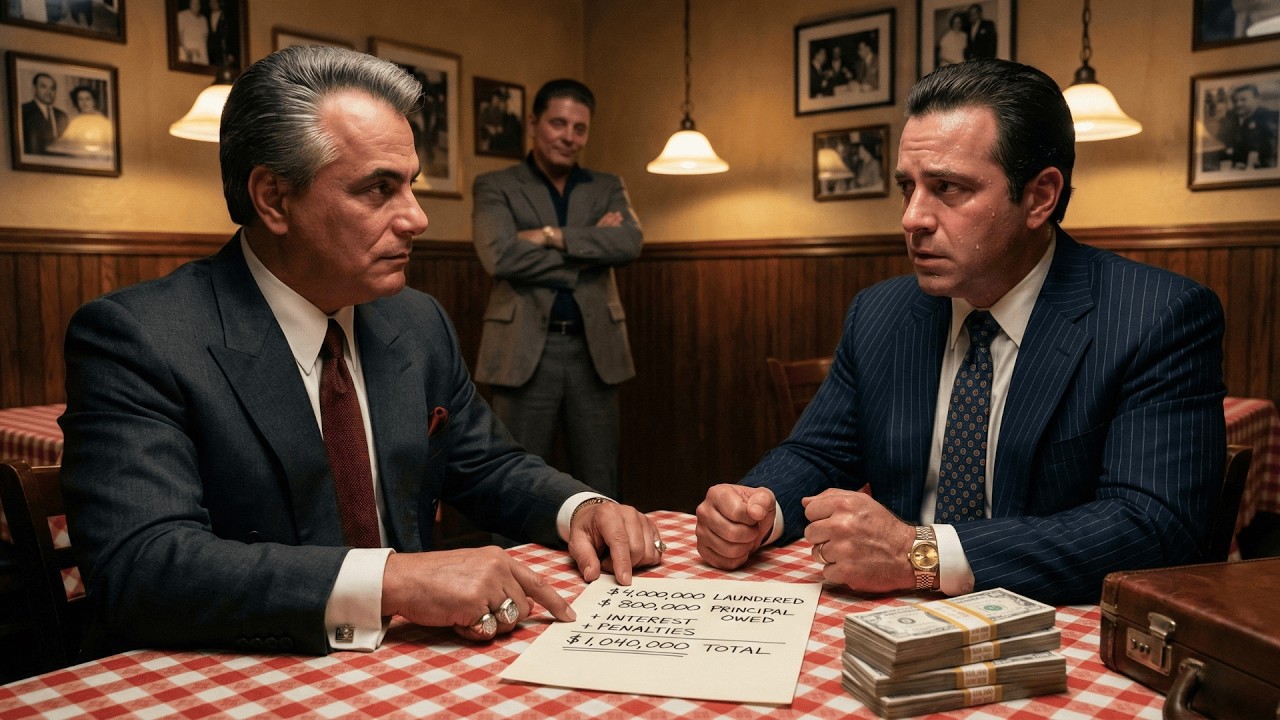
Gotti did the math: If someone asked permission to launder $4 million through Gambino operations, the standard fee would be 25%—$1 million. Bennett had paid $200,000 to employees. He owed the family $800,000 in unpaid fees. Plus interest. Plus penalties.
The meeting at a Little Italy restaurant: Bennett showed up expecting to pitch investment strategies to wealthy clients. Instead, he found himself across from John Gotti and Sammy Gravano.
🔥 "You laundered four million dollars through our businesses. Standard fee is 25%. One million dollars. You paid $200,000 to people who weren't authorized to negotiate rates. You owe us $800,000 in unpaid fees. Plus 3% monthly interest on unpaid balances for 18 months. Plus 20% penalty for disrespect. Your total: just over $1 million, paid in monthly installments of $65,000 for 16 months." - The bill for using mob infrastructure without permission.
Bennett tried to negotiate: "I already paid for those services." Gotti's response: "You paid what confused restaurant owners thought was fair. Not what the actual owners charge. Those businesses exist to launder our money. We built them, maintain them, take the risk. When you use them without permission, you're stealing our infrastructure."
The leverage: "We have documentation of every illegal trade you made for three years. Which stocks, which companies, exactly how you made your money. That information could be valuable to federal prosecutors. You can settle this like a business transaction—monthly payments, clean resolution—or we take alternative collection methods."
Bennett agreed. Over 16 months, he paid $65,000 monthly in cash to Gambino collectors, liquidating offshore accounts and selling assets to generate cash flow. By March 1989, he'd paid just over $1 million to the Gambino family.
The irony: He made $4 million in insider trading, laundered it through what he thought was free infrastructure, and ended up paying back $1 million in fees, interest, and penalties. His effective profit: less than $2 million. He would have made more investing legally and paying capital gains taxes.
The lesson became legendary in Commission circles: Gambino businesses aren't public utilities. They're private infrastructure built for specific purposes. Using them without permission isn't clever—it's theft. And in organized crime, theft means paying market rate plus interest plus penalties plus a lesson in respect.
Bennett continued on Wall Street until 1991, when the SEC caught his insider trading through an unrelated investigation. He pled guilty to securities fraud, paid $500,000 in fines, and served 18 months in federal prison.
👍 Like for more Gotti vs Wall Street stories!
🔔 Subscribe for organized crime history!
💬 Comment: Would you have tried negotiating with Gotti?
#JohnGotti #WallStreet #InsiderTrading #MoneyLaundering #GambinoFamily #1987 #Manhattan #LittleItaly #OrganizedCrime #SEC #FinancialCrime #MafiaHistory #TrueCrime #Yuppie #GordonGekko #StockMarket #CorporateCrime #MobBoss #CrimeBoss #ItalianMafia #WhiteCollarCrime #MafiaLegends #CrimeHistory #BusinessLesson #TrueStory #MafiaDoc #UndergroundEconomy #CriminalJustice #FinancialFraud #OrganizedCrimeBoss
Повторяем попытку...
Доступные форматы для скачивания:
Скачать видео
-
Информация по загрузке: