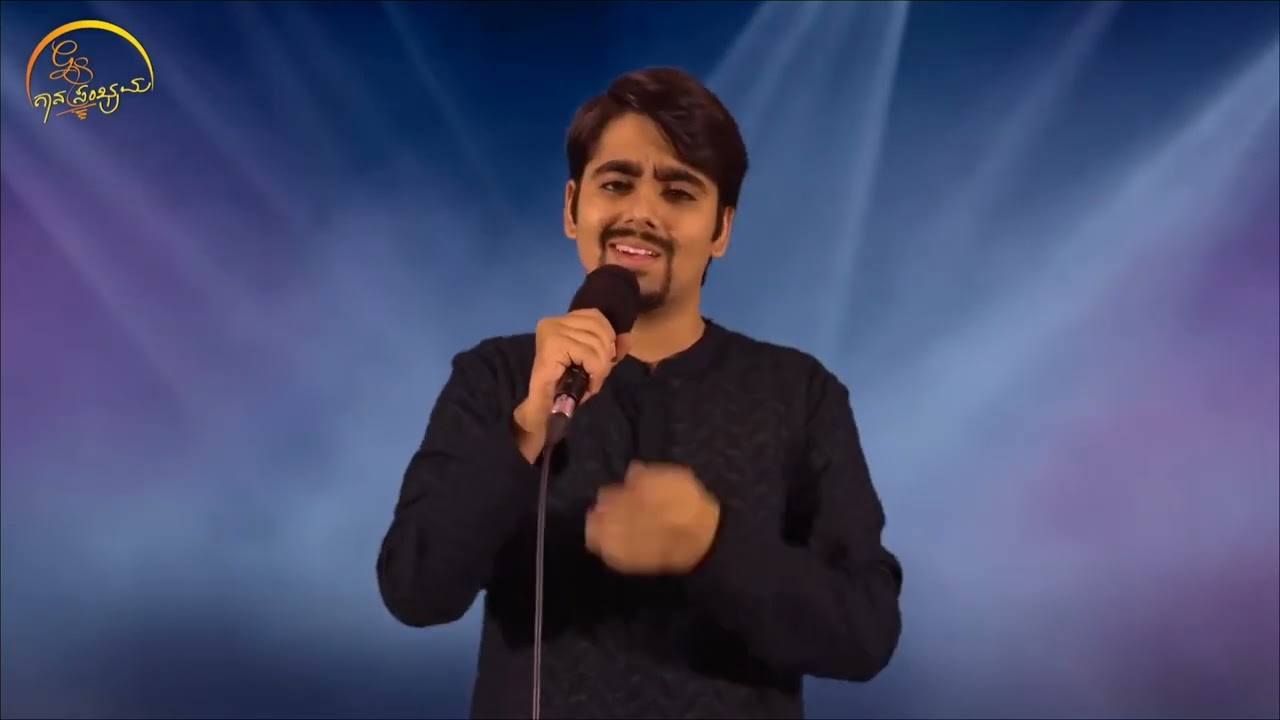
Antaratamani Guru | ಅಂತರತಮ ನೀ ಗುರು - Kuvempu, Mysuru Ananthaswamy
Автор: Prajwal J Haritsa
Загружено: 2026-01-23
Просмотров: 406
Описание:
This song is a profound poem (Bhavageethe) written by the legendary Kannada poet Kuvempu (Rashtrakavi K.V. Puttappa).
At its core, this is not just a prayer to an external god or teacher; it is an internal dialogue with his own Inner Soul (Antaratma). Kuvempu is famous for his philosophy of the "Universal Spirit," and here he is identifying that the true Guru (guide) resides deep within oneself.
Here is what the poet is actually trying to say, broken down by concept:
1. The "Guru" is Inside You
“Antaratama Nee Guru, Hey Atma Tamohari”
The poet is saying that the ultimate guide is the Innermost Self (Antaratama). He addresses his own soul as the "dispeller of darkness" (Tamohari). He is acknowledging that while the outside world offers confusion, the light that clears this ignorance comes from deep within.
2. The Confession of a Confused Mind
“Jatila Kutila Tama Antaranga / Bahu Bhava Vipina Sanchari”
This is a very vulnerable admission. The poet admits that his human mind (Antaranga) is not pure; it is:
Jatila: Complex and knotted.
Kutila: Twisted or tricky.
Tama: Dark.
He compares his life to wandering through a "forest of emotions" (Bhava Vipina). He is telling his Inner Soul, "I am lost in this jungle of feelings and complexities, and I need you to guide me through it."
3. Cleaning the Baggage of Past Lives
“Januma Januma Shata Koti Samskara / Parama Charama Samskari”
In Indian philosophy, we carry Samskaras (mental imprints or habits) from millions of past lives. These old habits make us act unconsciously.
The poet says, "I have the burden of a hundred million births," but then he calls the Inner Soul the "Parama Charama Samskari"—the Ultimate Refiner. He is asking his inner consciousness to burn away this ancient baggage and refine his spirit once and for all.
4. Accepting the Duality of Life
“Papa Punya Nana Lalita Rudra Leela”
He realizes that life is a divine play (Leela) that includes opposites:
Papa vs. Punya: Sin and Merit.
Lalita vs. Rudra: The Gentle (beautiful) aspects of God vs. the Fierce (terrifying) aspects.
Roopa vs. Aroopa: That which has form vs. the formless energy.
The poet is realizing that the Inner Soul is the witness to all of this—the good, the bad, the gentle, and the scary.
Summary
Kuvempu is trying to say: "My mind is a mess of dark knots and wandering emotions, accumulated over millions of lives. Oh Inner Light, you who watch this play of good and bad, please wake up within me, destroy this darkness, and lead me."
Повторяем попытку...
Доступные форматы для скачивания:
Скачать видео
-
Информация по загрузке: