Pokemon Heartgold
Автор: Jamie Retter
Загружено: 2026-02-20
Просмотров: 9
Описание:
Pokémon HeartGold[b] and Pokémon SoulSilver[c] are 2009 remakes of the 1999 Game Boy Color role-playing video games Pokémon Gold and Silver, also including features from Pokémon Crystal. The games are part of the fourth generation of the Pokémon video game series, developed by Game Freak and published by The Pokémon Company and Nintendo for the Nintendo DS. In commemoration of the 10th anniversary of Gold and Silver, the games were released in Japan on September 12, 2009, and were later released in other regions during March 2010.
HeartGold and SoulSilver take place in the Johto and Kanto region of the franchise's fictional universe, which features special creatures called Pokémon. The basic goal of the game is to become the best Pokémon Trainer in both the Johto and Kanto regions, which is done by raising and cataloging Pokémon and defeating other trainers.
Game director Shigeki Morimoto aimed to respect the feelings of those who played the previous games, while also ensuring that it felt like a new game to those that were introduced to the series in more recent years. The games received positive reviews from critics, and as of March 2014, the games' combined sales have reached 12.72 million, making the two games combined the eighth best-selling DS video games of all time.[1]
Gameplay
See also: Gameplay of Pokémon and Pokémon Gold and Silver § Gameplay
A pre-teenaged boy with black hair and a black and yellow baseball cap stands inside a dark, rocky, cave-like area. A small, blue, crocodile-like Pokémon stands behind him. Standing elsewhere in the area are two young men and one young woman, all wearing black clothes and beanies, and two small, pink, quadrupedal Pokémon.
The player first encounters a member of Team Rocket in Slowpoke Well. The player's Totodile, which is one of the game's three starter Pokémon, follows him.
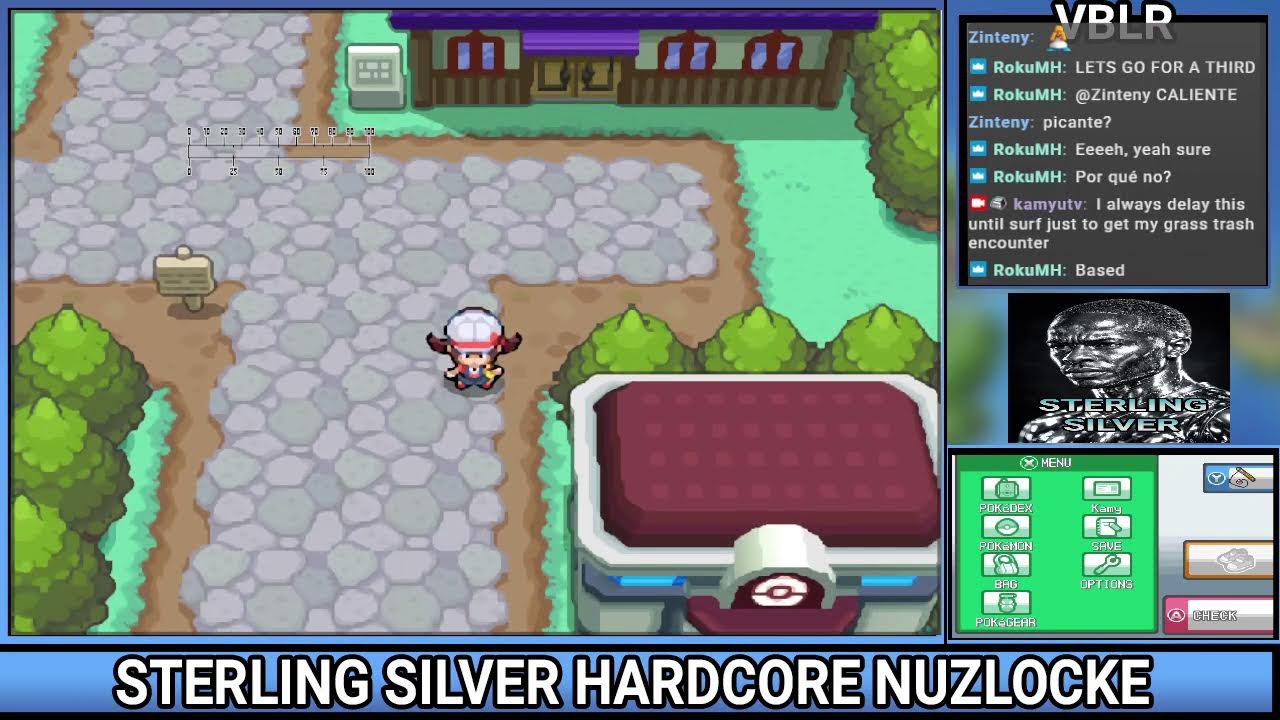
Pokémon HeartGold and SoulSilver are role-playing video games with adventure elements. The basic mechanics of the games are largely the same as their predecessors'. As with all Pokémon games for handheld consoles, gameplay is viewed from a third-person overhead perspective, and consists of three basic screens: a field map, in which the player navigates the main character; a battle screen; and the menu, in which the player configures their party, items, or gameplay settings. The player begins the game with one Pokémon and can capture more using Poké Balls.[2]
When the player encounters a wild Pokémon or is challenged by a trainer to a battle, the screen switches to a turn-based battle screen where the Pokémon fight. During battle, the player may use a move, use an item, switch the active Pokémon, or flee. Fleeing is not an option during battles against trainers. Pokémon have hit points (HP), which is displayed during battles; when a Pokémon's HP is reduced to zero, it faints and cannot battle unless taken to a Pokémon Center or healed or revived with a Pokémon skill or an item, typically a "revive" medicine. If the player's Pokémon defeats the opposing Pokémon (causes it to faint), it receives experience points. After accumulating enough experience points, it will level up; most Pokémon evolve into a new species of Pokémon when they reach a certain level, or when certain conditions are met, such as how much a Pokémon statistically "likes" its trainer.[2]
New features
Pokéwalker
In HeartGold and SoulSilver, the Pokémon in the first slot of the player's party can follow them in the overworld, echoing a mechanic in Pokémon Yellow where Pikachu follows the player. This mechanic was also used in a limited fashion in Pokémon Diamond, Pearl, and Platinum when the player is in Amity Park with a "cute" Pokémon. The player may talk to the Pokémon to see or check on how that Pokémon is feeling, and occasionally it may pick up items.[3] Additionally, a pedometer was bundled with each copy of the games called a "Pokéwalker", which allows players to transfer Pokémon from the game into the device and walk around with them, earning "watts" in the process, which can be exchanged for in-game rewards.[3]
A new minigame called the Pokéathlon[d] uses the Nintendo DS touchscreen and allows Pokémon to compete in events such as hurdling.[4] The Japanese versions retain slot machines found in previous games, while the international releases of the titles replace the slot machines with a new game called "Voltorb Flip", described as a cross between Minesweeper and Picross.[5] Another new item, the GB Sounds, changes the background music to the chiptune music that sounds similar to original music from Pokémon Gold and Silver.[6]
A new mechanic in the Safari where the player can customize areas to increase the rate of wild species to appear was also added. The entire mechanics will be unlocked after having gained the national Dex, completed two quests by the Safari administrator and automatically answered to each of his calls (one-each 3 hours of game).
Повторяем попытку...

Доступные форматы для скачивания:
Скачать видео
-
Информация по загрузке: