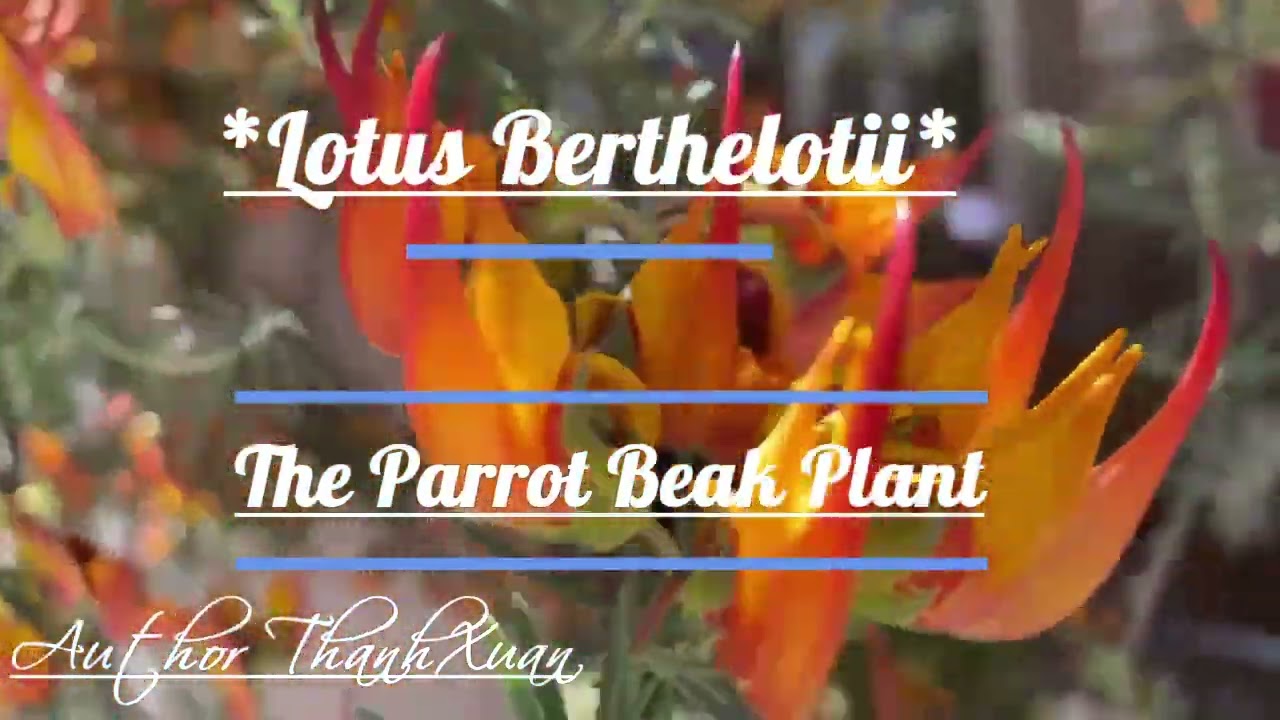
*Lotus Berthelotii* Parrot Beak Plant: Characteristics and Care
Автор: Success Journey
Загружено: 2024-06-18
Просмотров: 697
Описание:
Parrot Beak Plant: Characteristics and Care
Parrot's beak is a stunning tropical flower that acts as a ground cover and trailing plant. With lacy silver foliage on graceful stems, these plants work as backdrops in the garden. During seasons with cool nights, the plants boast curved blooms in all the shades of a sunset, including deep reds, oranges, and yellows. A low-maintenance plant hardy in Zones 10-11, it's grown as an annual or perennial, depending on the region.
How often to water your Parrot's Beak.
Parrot Beak needs 0.8 cups of water every 12 days when it doesn't get direct sunlight and is potted in a 5.0" pot. Use your water calculator to personalize watering recommendations to your environment.
Yellow leaves and dry soil signal over-watering; crispy leaves mean under-watering. ☀️🌡️ Bright, indirect light and stable 68-80°F are ideal for Parrot Beak plants. 🐛 Inspect for pests regularly, and use natural or chemical treatments if necessary.
#### Characteristics
The Parrot Beak plant, scientifically known as *Lotus berthelotii*, is a stunning perennial species native to the Canary Islands. This plant is prized for its unique and vibrant flowers that resemble the beak of a parrot, hence the name. Here are some key characteristics:
1. **Flowers**: The flowers are tubular, bright red or orange, and curved, mimicking the shape of a parrot's beak. They typically bloom in late spring to early summer.
2. **Foliage**: The plant has fine, silvery-grey, needle-like leaves that are soft to the touch. This foliage provides an attractive backdrop to the vibrant flowers.
3. **Growth Habit**: Parrot Beak is a trailing plant, making it excellent for hanging baskets, containers, or as ground cover. It can grow up to 2 feet in length.
4. **Size**: Generally, the plant reaches a height of 6-12 inches and spreads about 2-3 feet wide.
#### Care
Caring for the Parrot Beak plant involves providing conditions that mimic its native habitat. Here are some detailed care instructions:
1. **Light**: This plant thrives in full sun to partial shade. It requires at least 6 hours of direct sunlight each day to produce abundant flowers. In hotter climates, some afternoon shade can be beneficial.
2. **Soil**: Well-drained soil is crucial. Parrot Beak prefers sandy or loamy soil with good drainage to prevent root rot. It does not thrive in heavy, clay soils.
3. **Watering**: Regular watering is important, especially during the growing season. However, the soil should be allowed to dry out slightly between waterings. Overwatering can lead to root rot.
4. **Temperature and Humidity**: This plant enjoys warm temperatures and is not frost-tolerant. It can be grown outdoors in USDA hardiness zones 9-11. In cooler climates, it can be grown as an annual or brought indoors during winter.
5. **Fertilization**: Feed the plant with a balanced, water-soluble fertilizer every 4-6 weeks during the growing season. Over-fertilization should be avoided as it can reduce flowering.
6. **Pruning**: Pruning is not usually necessary, but trimming back any leggy growth can help maintain a compact shape and encourage bushier growth.
7. **Propagation**: Parrot Beak can be propagated from cuttings. Take softwood cuttings in spring or early summer, dip them in rooting hormone, and plant them in a moist, well-draining soil mix.
By providing the right conditions, the Parrot Beak plant can thrive and bring a vibrant splash of color to gardens and containers. Its unique appearance and cascading growth habit make it a popular choice among garden enthusiasts.
Повторяем попытку...
Доступные форматы для скачивания:
Скачать видео
-
Информация по загрузке: