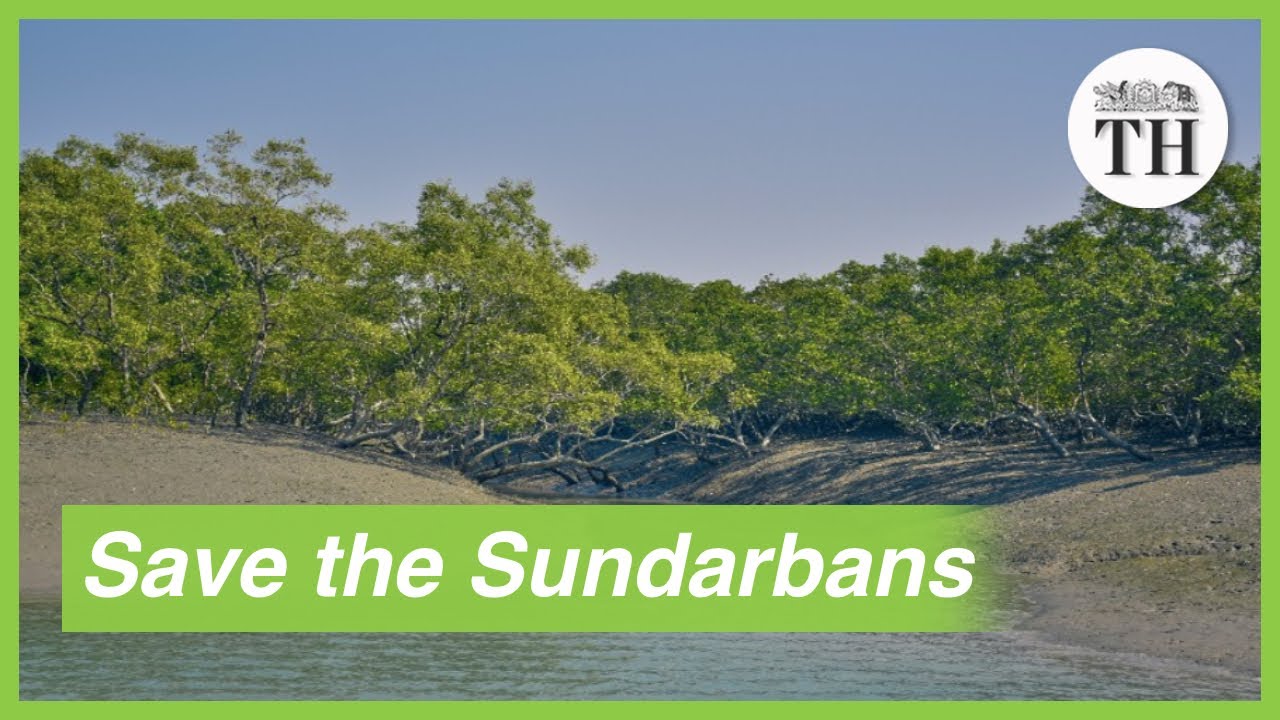
SAVE GOA! SAVE WESTERN GHATS! STOP RECKLESS DESTRUCTION! (2)
Автор: Felly Gomes
Загружено: 2020-12-29
Просмотров: 731
Описание:
Thank You for all your likes, comments, and shares dear friends. Our NGO Live Happy does a lot of groundwork for the community. You can head to our website https://livehappygoa.com/ or our Facebook page / livehappygoa to know more about our mission and work.
Your financial support will help us further help us to continue our work in protecting, preserving, and restoring our environment and heritage. To make your contribution please click on this link https://www.instamojo.com/@livehappyn...
Mog Asu
The National Alliance of Peoples Movements have called for review of the four-lane highway, 400 KV transmission line and double tracking of the railway line through the Bhagwan Mahavir Wildlife Sanctuary and Mollem National Park in Goa. The Supreme Court must direct mandatory compliance of the recommendations in the Western Ghats Ecology Expert Panel Report. The people and wildlife habitats which will be impacted by these projects are of serious concern to many who see the “virtual clearances” to multiple infrastructure projects in environmentally sensitive areas of Goa by the Union Ministry of Environment, Forest and Climate Change (MoEFCC) as malafide in the letter and spirit of the country’s environmental laws.
Even as the country is reeling under a pandemic and grappling with a poorly planned lockdown, the National Board for Wildlife (NBWL) ‘video-approved’ a four-lane highway and a 400 kv transmission line in the eco-fragile Western Ghats on April 7, 2020. These projects are to be constructed right through the forests of Bhagwan Mahavir Wildlife Sanctuary and Mollem National Park!
As if this is not enough, a third project related to the double tracking of the railway line passing through the sanctuary and national park is also being considered by the government. The three projects would require cutting down over 50,000 trees and diversion of 216 hectares of forest and private land. This venture will further put the water-security of over 16 lakh Goans in jeopardy as the projects will be cutting across the River Ragada, a tributary of Mhadei. Needless to say it has become a practice for project proponents to obtain “piece meal clearances,” while these three linear projects, situated within the same protected area need a rigorous cumulative impact assessment. It is an extremely sad reflection on the state of environmental governance that the MoEFCC and NBWL overlook these crucial statutory requirements.
The Bhagwan Mahaveer Wildlife Sanctuary and Mollem National Park are part of a larger contiguous forest and a treasure trove of flora and fauna with an important tiger corridor between Goa and the adjoining Kali Tiger Reserve in Karnataka. With an area of 240 sq km the sanctuary and national park constitute the largest protected area in Goa. What is more crucial is that this forest is part of the Western Ghats, one of the eight biodiversity hotspots of the world and part of a UNESCO World Heritage Site. Unfortunately, all the cleared projects require diversion of forest land from this single protected area.
The protected area is home to more than 721 plant species, 235 bird species, 219 butterfly species, 80 odonate species, 70 mammal species, 75 ant species, 45 reptile species, 44 fish species, 43 fungi species, 27 amphibian species, 24 orchid species, and 18 species of lichens. This list includes various endemic species as well as rare and vulnerable species such as the tiger, dhole, mouse deer, gaur and the Indian pangolin, amongst others. In addition, there are 18 bird species that are endemic to the Western Ghats and seven bird species that are of high conservation concern (according to the State of India’s Birds, 2020).
Besides flora and fauna these forests have fresh water streams that feed the main rivers including Goa’s lifeline, river Mandovi. This river is a major source of potable water and provides irrigation facilities, produces biotic and mineral resources and facilitates the movement of people and goods to different parts of the state. The ancestral livelihoods of people living in the villages, on the banks of these rivers will be severely affected by the projects. This area was marked as an Ecologically Sensitive Area by the Western Ghats Expert Ecology Panel (WGEEP) in 2011, that was appointed by the very same ministry that has now given “permission” to speed up the destruction! The WGEEP (Madhav Gadgil Committee) submitted an elaborate Report to MoEF, calling for restrictions on damaging activities like mining, quarrying and red-category industries in the Western Ghats. The forests in the Western Ghats have many sacred groves that have been protected by locals for centuries because of their association with deities and are, therefore, of tremendous cultural and conservation importance. No plans to secure the water reserves of the state have been made public by the MoEFCC or the government of Goa.
Повторяем попытку...
Доступные форматы для скачивания:
Скачать видео
-
Информация по загрузке:



![Челябинский метеорит мы пропустили. Пропустим и другие? [Veritasium]](https://imager.clipsaver.ru/nZRnAC_XJI4/max.jpg)